Saturday, September 22, 2007

Web 2.0 Analysis and Statistics


reposted from: http://tallblog.conted.ox.ac.uk/index.php/2007/07/19/web-20-analysis-and-statistics/

Web 2.0 podcast - a beginners guide (particularly for educators) to Web 2.0 - download mp3

Students are increasingly becoming familiar with using social networking and other interactive web services such as Facebook, MySpace, Flickr and YouTube. This phenomenon has important implications for educational institutions as students increasingly expect such services to be mirrored in the delivery of courses.

Web 2.0 Analysis and Statistics

You may be interested in my report on Web2.0 take-up and usage which I submitted to JISC a few weeks ago. It’s analysis of some data that blogged back in March 2007. I included the responses to the data in the report. It was all very ‘participatory’. The report can be downloaded from here: http://www.jisc.ac.uk/media/documents/programmes/digital_repositories/spiresurvey.doc

(copy on CGS PC)

Friday, September 21, 2007

Social net offers new perspective

reposted from: http://news.bbc.co.uk/1/hi/technology/6989327.stm

Social net offers new perspective
African women using a computer
Social networking has extended friendships around the globe
Columnist Bill Thompson asks whether social networking could underpin a new politics of connection.

When BBC reporter Michael Buerk brought us film of the starving children of Ethiopia in 1984 it motivated the country to action.

In 1985 Bob Geldof and Midge Ure's Live Aid raised millions of pounds, and the attendant publicity put humanitarian aid onto the agenda of the senior politicians of the day, forcing Prime Minister Margaret Thatcher and her Foreign Secretary Geoffrey Howe to take seriously an issue which they had not, hitherto, seen as a high priority.

Twenty years later Geldof was at it again, though the cultural and political impact of Live 8 was diminished for many by the sight of too many millionaire rock stars seeking to revive their careers on the back of the world's poor.

But something else had changed. In 2005 we didn't need the Six O'Clock News to bring us pictures from Darfur or Bangladesh, and we didn't need the journalistic talents of Buerk and others to tell the stories in a way that made it impossible not to respond.

The internet, through the web, instant messaging, email and its other applications, had brought the world into our living rooms - and our offices, classrooms, cafes, clubs, bars and railway carriages.

The last decade of the twentieth century saw a transformation in the forms of communication available to the lucky billion with easy access to the network, and the impact on the way we perceived the world was immense.

Greater understanding

Twin Towers on fire
Online tools has transformed the way we view major events

Those new technologies kept me glued to my computer in Cambridge on that sun-filled New York morning six years ago when the Twin Towers fell, watching the TV feed, reading the news websites and talking online with friends in London, the USA and elsewhere.

Richard was in Sydney, Australia, but his colleagues from the US office worked in the World Trade Center, and I shared his concern and grief, telling him what I could learn from the BBC and other sources unavailable to him.

Now the power of that technology is even greater, and its impact on the way we understand the world will go far beyond letting us see our holiday destinations on Google Earth or finding the best bar in Brooklyn via Steven Johnson's outside.in.

The world wide web has always been about more than just online publishing and Tim Berners-Lee, its inventor, has often spoken of its importance in promoting greater understanding between people.

Now the growth of online social networks is transforming the web's ability to teach us about one another, not in broad terms but as individuals, with our hopes, aspirations and separate but equally important lives.

I have 332 Facebook friends, which my girlfriend claims makes me a 'facebook tart'. It's true that

a significant number of them are people I have never met and am unlikely ever to bump into, but that doesn't mean that I can't enjoy being part of this disparate social network, or enjoy knowing who is reading what, which events they are attending or what their problems and triumphs are.

The people I see and chat to on Facebook, and on MySpace and Orkut and the other social sites I belong to, are real people.

New friends

Bill Thompson
The distribution of my friends reflects the distribution of the network
Bill Thompson

I share in their daily lives, and learn something of what it is like to be an expatriate Iranian in Canada (hi, Hoder), or a Delhi blogger like Amit or a Nigerian journalist like Edetaen.

The distribution of my friends reflects the distribution of the network and of the advanced technology needed to post on a blog, chat online or maintain a profile on one of the social sites, but it is already changing as the technology spreads further.

Smartphones, perfectly capable of accessing Facebook, are spreading through sub-Saharan Africa as people realise that they are cheaper, easier to operate and more usable than desktop PCs.

Eventually, the people with the phones are going to start using these new sites, and I imagine many more listeners to the BBC's Digital Planet - a radio programme devoted to the way technology touches lives around the world - will come online and join in the conversation. As one of Digital Planet's regular contributors, I hope some of them will add me as a friend on one of the social sites.

Students coming back to UK universities from gap years abroad will find that their friend lists include mates from Somalia, Siam and Syria, and anyone with even a passing interest in global politics will find that their friendship networks cover the globe.

What will happen when these people start dying in famines or wars, or when the climate changes caused by global warming lead to floods and droughts and natural disasters?

What happens when the photos on Facebook and Flickr show devastated crops and starving families - and these people are not just faces on the television but old friends, people whose likes and dislikes and reading habits and favourite films we know and share?

The world is different when it's the people you know, and I do not think we will be able to resist the forces of change when our friends are dying on screen, in front of us, and we know that we could do something but have decided not to.


Bill Thompson is an independent journalist and regular commentator on the BBC World Service programme Digital Planet.

Iran Blocks Access To Google

clipped from news.yahoo.com


TEHRAN (AFP) -
Iran has blocked access to the Google search engine and its Gmail email service as part of a clampdown on material deemed to be offensive, the Mehr news agency reported on Monday.


"I can confirm these sites have been filtered," said Hamid Shahriari, the secretary of Iran's National Council of Information.


He did not explain why the sites were being blocked. Google, Gmail and several other foreign sites appeared to be inaccessible to Iranian users from Monday morning.


Iran has tough censorship on cultural products and internet access, banning thousands of websites and blogs containing sexual and politically critical material as well as women's rights and social networking sites.


The rules are applied by Internet Service Providers who use filtering programmes to prevent access to the banned sites.


Iran is in the midst of one of its toughest moral crackdowns in years, which has already seen thousands of women warned for failing to obey Islamic dress rules.

 blog it

Misplaced Deity Sought By Christians

clipped from www.turoks.net

So, I'm standing at a bus stop and they pull up. A car load of well meaning,
bible thumping nut cases that are just frantic! The middle aged professionally
dressed woman rushes forward...She takes my arm and with trembling voice,
she asks...."Have you found Jesus?" Her eyes plead with an urgency that is
out of proportion to a bus stop.

So calmly as I can muster, without being sarcastic, I reply, "You people
lost him, again?"

"What is wrong with you Christians? Every time I turn around you've lost
Him!" I hit her with a glare of accusation. "I mean really..." I take a measured
breath. "How do you expect to have anyone follow a deity that you can't even
find?"

"Of course, you Christians aren't much fun," I continue. By now they are
all out of the car. Befuddled, aghast, and at a loss for words. "Of course," I
offer trying to give them some defense for losing Jesus. "He could have left
due to religious differences. If I remember correctly, He was Jewish.

 blog it

10 Great Math Tricks to Do Calculations in Your Head

this is a great detailed list of helpful math tricks, most of them I didn't know before.
clipped from listverse.com

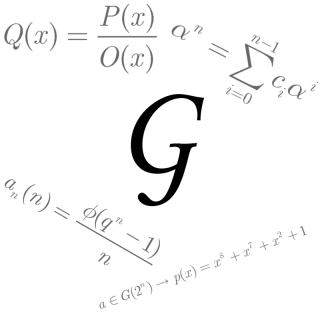
Galoisfieldlib

1. The 11 Times Trick

We all know the trick when multiplying by ten - add 0 to the end of the number, but did you know there is an equally easy trick for multiplying a two digit number by 11? This is it:

Take the original number and imagine a space between the two digits (in this example we will use 52:

5_2

Now add the two numbers together and put them in the middle:

5_(5+2)_2

That is it - you have the answer: 572.

If the numbers in the middle add up to a 2 digit number, just insert the second number and add 1 to the first:

9_(9+9)_9

(9+1)_8_9

10_8_9

1089 - It works every time.

2. Quick Square

If you need to square a 2 digit number ending in 5, you can do so very easily with this trick. Mulitply the first digit by itself + 1, and put 25 on the end. That is all!

252 = (2x(2+1)) & 25

2 x 3 = 6

625

3. Multiply by 5

Most people memorize the 5 times tables very easily, but when you get in to larger numbers it gets more complex - or does it? This trick is super easy.

blog it

Courage in our convictions - help prevent an attack on Iran.

reposted from: http://commentisfree.guardian.co.uk/conor_foley/2007/09/courage_in_our_convictions.html

Conor Foley

Courage in our convictions

We will need to develop better arguments than last time if we are to help prevent an attack on Iran.

September 19, 2007 5:00 PM

As the drumbeat towards an attack on Iran grows ever louder, the European left rush to positions which seem doomed to ensure that history will repeat itself as tragedy and farce. Bernard Kouchner has already offered himself as the new champion of Tony Blair's "muscular liberalism" while the Stop the War Coalition marks out their "it's all about the oil stupid " territory. Unless the multilateralist left stakes out an alternative soon, these two views are likely to define the terms of the subsequent debate again.

Despite the largest ever popular demonstration on the streets of Britain in the runup to the invasion of Iraq in 2003, the revolt against the war inside the parliamentary Labour party collapsed. Its two leading opponents, Clare Short and Robin Cook, failed to coordinate their activities and Short fatally damaged the campaign with her disastrous flip-flopping on the eve of the vote.

One of the factors inhibiting both Cook and Short was that they still supported the "liberal interventionist" arguments advanced to justify Nato's intervention in Kosovo without a UN mandate. Short also accepted the legal reasoning of the attorney general at face value. Her claim that the war was "unequivocally legal" showed an unwillingness to engage with the most basic concepts of international law, or familiarise herself with what actually what happened in Kosovo. Sadly, she was far from the only one and this allowed both arguments to go by default.

Kouchner may prove an even more credible advocate of flouting the UN charter's provisions on the use of force in the coming months - since he has already been doing it - and there will doubtless be many more criticisms to come of human rights violations by the reactionary and repressive Iranian regime.

However, these are not best dealt with by dismissing all the evidence against this government as Andrew Murray, chair of the Stop the War coalition, seems to believe. Clearly

there are grounds for thinking that the Iranians may actually be seeking nuclear weapons and destabilising their immediate neighbours. While the evidence is not conclusive, these are real issues and ignoring them is not only unconvincing, it is tactically inept. It is plainly not "all about the oil"
and failing to even acknowledge this is an abdication from the more serious discussions.

A military attack on Iran would be a catastrophe, which would make the world a much more dangerous place.
However, as Stephen Kinzer rightly points out, the sheer insanity of the plan may not be enough to stop it. Many of the same arguments also applied to Iraq, after all, so how can we be more convincing next time around?

This will be the first major foreign policy test of Brown's new government and the next few weeks could be crucial. The political conferences have already started and parliament is about to return.

Opponents of an attack need to advance a clear, credible position that builds an alliance strong enough to withstand the pressure it is likely to come under. The central point must surely be respect for international law, as laid out in the UN charter, and for a diplomatic resolution to be achieved through the UN's structures.

That will not necessarily rule out the use of force, but

members of parliament should demand that this must be explicitly authorised by a UN security council resolution. Any unilateral military action outside of this framework should be recognised as illegal acts of aggression.
This probably reflects the view of most senior UN officials and chimes with the advice that Brown may be receiving from one of his new foreign ministers, Mark Malloch Brown. Model resolutions, petitions and early day motions can help to stake out the ground - which would mark a significant break from the failures of the recent past.

Brown's first foreign policy success was to get an agreed UN resolution for the deployment of an international peace-keeping force to Darfur. The previous sabre-rattling of Bush and Blair was plainly ineffective, since no one seriously believed that the west was actually contemplating military action there, but, by taking its "responsibility to protect" seriously on this occasion, the UN helped to restore its credibility as an effective multinational institution

. The British government should again publicly state that the UN security council will be given the last word on the use of force.

This is a different position to those, like Andrew Murray, who appear to believe that

Tehran should be defended against any military action at all costs
, so it is probably a good idea to establish this difference clearly at an early stage. Although the Stop the War coalition frequently refers to the invasion of Iraq as being illegal, it rarely refers to the fact that the UN did authorise military action in Afghanistan and has given a mandate to the post-war administration of both countries. If the arguments about international legality are not a central part of this campaign's political case then it should stop making them. If they are it needs to stop displaying such selective political amnesia.

The liberal left also need to nail their colours more firmly to the mast. We always seems to be at our weakest when thinking about foreign policy issues and all too often allow ourselves to be seduced by easy cliches and simplistic notions. This is part of the reason why we are so often impatient with diplomacy and multilateral institutions during crises such as Darfur. But defending these also now represents the best chance there is for ensuring a peaceful end to impasse. This needs to be stated more loudly in the days ahead.

March to the Labour Party Conference Monday 24 September 2007

reposted from: http://www.stopwar.org.uk/

March to the Labour Party Conference Monday 24 September

demo flyerMarch to the Labour Party Conference! No more wars.

Monday 24 September, 12.30pm. Meet at Exeter Crescent, Central Bournemouth

The illegal invasion of Iraq, and subsequent occupation, has cost the lives of 655,000 Iraqis. Dorset Stop the War will be protesting at the annual Labour Party conference. At Gordon Brown's first conference as leader, Stop the War groups will be protesting for a withdrawal of troops from Iraq and Afghanistan.

With the announcement that 350 British troops have been stationed on the Iran-Iraq border, the protest will also call on Gordon Brown to oppose any attack on Iran.

Download the flyer here...

Here’s your Awwwww for the day!!

cute pics
clipped from phunkyou.com
Here’s your Awwwww for the day!!
 blog it

Origin of Some Common Words and Phrases

reposted from: http://infosalad.blogspot.com/2007/09/origin-of-some-common-words-and-phrases.html

Origin of Some Common Words and Phrases

  • In the 1400's a law was set forth that a man was not allowed to beat his wife with a stick no thicker than his thumb. Hence we have "the rule of thumb".
  • Many years ago in Scotland, a new game was invented. It was ruled "Gentlemen Only...Ladies Forbidden"...and thus the word GOLF entered into the English language. see http://en.wikipedia.org/wiki/Golf
  • In Shakespeare's time, mattresses were secured on bed frames by ropes. When you pulled on the ropes the mattress tightened, making the bed firmer to sleep on. Hence the phrase "goodnight, sleep tight."
  • It was the accepted practice in Babylon 4,000 years ago that for a month after the wedding, the bride's father would supply his son-in-law with all the mead he could drink. Mead is a honey beer and because their calendar was lunar based, this period was called the honey month, which we know today as the honeymoon.
  • In English pubs, ale is ordered by pints and quarts... So in old England, when customers got unruly, the bartender would yell at them "Mind your pints and quarts, and settle down." It's where we get the phrase "mind your P's and Q's"

of 7,000 languages one of them dies out every two weeks

clipped from www.foxnews.com
WASHINGTON — When every known speaker of the language Amurdag gets together, there's still no one to talk to. Native Australian Charlie Mungulda is the only person alive known to speak that language, one of thousands around the world on the brink of extinction. From rural Australia to Siberia to Oklahoma, languages that embody the history and traditions of people are dying, researchers said Tuesday.

While there are an estimated 7,000 languages spoken around the world today, one of them dies out about every two weeks, according to linguistic experts struggling to save at least some of them.

Five hotspots where languages are most endangered were listed Tuesday in a briefing by the Living Tongues Institute for Endangered Languages and the National Geographic Society.

Losing languages means losing knowledge, says K. David Harrison, an assistant professor of linguistics at Swarthmore College.

"When we lose a language, we lose centuries of human thinking
blog it

Monday, September 17, 2007

Timeline: Burma

reposted from: http://news.bbc.co.uk/1/hi/world/asia-pacific/country_profiles/1300082.stm

Timeline: Burma
A chronology of key events

1057 - King Anawrahta founds the first unified Burmese state at Pagan and adopts Theravada Buddhism.

Shwedagon Pagoda, Rangoon
Shwedagon Pagoda: Burma's key religious site
Said to date back 2,500 years
Restored in 1998
Jewellery donated for gold roof
1287 - Mongols under Kublai Khan conquer Pagan.

1531 - Toungoo dynasty, with Portuguese help, reunites Burma.

1755 - Alaungpaya founds the Konbaung dynasty.

1824-26 - First Anglo-Burmese war ends with the Treaty of Yandabo, according to which Burma ceded the Arakan coastal strip, between Chittagong and Cape Negrais, to British India.

1852 - Britain annexes lower Burma, including Rangoon, following the second Anglo-Burmese war.

1885-86 - Britain captures Mandalay after a brief battle; Burma becomes a province of British India.

1937 - Britain separates Burma from India and makes it a crown colony.

Japanese occupation

1942 - Japan invades and occupies Burma with some help from the Japanese-trained Burma Independence Army, which later transforms itself into the Anti-Fascist People's Freedom League (AFPFL) and resists Japanese rule.

1945 - Britain liberates Burma from Japanese occupation with help from the AFPFL, led by Aung San.

1947 - Aung San and six members of his interim government assassinated by political opponents led by U Saw, a nationalist rival of Aung San's. U Nu, foreign minister in Ba Maw's government, which ruled Burma during the Japanese occupation, asked to head the AFPFL and the government.

Independence

1948 - Burma becomes independent with U Nu as prime minister.

Irrawaddy river
The Irrawaddy: backbone of Burma's rice trade
2,170 km (1,350 miles) long
Commercially navigable for 1,300 km (800 miles)
Mid-1950s - U Nu, together with Indian Prime Minister Nehru, Indonesian President Sukarno, Yugoslav President Tito and Egyptian President Nasser co-found the Movement of Non-Aligned States.

1958-60 - Caretaker government, led by army Chief of Staff General Ne Win, formed following a split in the ruling AFPFL party.

1960 - U Nu's party faction wins decisive victory in elections, but his promotion of Buddhism as the state religion and his tolerance of separatism angers the military.

One-party, military-led state

1962 - U Nu's faction ousted in military coup led by Gen Ne Win, who abolishes the federal system and inaugurates "the Burmese Way to Socialism" - nationalising the economy, forming a single-party state with the Socialist Programme Party as the sole political party, and banning independent newspapers.

Former dictator Ne Win
Ne Win crushed dissent, propelled Burma into isolation

1974 - New constitution comes into effect, transferring power from the armed forces to a People's Assembly headed by Ne Win and other former military leaders; body of former United Nations secretary-general U Thant returned to Burma for burial.

1975 - Opposition National Democratic Front formed by regionally-based minority groups, who mounted guerrilla insurgencies.

1981 - Ne Win relinquishes the presidency to San Yu, a retired general, but continues as chairman of the ruling Socialist Programme Party.

1982 - Law designating people of non-indigenous background as "associate citizens" in effect bars such people from public office.

Riots and repression

1987 - Currency devaluation wipes out many people's savings and triggers anti-government riots.

Chris Street arrived in Rangoon. Students were on the street - with the tanks - protesting about making notes over £10 illegal tender.

AUNG SAN SUU KYI
Aung San Suu Kyi
Resistance figure and daughter of Burma's founding father

1988 - Thousands of people are killed in anti-government riots. The State Law and Order Restoration Council (Slorc) is formed.

1989 - Slorc declares martial law, arrests thousands of people, including advocates of democracy and human rights, renames Burma Myanmar, with the capital, Rangoon, becoming Yangon. NLD leader Aung San Suu Kyi, the daughter of Aung San, is put under house arrest.

Thwarted elections

1990 - Opposition National League for Democracy (NLD) wins landslide victory in general election, but the result is ignored by the military.

1991 - Aung San Suu Kyi awarded Nobel Peace Prize for her commitment to peaceful change.

1992 - Than Shwe replaces Saw Maung as Slorc chairman, prime minister and defence minister. Several political prisoners freed in bid to improve Burma's international image.

1995 - Aung San Suu Kyi is released from house arrest after six years.

1996 - Aung San Suu Kyi attends first NLD congress since her release; Slorc arrests more than 200 delegates on their way to party congress.

1997 - Burma admitted to Association of South East Asian Nations (Asean); Slorc renamed State Peace and Development Council (SPDC).

Release of pro-democracy supporters

1998 - 300 NLD members released from prison; ruling council refuses to comply with NLD deadline for convening of parliament; student demonstrations broken up.

Market in Mandalay
Mandalay, Burma's second city, saw action in World War II

1999 - Aung San Suu Kyi rejects ruling council conditions to visit her British husband, Michael Aris, who dies of cancer in UK.

2000 September - Ruling council lifts restrictions on movements of Aung San Suu Kyi and senior NLD members.

2000 October - Aung San Suu Kyi begins secret talks with ruling council.

2001 Ruling council releases some 200 pro-democracy activists. Government says releases reflect progress in talks with opposition NLD leader Aung San Suu Kyi who remains under house arrest.

2001 February - Burmese army, Shan rebels clash on Thai border.

Improving border relations

2001 June - Thai Prime Minister Shinawatra visits, says relations are back on track.

2001 September - Intelligence chief Khin Nyunt visits Thailand. Burma pledges to eliminate drugs trade in the Golden Triangle by 2005.

2001 November - Chinese President Jiang Zemin visits, issues statement supporting government, reportedly urges economic reform.

Conflicting signals

2002 May - Pro-democracy leader Aung San Suu Kyi released after nearly 20 months of house arrest.

Prime Minister Khin Nyunt
Former PM Khin Nyunt was ousted in late 2004

2003 May - Aung San Suu Kyi taken into "protective custody" after clashes between her supporters and those of government.

2003 August - Khin Nyunt becomes prime minister. He proposes to hold convention in 2004 on drafting new constitution as part of "road map" to democracy.

2003 November - Five senior NLD leaders released from house arrest after visit of UN human rights envoy.

2004 January - Government and Karen National Union - most significant ethnic group fighting government - agree to end hostilities.

2004 May - Constitutional convention begins, despite boycott by National League for Democracy (NLD) whose leader Aung San Suu Kyi remains under house arrest. The convention adjourns in July.

Prime minister ousted

2004 October - Khin Nyunt is replaced as prime minister amid reports of a power struggle. He is placed under house arrest.

2004 November - Leading dissidents are freed as part of a release of thousands of prisoners, including Min Ko Naing, who led the 1988 pro-democracy student demonstrations.

2004 December - Giant waves, generated by an undersea earthquake off the Indonesian coast, hit the coast. The prime minister says 59 people were killed and more than 3,000 left homeless.

Railway station, Pyinmana
Nay Pyi Taw: New capital is in a remote region

2005 February - Constitutional convention resumes, but without the participation of the main opposition and ethnic groups. Talks end in January 2006 with no reports of any clear outcomes.

2005 7 May - Three near-simultaneous explosions go off in shopping districts in the capital; the government puts the death toll at 23.

2005 July - Asean announces that Burma has turned down the 2006 chairmanship of the regional grouping.

2005 November - Burma says its seat of government is moving to a new site near the central town of Pyinmana.

2006 March - The new capital - Nay Pyi Taw - hosts its first official event, an Armed Forces Day parade.

2007 January - China and Russia veto a draft US resolution at the UN Security Council urging Burma to stop persecuting minority and opposition groups.

2007 April - Burma and North Korea restore diplomatic ties, 24 years after Rangoon broke them off, accusing North Korean agents of staging a deadly bomb attack against the visiting South Korean president.

2007 May - Aung San Suu Kyi's house arrest extended for another year.

2007 June - In a rare departure from its normally neutral stance, the International Committee of the Red Cross (ICRC) accuses the government of abusing the Burmese people's rights.

2007 August - Wave of public dissent sparked by fuel price hikes. Dozens of activists are arrested.

2007 September - Military government declares 14 years of constitutional talks complete and closes the National Convention.