Tuesday, February 20, 2007

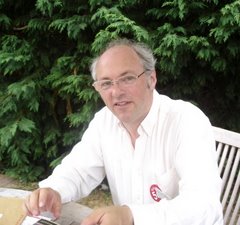
Interview with Alister McGrath, author of 'The Dawkins Delusion?'

Religious persuasion
Tuesday, February 06, 2007
By Judith Cole

World famous atheist Richard Dawkins' book The God Delusion was published to massive media hype last year. Now, in a major response to its claims, Alister McGrath (54,), Professor of Historical Theology at Oxford University, and his wife Joanna Collicutt McGrath (52), lecturer in the psychology of religion at University of London, hit back in their book The Dawkins Delusion?

Professor McGrath, who grew up in Downpatrick and attended Methodist College, Belfast, before becoming a research biochemist at Oxford and then an ordained priest in the Church of England, tells Judith Cole how he found faith in God and why it is atheism itself which is deluded

Reposted from:
http://www.belfasttelegraph.co.uk/features/daily-features/article2241900.ece

reposted from: http://richarddawkins.net/article,622,n,n
my highlights / emphasis / comments

What did you think of Richard Dawkins' book The God Delusion?

I thought it was very interesting but not very good. It contains a lot of hopeless exaggerations and rather odd arguments. My wife and I decided we would together write a response to identify the main line of arguments Dawkins uses and respond to them.


Richard Dawkins says that faith is irrational. What do you think?

Dawkins has this idea that faith is simply a refusal to think, a process of non-thinking. But it's obvious that people think a lot about their faith and this is grounds for evidence - but it's not the same as scientific proof. It belongs in a different category. We're particularly critical of his statements that religious people are not allowed to try and prove their beliefs when it's clear that lots of people do. In Belfast you might think of CS Lewis, an obvious example of a Christian who thought it was very important to set out the rational grounds for belief.

Dawkins says that because faith must be irrational, there has to be some biological or psychological way of explaining why so many people - in fact, by far the greater part of the world's population - fall victim to such a delusion. One of the explanations that Dawkins offers is that believing in God is like being infected with a contagious virus, which spreads throughout entire populations. Yet biological viruses are not merely hypothesised. They can be identified, observed, and their structure and mode of operation determined. This hypothetical 'virus of the mind' is an essentially polemical construction, devised to discredit ideas that Dawkins does not like.

As a scientist you spent years carrying out research in biochemistry at Oxford University before becoming a theologian. What do you say to Dawkins' claim that real scientists can't be religious believers?

It's obvious that this is simply not an adequate analysis of the situation. In the same year that Dawkins' book, The God Delusion, was published two other books came out, one called The Language of God: A Scientist Presents Evidence for Belief, by Francis Collins, who directed the human genome project, and the other was God's Universe, by Owen Gingerich, who is professor of astronomy at Harvard University. These are both top of the range scientists who say their Christian faith makes a lot more sense of science than anything else.

What about his main argument, that religion leads to violence and oppression?

Dawkins treats this as a defining characteristic of religion, airbrushing out of his somewhat skimpy account of the roots of violence any suggestion that it might be the result of political fanaticism - or even atheism. He is adamant that he himself, as a good atheist, would never fly aeroplanes into skyscrapers, or commit any other outrageous act of violence or oppression. Good for him. Neither would I. Yet the harsh reality is that religious and anti-religious violence has happened, and is likely to continue to do so.

As someone who grew up in Northern Ireland, I know about religious violence only too well. There is no doubt that religion can generate violence. But it's not alone in this. The history of the 20th century has given us a frightening awareness of how political extremism can equally cause violence. In Latin America, millions of people seem to have 'disappeared' as a result of ruthless campaigns of violence by right wing politicians and their militias. In Cambodia, Pol Pot eliminated his millions in the name of socialism. The rise of the Soviet Union was of particular significance. Lenin regarded the elimination of religion as central to the socialist revolution, and put in place measures designed to eradicate religious beliefs through the 'protracted use of violence.' One of the greatest tragedies of this dark era in human history was that those who sought to eliminate religious belief through violence and oppression believed they were justified in doing so.

They were accountable to no higher authority than the state.

Dawkins is clearly an ivory tower atheist, disconnected from the real and brutal world of the 20th century.

We make the point that religion can lead to violence and one of the things we need to work at very hard is to eliminate religious violence - but that means the reformation, not the abolition, of religion.

So who do you think Dawkins' book was written for?

The arguments that Dawkins put together can only lead to, at best, agnosticism or a very dogmatic form of atheism which isn't well grounded in facts. That makes me wonder who he wrote this book for. Clearly, Christian readers will say it's completely inaccurate, while more informed atheists will be very nervous about it because they'll say it's so simplistic and dogmatic that no one will take it seriously. I think the sort of person who reads it would be a poorly informed atheist who wants their faith reinforced.

Dawkins seems to think that saying something more loudly and confidently, while ignoring or trivialising counter-evidence, will persuade the open-minded that religious belief is a type of delusion. For the gullible and credulous, it is the confidence with which something is said that persuades, rather than the evidence offered in its support. Dawkins' astonishingly superficial and inaccurate portrayal of Christianity will simply lead Christians to conclude that he does not know what he is talking about - and that his atheism may therefore rest on a series of errors and misunderstandings. Ironically, the ultimate achievement of The God Delusion for modern atheism may be to suggest that it is actually atheism itself which may be a delusion about God.

He even compares believing in God like believing in Santa Claus or the Tooth Fairy

This is a very bad analogy to use. There is no empirical evidence that people regard God, Santa Claus and the Tooth Fairy as being in the same category. I stopped believing in Santa Claus and the Tooth Fairy when I was six, and after being an atheist for some years discovered God when I was 18. Many people come to believe in God when they're older, but I've yet to meet somebody who has started to believe in Santa Claus later on in life.

Why do you say that denying the existence of God on the basis of science is dishonest?

Science just doesn't take you there. It raises some very good questions about what God is like or whether we need to involve God at all. But what most science says is that you don't have to involve God in day to day explanations of how the world works.

So does Dawkins overstate the case for science in saying that it proves or disproves things relating to God?

Yes, and he's very naughty about this - often scientists say that what we believe today is the best way of looking at a certain thing, but in 20 years' time we might have changed our mind. Science is an ongoing project. Dawkins himself says in his book The Devil's Chaplain that in 150 years' time we may not believe Darwin's view of evolution any more. There are limits to science; science can't actually tell us the answer to lots of important questions such as whether there is there a God and what is the meaning of life.

What do you think was behind his writing the book?

I personally think that the public credibility of atheism is beginning to hit trouble, and that one of the reasons Dawkins wrote the book was to bolster the faith on the part of an atheism that's beginning to feel itself threatened. The big problem for atheism is that religion is coming back in a very big way, and if you're an atheist that shouldn't be happening. That helps us to understand the aggressiveness and hype you see in the book. It seems to me that what Dawkins presents us with is an atheism that is getting very shrill and angry because it feels it's not being taken seriously enough in Western culture.

Is atheism based on fear?

There is an element of fear. Atheism will appeal to someone who is very frightened about the resurgence of religion and the possibility of religious violence. One of the things the religious community needs to be aware of is the way it behaves and the impact on our church and faith.

As a schoolboy you were an atheist. What formed those beliefs?

I attended Down High School before going on to Methody to study pure and applied mathematics, physics and chemistry. It seemed obvious to me then that science led to atheism. Also, while I was at school the Troubles began and that seemed to confirm everything, that all religion did was generate conflict and violence, and therefore the best way of stopping conflict and violence was to get rid of religion. I tried, unsuccessfully, to start up an atheist society at school, which was certainly not a wise thing to do at the time and I didn't get much support!

Did your parents have any religious beliefs?

My parents (my father was a medical officer of health for Co Down; my mother was nurse at the Royal Victoria Hospital) belonged to the Church of Ireland and I tagged along to services most unwillingly, and when I was a boarder at Methody there were compulsory services, which I didn't like at all. But my parents were very good at letting me find my own way - but my way at that stage was reacting against the whole thing.

How did you find faith in God?

When I went to Wadham College at Oxford University in 1971 to study chemistry I was forced to re-examine my thinking. My own work in the sciences brought home to me that the link between science and atheism was much weaker than I thought, and also being confronted with very articulate Christians in Oxford showed me that my thinking was quite shallow. I realised that Christianity makes much more sense of things, and of life, than anything else. CS Lewis wrote: 'I believe in Christianity as I believe the sun has risen, not only because I see it but because by it I see everything else'. I would also argue that in terms of its own place in history the life, death and resurrection of Jesus is extremely well grounded. And above all, it's relevant.

What do you think future patterns in religion might be?

The real issue is that the heartland of Christianity these days isn't western Europe at all; it's places like Latin America and Africa. Just last week I received a copy of a book of mine which has been translated into Chinese by Peking University Press. Forty years ago the Peking University Press only published communist books and the reason they have started publishing mine is that there are so many Christians in China.

I think that Pentecostalism will be a big thing of future, even in Belfast and especially in working class areas, which is very interesting. In visiting various places in the world, I have noticed that in areas where Marxism used to predominate, such as some of the big slum areas of Latin America and the Philippines, Pentecostalism is popular today because it speaks very powerfully to people and takes their social concerns very seriously.

Is a public debate with Professor Dawkins on the cards?

I would like a proper discussion with him. This year I'm debating three of the world's leading atheists: Daniel Dennett, Peter Atkins and Susan Blackmore. As I know a lot about Richard Dawkins I think it would be good to have a discussion and see where it takes us.

The Dawkins Delusion?, £7.99, by Alister McGrath and Joanna Collicutt McGrath is published by SPCK

*******************
Some comments http://richarddawkins.net/article,622,n,n


12. Comment #20842 by Pi Guy on February 6, 2007 at 6:33 pm

"There is no empirical evidence that people regard God, Santa Claus and the Tooth Fairy as being in the same category...but I've yet to meet somebody who has started to believe in Santa Claus later on in life."

I see. Since people believe god is in a different category than Santa Claus it's a foregone conclusion that one is real and one is not. Does this somehow seem like a rational defense of his position?

If you're still believeing in Santa at 10 or 11, the other kids will make fun of you until you stop believing. I believe that in the not too distant future the same thing will happen when the kids find out that another kid believes in god.

16. Comment #20854 by tomjlawson on February 6, 2007 at 7:53 pm

Find me a violent act that inevitably doesn't come back to religion and I will find you on a different planet. Even the genocides of Darfur were religiously motivated because although it was Arab muslims killing African muslims the Arabs read the racial preference of Arabs in the Qu'ran. If religion is removed from the equation all violent acts fall apart. The biggest argument is that Hitler used eugenics and atheism to justify his exterminations. If there were no Judaism, what reason would Hitler have to murder 6 million of his citizens? Try six degrees of separation with every historical atrocity and I bet you it leads back to a religious idea, and most of them will not need all six degrees.

17. Comment #20858 by Heatnzl on February 6, 2007 at 8:00 pm

It's official: Prof. Dawkins is a very naughty boy!

21. Comment #20879 by stevencarrwork on February 6, 2007 at 10:23 pm

Once more, an article by McGrath is refreshingly short of any more evidence for God than it is for Santa Claus (who was a historical character by the way).

27. Comment #20894 by Myryama on February 7, 2007 at 12:57 am

I think the interviewer in this article is almost as much to blame as the interviewee. McGrath is allowed to get away with things like:

"But it's obvious that people think a lot about their faith and this is grounds for evidence - but it's not the same as scientific proof."

This should have been challenged with, at the very least, "Can we see your evidence?"

McGrath is an experienced, educated man but he refuses to apply his scientific knowledge and methods to his religious beliefs. It seems to me that he has reached a point in his understanding of the world where he simply can't move forward any further scientifically and so he has assumed that God is responsible for the things he doesn't understand.

There will be no "McGrath's laws of Biochemistry"; he's limited himself to a minor footnote in the annals of an obsolete and obscure department (Historical Theology!). How sad.

28. Comment #20895 by denoir on February 7, 2007 at 1:00 am

 avatarI'm with Dennett - this clearly has to be studied. While abandoning religion altogether may be rational and beneficial in a social sense, there is obviously an interesting psychological mechanism in play worth investigating.

It is absolutely remarkable to see how religion manages to short-circuit reason in otherwise intelligent, well-educated people. One could maybe rationalize some form of agnostic or vague pantheistic position - in the best case scenario it would be irrelevant. However when they get into specifics such as "I would also argue that in terms of its own place in history the life, death and resurrection of Jesus is extremely well grounded." some significant pathways in the brain have been short-circuited. The brain is apparently very capable of compartmentalizing certain information or models that is in stark conflict with other information and models stored in the same brain - without the higher level post-processing functions raising any alarms.

My guess would be that this comes from the duality of specialization of brain regions and adaptive capabilities. I would not be surprised if these beliefs were fairly localized in the brain. It is conceivable that there are specialized regions that are still adaptive but that bypass the standard sanity check done by the neocortex. That type of region could have some completely different task originally but are usually today adapted to religious beliefs. Or perhaps these are regions that are useful for children before they collect enough direct experience.

Either way, it must have something to do with the brain and it would be very interesting to have it properly investigated.

42. Comment #20980 by alfonso on February 7, 2007 at 7:34 am

Dawkins himself says in his book The Devil's Chaplain that in 150 years' time we may not believe Darwin's view of evolution any more.


But he does not say that in 150 years time we will believe in a complete negation of Darwin's evolution! We will have more data that will help us understand better the gaps that Darwin might have conjectured instead of proven scientifically.

Or in other words, we might not call it Darwin's evolution because other scientists contribution might have diluted the initial mass of Darwin's theory, but it certainly will be based in the same principles, because they are true!

We do not build planes like we did 100 years ago, but we still can fly!

46. Comment #21019 by Student Grant on February 7, 2007 at 9:59 am

At last, Northern Ireland leads the Western World in something;
'Northern Ireland Heads Western Bigotry Index'
http://news.ulster.ac.uk/releases/2007/2980.html
Is there a connection between our pre-eminence in both bigotry and superstitious beliefs? With journalists like Judith Cole we'll never know.

47. Comment #21020 by Suffolk Blue on February 7, 2007 at 9:59 am

cheshirecat - I supect that one of the reasons Richard "makes such a fuss" is that he believes the continued existence of the human race depends largely on our dumping religion.

48. Comment #21022 by L.Minnik on February 7, 2007 at 10:03 am

"Dawkins seems to think that saying something more loudly and confidently, while ignoring or trivialising counter-evidence, will persuade the open-minded that religious belief is a type of delusion. For the gullible and credulous, it is the confidence with which something is said that persuades, rather than the evidence offered in its support"

"...the link between science and atheism was much weaker than I thought, and also being confronted with very articulate Christians in Oxford showed me that my thinking was quite shallow. I realised that Christianity makes much more sense of things, and of life, than anything else."

Can't help but think that McGrath describes himself as 'gullible' because he does not say that it was the 'evidence' presented by the Christians that convinced him, meeting with 'articulate' Christians.


I am very curous to hear exactly what he wants to do to 'eliminate religious violence' on his next debate, and why he does not place atheists together with people believing religions without a personal god, since only his point of view is 'right.'

49. Comment #21030 by Thrall on February 7, 2007 at 10:52 am

"Is atheism based on fear?"

Ah, that's hilarious. I nearly fell off my chair, what a silly question. Who is asking these questions, his co-author?

"death and resurrection of Jesus is extremely well grounded."

Just demonstrating on what a loon this guy is. If you can explain resurrection, please, go ahead.

50. Comment #21038 by willerror on February 7, 2007 at 11:13 am

--But it's obvious that people think a lot about their faith and this is grounds for evidence - but it's not the same as scientific proof. It belongs in a different category.—

And later:

--I would also argue that in terms of its own place in history the life, death and resurrection of Jesus is extremely well grounded.--

Well, which is it? If religious belief requires no scientific proof and only faith, what does it matter if the life, death and resurrection of Jesus is "well grounded"?

53. Comment #21067 by mattjuan on February 7, 2007 at 1:26 pm

I would also argue that in terms of its own place in history the life, death and resurrection of Jesus is extremely well grounded. And above all, it's relevant.

Is this an example of academic irresponsibility? WELL GROUNDED? Well grounded in what?

55. Comment #21125 by captain underpants on February 7, 2007 at 4:45 pm

Mr McGrath speaks of "poorly informed atheists". Perhaps he could tell us what precisely it is theists know that atheists do not know.

59. Comment #21195 by Love58 on February 8, 2007 at 1:53 am

" I stopped believing in Santa Claus and the Tooth Fairy when I was six, and after being an atheist for some years discovered God when I was 18"

An atheist as a teenager and then found God at 18.

It took me 20 years of thinking about the existance of God before I was able to say I was an atheist.

I am not an atheist because I am frightened, I am not an atheist because of religious resurgence, I am an atheist because I do not believe there is a God.

70. Comment #21909 by csb on February 11, 2007 at 3:52 pm

McGrath: As someone who grew up in Northern Ireland, I know about religious violence only too well.

I doubt that Professor Dawkins is an expert on Irish politics, but even he had the sense to realise that the conflict here is about more than just religion. So McGrath is essentially shooting himself in the foot here.

Stern assumptions 'implausible' - Lord Lawson on Climate Change

Nigel Lawson seems to be the leading politician attempting to question current climate change thinking.

Lord Lawson
Lord Lawson says money should not be spent 'foolishly'
The Stern report into climate change is based on "implausible" economic and scientific assumptions, former Chancellor Lord Lawson has told MPs.

Lord Lawson said the report was a "biased" attempt to please ministers rather than an "objective" study.

And money would be better spent on dealing with the effects of climate change rather than trying to halt it.

Sir Nicholas Stern described Lord Lawson's criticisms of his work as "name-calling without substance".

Sir Nicholas, a former World Bank economist, said in his government-sponsored report it would cost 1% of annual global GDP to stabilise greenhouse gas emissions.

But the cost of doing nothing now would cause a 5% to 20% loss in GDP.

Ice age

Lord Lawson told the Commons Treasury committee he believed the scientific assumptions behind Sir Nicholas's report were imprecise.

It is not a very analytical use of language and I don't think it bears scrutiny frankly
Sir Nicholas Stern on Lord Lawson's critique

He accepted it was "highly likely" man-made carbon emissions had contributed to temperatures increasing 0.7C during the 20th century.

"It has played a part, but we don't know how big a part," the Conservative peer told MPs.

Some climate scientists were predicting "another ice age" in the next 100 years, Lord Lawson added, but even if temperatures were going up there was little mankind could do about it.

It would make more sense to "monitor" any changes and deal with any harmful consequences "rather than attempt at huge cost to cut back drastically, as the Stern report recommends, on carbon dioxide emmissions".

'Highly implausible'

Lord Lawson told MPs: "One of the oddities of this whole field is that you apply weather forecasting to economic forecasting to demographic forecasting, you pile uncertainty on uncertainty and then apparently you come to a certain conclusion of what we should do.

"I think that is highly implausible to anybody that stops to think about it."

Even under the worst case scenario set out by Stern, future generations would only be slightly worse off financially as a result of global warming, Lord Lawson said.

"The proposition is that we should ask the people of this generation [to] make considerable sacrifices now so that their grandchildren, their great grandchildren, are seven times as well off as they are today, rather than only six times as well off."

He accused Sir Nicholas of being unduly influenced by the government's environmental policy.

"The Stern report has turned out basically to be a work of advocacy... but I think a more objective, analytical approach would have been more helpful.

"He [Stern] ramps up the alleged costs of warming to an inordinate degree and the benefits of warming are scarecely mentioned.

"The costs of mitigation are, in my view, grossly understated and the whole thing is very biased."

'Name calling'

Lord Lawson said Britain would see "great benefits" from climate change over the next 100 years.

And investing in new technology - and building better flood defences - would be a "quicker and easier" way to deal with rising temparatures than cutting emissions.

"We should be careful about future threats but we should be careful not to spend money foolishly," he told the committee.

Sir Nicholas, appearing earlier before the same committee, described Lord Lawson's criticisms of his work as "name- calling without substance," adding he could refute each of Lord Lawson's points.

Asked about the peer's description of carbon trading schemes as "capricious and corrupt," he said: "It is not a very analytical use of language and I don't think it bears scrutiny frankly.

"The emissions trading scheme works in the EU, if you think of it in terms of a two year history".

reposted from: http://news.bbc.co.uk/1/hi/uk_politics/6334497.stm
my highlights / emphasis / comments

Health teams in flu pandemic test


Woman sneezing
It is feared that a flu pandemic could kill 400,000 people in the UK
Hundreds of health officials from across Britain have taken part in an exercise to see how to deal with a flu pandemic.

Officials stayed in a bunker at the Department of Health, in London, as part of the logistical exercise.

The strategic trial is thought to be the biggest emergency planning event since the end of the Cold War.

Officials estimate that a flu pandemic would affect one in four people and cause 400,000 deaths in the UK.

The NHS is ready to implement its well-rehearsed plan
Sir Liam Donaldson
Chief Medical Officer for England

It is feared that the H5N1 strain of bird flu, which has killed 167 people, mostly in South East Asia, could mutate into a form that would put millions of people at risk worldwide.

At present, this virus cannot pass easily from human to human, and remains essentially a disease of birds.

But in theory if it mixed with a human flu virus it could mutate into a much more dangerous form.

Dummy run

In the trial scenario, the first infected person was a businessman from Surrey who recently returned from South East Asia.

The operation was an attempt to estimate the way in which certain aspects of the country's infrastructure, such as health, transport, education and food distribution would keep working during an outbreak.

Under current planning for an outbreak, schools would be closed in areas suffering an outbreak, to protect children and stem the spread of the disease.

A dedicated "flu line" would field calls from the public, and be used to distribute the stockpiles of Tamiflu antivirals to those who had symptoms of the virus, although there are concerns the "worried well" may attempt to gain the drugs unnecessarily.

Prototype vaccines could be given to health care workers who are most at risk of catching the flu, but there are currently no plans to vaccinate ministers and government officials.

Pressure

Hospitals may be put under extreme pressure - with some A&E units forced to closed, and patients transferred to other hospitals.

Employers might be asked to stagger working hours to prevent overcrowding on public transport in a bid to limit transmission.

People with flu symptoms would be asked to stay at home, but it is not expected the government would step in to cancel sporting events or other mass gatherings.

Sir Liam Donaldson, Chief Medical Officer for England, said: "When a flu pandemic hits the country the top priority for the government is to protect the public.

"The World Health Organization has said that the UK is at the forefront of preparations internationally, but it is always necessary to test our responses and improve them where required.

"This exercise is another part of the continual testing, refining, and developing of our plans.

"The NHS is ready to implement its well-rehearsed plan."

reposted from: http://news.bbc.co.uk/1/hi/uk/6377655.stm
my highlights / emphasis / comments

Think Humanist - Why treat religion as an endangered animal? - Julian Baggini

Julian Baggini talks about religion, atheism and the analogy with endangered species.

Julian Baggini

Julian Baggini is a British philosopher and writer. He is the author of The Pig that Wants to be Eaten and 99 other thought experiments (2005) and is a co-founder and editor of The Philosophers' Magazine. He has written for The Guardian, The Independent, The Observer, and the BBC, and has been a regular guest on BBC Radio 4's In Our Time. Baggini was awarded his Ph.D. in 1996 from University College, London for a thesis on the philosophy of personal identity. His forthcoming book: Welcome to Everytown: A Journey into the English Mind is published by Granta in march www.julianbaggini.com
Download the transcript of this Thought For Today


20-02-2007 (1.34 MB)
Download Julian Baggini - Duration: 2:55

Thought For The Day - Transcript - Julian Baggini - 16th February 2007

Isaiah Berlin divided thinkers up into either hedgehogs or foxes, depending on whether they knew one thing or many. I’d like to propose another mammalian distinction, one of belief systems rather than individuals, between squirrels and pandas. To some squirrels are adorable little critters; to others, they are rats with bushy tails who should be wiped out. But whatever you think of them, they thrive and propagate in the wild, without artificial assistance. Pandas, in contrast, are doomed to die out without special protection and nurturing.

From where I’m standing, both religion and atheism look squirrel-like to me. Provoking affection and scorn in equal measure, both are to be found everywhere human life flourishes.

But some people who claim to be friends of religion seem to want to treat it as though it were a panda, and afford it special protection. Sometimes it is placed in relatively pokey sanctuaries, like a ring-fenced period of time in the television or radio schedules; or a small prayer room. On other occasions the protected zone can be more extensive, such as when it means reserving seats in the second chamber of parliament for representatives of religions, or allowing denominational and single-faith schools. If I were religious I’d be concerned that my faith were being treated as though it were a species of belief so unable to cope in the modern, harsh world that it needed its own special conservation zones to stop it going extinct. It may be objected that a scared space is needed, not because religion is weak and vulnerable, but because society is now overwhelmingly secular. But this is a peculiar argument.

Our supposedly secular society is not an atheist one. It is simply neutral as regards matters of fundamental belief, so religion is no more in need of a sanctuary from the secular world as any other form of belief, including atheism. For those who care about religion, there is also a worry that segregation sends out a signal that it stands apart from the business of everyday life. By separating faith schools from other schools, faith programmes from other broadcasts, faith groups from other voluntary organisations, doesn’t it give ammunition to critics who maintain that religion has nothing to do with the everyday life of ordinary people? The challenge to religion’s various claims to special status is therefore not essentially anti-religious at all. If religion is real, relevant and vibrant, then let it enter the mainstream on all fours with other species of belief and show itself fit.

Only if it were impotent and maladapted, like the hapless Panda, would it need special, protected spaces.

Think Humanist Thought for the Day - Nigel Warburton

Nigel Warburton talks about the significance of death

Monday, February 19, 2007

Science Cafe, Bristol, Monday 26th at the Tobacco Factory

Upcoming Science Cafe in Bristol event. Wish I could go.

Vala Ragnarsdottir - One Planet Living: Delivering a habitable planet for future generations. Vala is Professor of Earth Sciences at Bristol University.

Top climate change scientists have come to the conclusion that an increase of more than 1C° from present temperatures in the coming century would deliver a different planet, with impacts including flooded lowlands, submerged islands, increases in severe weather and droughts, hundreds of millions of human refugees and over 50% extinction of species.

To avoid this 1 degree temperature rise we need to stabilise the CO2 in the atmosphere to below 450 ppmv. This means we need to reduce CO2 emissions by roughly 70% globally by 2030. To deliver a habitable planet to our grandchildren individuals and political leaders need to act now.

Vala will describe the "state we are in" and then some practical steps for individuals "to do their bit".

Bob Foster
0117 9730461

www.sciencecafe.co.uk

Sunday, February 18, 2007

Why do placebos work?

Tor Wager makes his living inflicting pain. As a psychologist at Columbia University, he zaps people with brief electric surges in order to study the placebo effect, one of the most mysterious phenomena in modern medicine. In one recent experiment, Wager and a group of colleagues delivered harsh shocks to the wrists of 24 test subjects. Then the researchers rubbed an inert cream on the subjects’ wrists but told them it contained an analgesic. When the scientists delivered the next set of shocks, eight of the subjects reported experiencing significantly less pain.

The idea that an innocuous lotion could ease the agony of an electric shock seems remarkable. Yet placebos can be as powerful as the best modern medicine. Studies show that between 30 and 40 percent of patients report feeling better after taking dummy pills for conditions ranging from depression to high blood pressure to Parkinson’s. Even sham surgery can work marvels. In a recent study, doctors at Houston’s Veterans Affairs Medical Center performed arthroscopic knee surgery on one group of patients with arthritis, scraping and rinsing their knee joints. On another group, the doctors made small cuts in the patients’ knees to mimic the incisions of a real operation and then bandaged them up. The pain relief reported by the two groups was identical. “As far as I know, the placebo effect has never raised the dead,” says Howard Brody, a professor at the University of Texas Medical Branch and author of a book on the subject. “But the vast majority of medical conditions respond to placebo at least to some degree.”

How do placebos have such an effect? Nobody knows. Studies have shown that our brains can release chemicals that mimic the activity of morphine when we’re treated with placebo analgesics. But only lately have researchers begun to pin down the underlying physiological mechanisms. In his groundbreaking electrical-shock experiment, Wager used functional MRI to examine images of the brain activity of his subjects. When a person knew a painful stimulus was imminent, the brain lit up in the prefrontal cortex, the region used for high-level thinking. When the researchers applied the placebo cream, the prefrontal cortex lit up even brighter, suggesting the subject might be anticipating relief. Then, when the shock came, patients showed decreased activity in areas of the brain where many pain-sensitive neurons lead.

One day, this sort of research could point toward new treatments that harness the mind to help the body. Until then, doctors are divided on the ethics of knowingly prescribing placebos. Some think it’s shady to perform mock surgery or offer a patient pills that contain no active ingredients. Yet the best doctors have always employed one form of placebo: Studies show that empathy from an authoritative yet caring physician can be deeply therapeutic. Maybe handing out the occasional sugar pill isn’t such a bad idea.

Shannon Brownlee, senior fellow at the New America Foundation

Return to Big Questions: http://www.wired.com/42

There is an argument that the placebo effect works because there is an evolutionary advantage in our ability to respond to treatment (no matter what), but I think that one thing worth considering is the fact that medication very often represents treatment by others.

Perhaps as social organisms our awareness of being valued by others is reason in itself to respond to placebos. This could be the case when we are provided with medication by another person (representing to us our value or worth to others) or in the case of an ill person with dependents, self administration would be symbolic of the dependents' need for the ill person. In either case the medication or treatment becomes a token of social status and worth.

By this reading the placebo effect could be explained as part of the same spectrum of phenomena that includes at one end very ill people's apparent capacity to live long enough to see important events in their lives (births, marriages etc.) and at the other end the clearly detrimental effects of treatments representing low worth (e.g. solitary confinement.)

Autism is (as I understand it) the inability to read social cues. If that is the case it may be worth investigating whether autistic people have a relatively diminished response to placebos...

http://entrepot.blogspot.com/

contributed by Guest User on Jan 24 4:19pm


In Chinese medicine, the mind itself is a vital substance in the body. They call this substance "Shen" and consider it a major player in disease and healing processes. It is not merely an esoteric or spiritual component, but an aspect of physiologic function that is deeply integrated with the blood and body structures. From this vantage point, activating the mind means activating physiologic function.

There's great flurry in neurology regarding the search for memory - how exactly do we store and process memory? Yes, we can locate specific filing locales in the brain, but that alone is insufficient to explain all facets of memory. Many believe and seek to prove that memory is stored in every cell in the body, somehow regenerated and/or lost as cells regenerate and function. Western science has also had a lot of fun discovering levels of communication between organ systems and the brain, pathways we once assumed were unidirectional now reveal sophisticated two-way dialogues. The digestive system and the heart each send independent messages to the brain and "make decisions" on their own. There is more to the way we function than just a brain running the show. That's like saying the CPU and motherboard in my laptop are typing these vowels and consonants, turning them into words, phrases and concepts.

The mind is not the brain. It is what runs the brain, and the entire body. It is substantial and esoteric simultaneously and we brain-thinkers tend to stop short of understanding what the mind truly is. If two elementary cells can differentiate into the complex organs, materials and personality of a human being, why not believe that the mind in charge of the body has the capacity to rewrite any program it chooses? Pain can be overcome by thought. Pain can be caused by thought. Why not?

Laurie Perez, L.Ac
http://www.xincare.com

contributed by Laurie Perez on Feb 6 9:51am


Most placebos have an apparent 'effect' in diseases or conditions in which subjective perception is known to make a difference. Our perception of pain is well known to be influenced by both psychological and socio-cultural factors. We interpret the effects of these influences as the powerful involvement or our minds on our somatic selves.

Where the so-called placebo effect fails to manifest itself is in diseases with more concrete biological origins. Take cancer, for instance. As scientists, we study the therapeutic effects or our high-tech, genomic research derived biological treatments, often comparing them to placebo. We express our results as either worse, the same or, hopefully, better than placebo. Looking at historical data on cancer outcomes, we easily conclude that the placebo effect is no different than the natural outcome of that particular cancer. While the 30 or 40% placebo 'effect' is often seen when the placebo is compared to a real treatment (ie 30% of participants treated with placebo report improved fill in the blank vs x% with study medication) . Placebo vs nothing has no effect in cancer. In other words, while pain may be modulated by whatever you want to define as the 'mind', cancer, and other biological diseases are not subject to these influences. Sure there are case reports and anecdotal evidence of cancers getting 'better' because of this or that belief, but these are very poorly documented, studied and entirely irreproducible.

We've cloned the entire human genome, we are in the process of systematically decoding its secrets. We are at the dawn of a quantum leap in our understanding of human physiology and disease. But just because there is still so much modern science does not understand, does not mean that we should jump to conclude that antiquated theories of 'vital substances' should rush in to fill those lacunes.

Michael Sebag, MD, PhD.


The point of mentioning Shen and mind as a vital substance was to describe the perception of Chinese medicine on how placebo might work, not to negate the merits of genomic discovery. Contrary to popular misconceptions, Chinese medicine does not rely on thought or belief for treatment; it relies on physical therapies, internal medicine and lifestyle / nutritional regulation. In other words, it is equally focused on the physical body and its biology.

The CM theory of how the mind plays a role in physiology may belong to a very old medical paradigm, but it's not actually outdated or in conflict with the discoveries of the current era. It may simply hold one of those keys to decoding a mystery as intriguing as the placebo effect.

Laurie Perez, L.Ac
http://www.xincare.com

contributed by Laurie Perez on Feb 6 2:24pm


I agree, the theory of 'vital substances' to explain physiological responses does not in any way negate the merits of genomic research. What it does, however, is somewhat more nefarious, as it attempts to comprehensively fill in the gaps that lie beyond the leading edge of our research endeavours. While I agree that there are merits in Chinese traditional medicine, much of it remains unexplained, incomprehensible and irreproducible in scientific settings. Centuries of practice has led to an empiric knowledge of the effects of certain herbs, roots, tree barks and preparations. The biochemistry, pharmacology and physiology needed to understand these effects are only now being applied to the study of tranditional Chinese medicine. A quick look at scientific publications on a variety of traditional Chinese therapies reveals that these may have specific reproducible biochemical properties. Not all of them work, but some do. Those that do, likely do not rely on a placebo effect.

As a society, we spend an exceedingly large amount money on the exploitation of the 'placebo' effect. Many 'alternative' therapies are at best, unproven, although I admit that they may 'stimulate' the placebo effect. The problem is that as placebos, 'alternative' therapies are expensive. We have turned down too many cancer patients that could benefit from our newly discovered biological therapies. These new targeted therapies cost, sometimes unjustifiably, a fortune and we are running out of money. Why waste so much of our precious health-care dollars on expensive placebos?

contributed by Michael Sebag on Feb 6 3:42pm


In my opinion, the theory of 'vital substances' should be understood in a way similar to our understanding of the theory of the 'atom'. There is no 'atom' as the term was originally meant -- an indivisible particle. Go down far enough, and everything is patterns of energy. The word 'atom' remains useful as a signifier in the context of our ongoing work in physics, and our definition and understandings of 'atoms' continue to expand. Similarly, the Chinese Medical theory of 'vital substances' is useful within the context of CM practice. We may never find a physical entity we could call 'shen' (or 'chi' or 'jing', to name the other two vital substances). The meaning of 'substance' in the phrase 'vital substance' has never meant a visually observable physical entity, however. A better translation of 'substance' into the terminology of modern science might be 'perceptible web of causation in the body'.

This concept of a web of causation, where everything is a dependent variable of everything else, is the essence of Chinese Medical theory. It is also something that modern science is still struggling to come to grips with. It is clear that biological systems are immense webs of nested and inter-locking feedback loops; nonetheless, most biomedical research is done using traditional experiment structures attempting to isolate a the behavior of a dependent variable.

In looking at the effects we call 'placebo', it might be useful to investigate the patterns that produce these 'placebo' effects -- or the 'spontaneous remissions' that happen in some cases where no 'placebo' application has been recorded. The words 'placebo' and 'spontaneous remission' both remove our attention from what has happened: a person got well through a mechanism we do not currently understand. The various systems of our bodies, coordinated through a wide range of information transfer mechanisms, continuously maintain our well-being. For example, most cancers are eliminated by the immune system before they are detected by any sort of medical system. Biomedicine has given up on the ancient Greek theories of 'vital substances', and for good reasons. Unfortunately, we now lack terminology and a philosophy of experimental inquiry that would allow us to easily investigate the aspects of the human system that make us whole. (There are numerous inroads being made of course -- the work of neuroendocrinologists such as Candace Pert, and the heart-brain-body interactions described as 'physiological coherence' by the HeartMath Institute researchers are two examples).

Whether we use (and redefine through research) Chinese words like 'shen' to represent the information patterns within the body that make us whole, use and redefine English words like 'spirit' and 'integrity', or we invent new words that better suit our modern sensibilities, we will undoubtedly require such a concept to understand the way in which people become well.

Nathaniel White
contributed by Nathaniel White on 2007-02-09 12:05 GMT

reposted from: http://www.eu.socialtext.net/wired-mag/index.cgi?why_do_placebos_work
my highlights / emphasis / comments

What do scientists mean by 'theory'?

Posted on: February 10, 2007 3:33 PM, by Janet D. Stemwedel

In my basic concepts post on theory testing, I set out what I take to be a fairly standard understanding of "theory" in philosophy of science discussions:

... a theory is a group of hypotheses that make claims about what kind of entities there are and how those entities change over time and interact with each other. If you like, the theory contains claims about ontology and laws. If you prefer, the theory tells you what kind of stuff there is and how that stuff behaves.

In a comment, Lab Lemming opined:

That's a really odd way to think of theories. I reckon a theory is something that is both sufficiently broad and sufficiently tested that a scientist can use it to figure out how to frame a question in a testable manner.

For example, if you're looking into an outbreak of a drug resistant germ, you can use the theory of evolution to design an experiment that will test how this resistance arose, and how effective it is against other drugs.

Now, I don't think these two descriptions of a theory are necessarily contradictory, although the theory-as-set-of-hypotheses I'm describing might not be well tested (i.e., it could be a new theory). Indeed, it seems like having some picture of what kind of stuff you're dealing with and some of the ways that stuff behaves it at least extremely helpful, if not absolutely necessary, to the framing of questions in a testable manner.

The thing that interests me here is the possibility that scientists think of "theory" in a different way than the philosophers of science who are trying to make sense of what scientists are doing. So, a question to the scientists: How would you define (or at least describe) a theory? If you think it's relevant (and it may well be), indicate your scientific field.

Once we have some "empirical data" on this, I'll give you my hunches as to what may be behind some of the differences in perspective.

Comments

Here was my take from a while back:

http://cosmicvariance.com/2005/09/19/theories-laws-facts/

Basically, if what you care about is how scientists use the word theory, rather than some prescriptive notion of how it should be used, you have to face up to the fact that the usages are wildly varying and inconsistent. Sometimes it just means "a model," other times it means "a subject area," other times it means "a well established set of rules and ideas." I worry about pretending that it means something more specific and well-defined than it really does.

Posted by: Sean Carroll | February 10, 2007 04:55 PM

As a follow-up, here is some empirical data, in the form of papers in the SPIRES high-energy physics database that use the word "theory" in the title:

http://www.slac.stanford.edu/cgi-bin/spiface/find/hep/www?rawcmd=t%20theory&FORMAT=WWW

It's easy to see all of the above meanings, plus several more.

Posted by: Sean Carroll | February 10, 2007 04:59 PM

As a theorist (of soft matter; polymers and the like), I think an important element of a theory is that it is a (somewhat) comprehensive model of a class of phenomena. An equation is not, by itself, a theory. A prediction is not, by itself, a theory. In order to qualify as a theory, a model has to provide an explanation for some already-observed phenomenology and a prediction for some other (already observed, or capable of being observed, at least technically) phenomenology. Your definition makes sense, but it's not really how I would think of a theory while in the process of developing one.

Posted by: Capella | February 11, 2007 12:56 AM

I tend to regard science as an excercise in building (and testing) explanatory links between disparate observations and data; so I think of a theory as the description of all the links between a particular set of data, as well as an assessment of how well-supported those links are (tested to death, seemingly well-supported, speculative).

I'd guess Lemming is just making the point that theories are not solely an end in themselves, but that they are also used as tools - people use the present pattern of links to propose new connections, or transplant them into new fields.

Posted by: gengar | February 11, 2007 06:10 AM

I take back the well-tested requirement for theories.

Or, rather, I admit that it was a value judgement on my part- that I think that scientists are generally better off using those sorts of theories.

As Sean points out in his blog, some theories, like phlogiston, or lamarkian evolution, don't hold up very well at all. So there are good theories and bad theories.

However, I don't think you can tell the difference between them by any sort of logical proof or analysis. I think the most appropriate way to evaluate theories is on the basis of their utility. There are useful theories, and theories that are a waste of time. And judging theories by their utility gives us a handy way to differentiate science from philosophy, logic or religion, which deal in non-scientific matters like truth and correctness.

I have a half-baked explanation of how this applies to evolution written somewhere, which I'll try to find, finish, and post.

Posted by: Lab Lemming | February 11, 2007 06:30 AM

I'm in comparative religions... do social scientists count?

We use theory to focus in on the giant pile of data in our field, to tease out specific elements we want to examine. It's a necessary tool for methodological reduction.

Posted by: John B | February 11, 2007 08:32 AM

To me a theory is a set of experiments incorporated into a story which lets you make predictions about experiments to come. Thus you have a theory in your head, and in that framework you construct hypotheses which you can test.

I think a lot of divergence comes in the barriers you set yourself in how you can tell stories from a theory, and what the relevant objects are (if you're worrying about binary effects of having genes, the structure looks rather different than if you're fighting with the 23rd decimal place of a measurement of a physical constant).

Posted by: Frederick Ross | February 11, 2007 09:40 AM

I agree with Sean, that the problem is that theory has several, closely related, meanings in science. I think you need a lexicographer to tease out these meanings.

Bob

Posted by: Bob O'H | February 11, 2007 11:24 AM

We don't need no stinkin' lexicographer!

That is to say: What I'm really asking for is not the officially way Science defines Theory. Rather, I'm interested in how actual scientists in various scientific fields and contexts use the word theory. (Lexicographers need to attend to usage, I reckon.) So, I'm under no illusion that all the things people mean by "theory", or expect should come along with a "thoery", or would identify in contrast to "theory" will line up neatly.

I just want some good reports from the field, as it were.

Posted by: Janet D. Stemwedel | February 11, 2007 02:32 PM

I tend to think of a theory first as a system for establishing correspondences between the terms and operators of some formalism on the one hand, and objects, processes, and relationships of phenomena in the world on the other hand. That is, theories are interpretations of formalisms.

Testing theories then resides in messing with the transition rules of the formalism to generate predictions of what will happen if the corresponding objects, processes, and relationships are altered in a similar way. For example, interpreted in terms of objects and operations performed on them, F=MA suggests that if I pare some M off an object and accelerate it, measured F will be a specified amount less than it was before I did the paring at the same acceleration. Lots of tests tend to more strongly corroborate the theory (formalism plus correspondence rules).

The formalism doesn't necessarily have to be expressed in explicit equations. I do applied work with evolutionary algorithms -- simulations -- and theory tells me about correspondences between the processes in the model running in the computer and the phenomena of interest in complex adaptive systems. Multiple runs of the simulators under plausible perturbations provide ranges of outcomes to be expected in the world of phenomena we model, and the veridicality of those predicted outcomes are tested with real money every day in various derivatives markets. Trading in negative-sum markets is much less forgiving of invalid or plain wrong theories than are one's (former) academic colleagues. :)

Posted by: RBH | February 11, 2007 06:46 PM

Lexicographers need to attend to usage, I reckon.

I was assuming they did! At least the approach the OED takes is descriptive - i.e. they describe the way words are used. I agree that having a prescriptive lexigographer involved would be awful.

I think a survey of usage would be useful, and may have been done. But searching lexicographal journals for "theory" and "science" may not be the wisest way of finding it.

Bob

Posted by: Bob O'H | February 14, 2007 03:09 AM

My $.02 worth on this topic:

Science starts with an observation. You devise a hypothesis to explain the observation. Then you use the hypothesis to make predictions. Then you test the predictions. If the predictions are wrong, then you go back and try a different hypothesis. If the predictions are correct, you try to expand the hypothesis to be more general and more powerful. A very general, very complex hypothesis that makes lots of verifiable predictions and explains lots of different observations is called a theory.

I still call things like phlogiston and Ptolemaic astronomy by the term "theory" because they were well-meant attempts to form theories, using the best evidence then available. They failed because they didn't agree with the facts, not because they were internally flawed or illogical.

Posted by: wolfwalker | February 14, 2007 08:12 AM

Action plan for killer asteroids

By Jonathan Fildes
Science and technology reporter, BBC News, San Francisco

Asteroid Mathilde  Image: Nasa
Nasa is tracking many asteroids
A draft UN treaty to determine what would have to be done if a giant asteroid was on a collision course with Earth is to be drawn up this year.

The document would set out global policies including who should be in charge of plans to deflect any object.

It is the brainchild of the Association of Space Explorers, a professional body for astronauts and cosmonauts.

At the moment, Nasa is monitoring 127 near-Earth objects (NEO) that have a possibility of hitting the Earth.

The association has asked a group of scientists, lawyers, diplomats and insurance experts to draw up the recommendations.

The group will have its first meeting in Strasbourg in May this year. It is hoped the final document will be presented to the UN in 2009.

"We believe there needs to be a decision process spelled out and adopted by the United Nations," said Dr Russell Schweickart, one of the Apollo 9 astronauts and founder of the Association of Space Explorers.

Known threat

The threat of an asteroid hitting the Earth is being taken more and more seriously as more and more NEOs are found.

In the US, Congress has charged Nasa with the task of starting a more detailed search for life-threatening space rocks.

"Congress has said that Nasa's efforts to date are not sufficient to the threat," said the US space agency's Dr Steven Chesley.

"They have changed Nasa's targets so that the cataloguing and tracking of asteroids is part of its mandate."

Congress has asked the agency to mount a much more aggressive survey.

At the moment, Nasa tracks all objects greater than 700m (2,300ft) in diameter. The agency's new goal is to track all objects greater than 70m (230ft) in diameter.

To do this, the agency needs to use a new suite of telescopes.

Alternatives include building a new Nasa-owned system or investing in other proposed telescopes such as the Large Synoptic Survey Telescope (LSST) or the Panoramic Survey Telescope & Rapid Response System (Pan-Starrs).

Pan-Starrs is a wide-field telescope being developed at the University of Hawaii, whilst the LSST is a proposed ground-based instrument being developed by the not-for-profit LSST corporation based in the US.

Nasa estimates that there are about 20,000 potentially threatening asteroids yet to be discovered.

"Out of those thousands, there will be without question many that look like they might hit the Earth with a high enough probability that the public and everyone else will be concerned," said Dr Schweickart.

"This has gone from being an esoteric statistical argument to talking about real events," added Dr David Morrison, an astronomer at the Nasa's Ames Research Center.

Future plans

The UN draft treaty would establish who should be in charge in the event of an asteroid heading towards Earth, who would pay for relief efforts and the policies that should be adopted.

In addition, it would set out possible plans to deflect the object.

Ideas could include hitting the asteroid with a spacecraft or rocket to deflect its orbit.

Other less destructive proposals include a "gravity tug" that would simply hover over the asteroid and use gravity as a "towline" to change its path.

But any decision to deflect an NEO could come with its own set of conundrums for the UN, as changing its path may simply alter its final target.

"It's important to understand when you start to deflect an asteroid that certain countries are going to have accept an increase in risk to their populations in order to take the risk to zero for everyone," said Dr Schweickart.

It is difficult decisions like this which can only be addressed by the UN, the Association of Space Explorers believes.

And it is under no illusion that the process can be sorted out quickly.

"You have to act when things look like they are going to happen - if you wait until you know for certain, it's too late," said Dr Schweickart.

Experts who will draw up the treaty include Lord Rees, the English Astronomer Royal and head of the Royal Society; the ex-director of science at the European Space Agency, Roger Bonnet; and former UK government advisor Sir Crispin Tickell.

The proposals were outlined at the American Association for the Advancement of Science (AAAS) annual meeting in San Francisco, US.

reposted from: http://news.bbc.co.uk/1/hi/sci/tech/6370817.stm
my highlights / emphasis / comments

Karl Popper - contribution to Scientific Method

Sir Karl Raimund Popper is counted among the most influential philosophers of science of the 20th century (also wrote extensively on social and political philosophy - not included here). Popper is perhaps best known for repudiating the classical observationalist-inductivist account of scientific method by advancing empirical falsifiability as the criterion for distinguishing scientific theory from non-science.

In 1934 he published his first book, Logik der Forschung (The Logic of Scientific Discovery), in which he criticised psychologism, naturalism, inductionism, and logical positivism, and put forth his theory of potential falsifiability being the criterion for what should be considered science.

Philosophy of Science

Popper coined the term critical rationalism to describe his philosophy. The term indicates his rejection of classical empiricism, and of the observationalist-inductivist account of science that had grown out of it. Popper argued strongly against the latter, holding that scientific theories are universal in nature, and can be tested only indirectly, by reference to their implications. He also held that scientific theory, and human knowledge generally, is irreducibly conjectural or hypothetical, and is generated by the creative imagination in order to solve problems that have arisen in specific historico-cultural settings. Logically, no number of positive outcomes at the level of experimental testing can confirm a scientific theory, but a single counterexample is logically decisive: it shows the theory, from which the implication is derived, to be false. Popper's account of the logical asymmetry between verification and falsification lies at the heart of his philosophy of science. It also inspired him to take falsifiability as his criterion of demarcation between what is and is not genuinely scientific: a theory should be considered scientific if and only if it is falsifiable. This led him to attack the claims of both psychoanalysis and contemporary Marxism to scientific status, on the basis that the theories enshrined by them are not falsifiable.

Popper also wrote extensively against the famous Copenhagen interpretation of quantum mechanics. He strongly disagreed with Niels Bohr's instrumentalism and supported Albert Einstein's realist approach to scientific theories about the universe. Popper's falsificationism resembles Charles Peirce's fallibilism. In Of Clocks and Clouds (1966), Popper said he wished he had known of Peirce's work earlier.

In All Life is Problem Solving, Popper sought to explain the apparent progress of scientific knowledge—how it is that our understanding of the universe seems to improve over time. This problem arises from his position that the truth content of our theories, even the best of them, cannot be verified by scientific testing, but can only be falsified. If so, then how is it that the growth of science appears to result in a growth in knowledge? In Popper's view, the advance of scientific knowledge is an evolutionary process characterised by his formula:

PS_1 \rightarrow TT_1 \rightarrow EE_1 \rightarrow PS_2

In response to a given problem situation (PS1), a number of competing conjectures, or tentative theories (TT), are systematically subjected to the most rigorous attempts at falsification possible. This process, error elimination (EE), performs a similar function for science that natural selection performs for biological evolution. Theories that better survive the process of refutation are not more true, but rather, more "fit"—in other words, more applicable to the problem situation at hand (PS1). Consequently, just as a species' "biological fit" does not predict continued survival, neither does rigorous testing protect a scientific theory from refutation in the future. Yet, as it appears that the engine of biological evolution has produced, over time, adaptive traits equipped to deal with more and more complex problems of survival, likewise, the evolution of theories through the scientific method may, in Popper's view, reflect a certain type of progress: toward more and more interesting problems (PS2). For Popper, it is in the interplay between the tentative theories (conjectures) and error elimination (refutation) that scientific knowledge advances toward greater and greater problems; in a process very much akin to the interplay between genetic variation and natural selection.

Where does "truth" fit into all this? As early as 1934 Popper wrote of the search for truth as one of the "strongest motives for scientific discovery." Still, he describes in Objective Knowledge (1972) early concerns about the much-criticised notion of truth as correspondence. Then came the semantic theory of truth formulated by the logician Alfred Tarski. (Its first published form was in 1933.) Popper writes of learning in 1935 of the consequences of Tarski's theory, to his intense joy. The theory met critical objections to truth as correspondence and thereby rehabilitated it. The theory also seemed to Popper to support metaphysical realism and the regulative idea of a search for truth.

Critics

The Quine-Duhem thesis argues that it's impossible to test a single hypothesis on its own, since each one comes as part of an environment of theories. Thus we can only say that the whole package of relevant theories has been collectively falsified, but cannot conclusively say which element of the package must be replaced. An example of this is given by the discovery of the planet Neptune: when the motion of Uranus was found not to match the predictions of Newton's laws, the theory "There are seven planets in the solar system" was rejected, and not Newton's laws themselves. Popper discussed this critique of naïve falsificationism in Chapters 3 & 4 of The Logic of Scientific Discovery. For Popper, theories are accepted or rejected via a sort of 'natural selection'. Theories that say more about the way things appear are to be preferred over those that do not; the more generally applicable a theory is, the greater its value. Thus Newton’s laws, with their wide general application, are to be preferred over the much more specific “the solar system has seven planets”.

Thomas Kuhn’s influential book The Structure of Scientific Revolutions argued that scientists work in a series of paradigms, and found little evidence of scientists actually following a falsificationist methodology. Popper's student Imre Lakatos attempted to reconcile Kuhn’s work with falsificationism by arguing that science progresses by the falsification of research programs rather than the more specific universal statements of naïve falsificationism. Another of Popper’s students Paul Feyerabend ultimately rejected any prescriptive methodology, and argued that the only universal method characterizing scientific progress was anything goes.

Popper seems to have anticipated Kuhn's observations. In his collection Conjectures and Refutations: The Growth of Scientific Knowledge (Harper & Row, 1963), Popper writes, "[S]cience must begin with myths, and with the criticism of myths; neither with the collection of observations, nor with the invention of experiments, but with the critical discussion of myths, and of magical techniques and practices. The scientific tradition is distinguished from the pre-scientific tradition in having two layers. Like the latter, it passes on its theories; but it also passes on a critical attitude towards them. The theories are passed on, not as dogmas, but rather with the challenge to discuss them and improve upon them."

Another objection is that it is not always possible to demonstrate falsehood definitively, especially if one is using statistical criteria to evaluate a null hypothesis. [citation needed] More generally, it is not always clear that if evidence contradicts a hypothesis that this is a sign of flaws in the hypothesis rather than of flaws in the evidence. However, this is a misunderstanding of what Popper's philosophy of science sets out to do. Rather than proffering a set of instructions that merely need to be followed diligently to achieve science, Popper makes clear in The Logic of Scientific Discovery his belief that the resolution of conflicts between hypotheses and observations can only be a matter of the collective judgement of scientists, in each individual case. [6]

reposted from: Wikipedia
my highlights / emphasis / comments