Saturday, November 18, 2006

BMW Series 7 car runs on Hydrogen


1. Fuel tank, holds approx 8kg of liquid hydrogen at -253C
2. Petrol tank, with 74 litre capacity
3. Pressure control valve
4. Internal combustion engine, uses petrol or liquid hydrogen
Source: BMW

BMW's hydrogen car: Beauty or beast? from BBC News (edited by Chris Street)

As one of the first journalists to drive the world's first series-produced car powered by zero-emission hydrogen, BBC News business reporter Jorn Madslien assesses whether it is a truly green initiative or merely a cynical marketing ploy.

BMW Hydrogen 7 in Berlin
Racing to save the world?

Heading north out of Berlin, towards miles and miles of German autobahn, the roaring six-litre engine belies the top-of-the-range BMW's true potential: to save the world.

Powered by liquid hydrogen that is stored in a vacuum-sealed tank, the engine delivers a whopping 300bhp, yet the emission escaping through the exhaust pipe is mainly pure water vapour.

Unlike rival hydrogen models in the making, which use fuel cells, the BMW Hydrogen 7 is kitted out with a conventional combustion engine that can also run on petrol.

This makes it possible to use it as an everyday car, which is why BMW has announced plans to put hydrogen powered cars into production, months or years ahead of its competitors.

Having stolen a march on its rivals, BMW is far from shy about milking it for all it is worth.

Dashboard warning to refuel soon
Finding a place to refuel remains a major problem

Wealthy endorsement

BMW has already received plenty of offers from politicians and executives, scientists and athletes, rock stars and TV personalities, all eager to help "create visibility for hydrogen".

Madonna, David Suzuki, Al Gore and Arnold Schwarzenegger are said to be among a long line of celebrities queuing up to endorse the car, and perhaps further enhance their own green images in the process.

But they will have to pay for the privilege.

The H2 button
The H2 button switches between green and gas guzzler mode

The risk of explosion if the car is parked inside a garage and the lack of luggage space caused by the massive hydrogen tank taking up half the boot.

With no more than five hydrogen fuelling stations in the world supporting BMW's technology, early adopters will have to rely on mobile fuelling vehicles that are set to arrive, complete with support crews.

Or they can press a little button on the steering wheel that switches to petrol and extends the car's range by a further 500 gas-guzzling km.

BMW says it wants to lead the way to encourage governments and investors to provide a regulatory framework and an infrastructure that can make a hydrogen economy a reality.

Even more important than getting the fuelling stations up and running is the need to find ways to create enough cheap and clean hydrogen.

"Hydrogen is an energy carrier," points out Wolfgang Leder of Total Deutschland's new energy team.

"There are several ways to produce it. Wind power would be the best, or solar."

The problem is that currently most hydrogen is generated from fossil fuels, since the cost of generating it from, say, solar energy can be up to four times higher.

And when hydrogen is produced this way, well-to-tank and tank-to-wheel analysis shows the overall carbon dioxide emissions from hydrogen powered cars can be higher than that from petrol or diesel powered vehicles.

What is required is large scale investment in technology, BMW insists, and the carmaker - along with many of its rivals - is prepared to do its bit.

"One day, even petrol and diesel will have to compete with hydrogen," predicts BMW's marketing and brand manager, Torsten Muller-Otvos.

The company declines to divulge exactly how much money it has sunk into the project, though it says 300 of its 7,500 engineers work on it full time.

James Martin 21st Century School at Oxford University


New Scientist 13 September 2006, James Martin, Magazine issue 2568

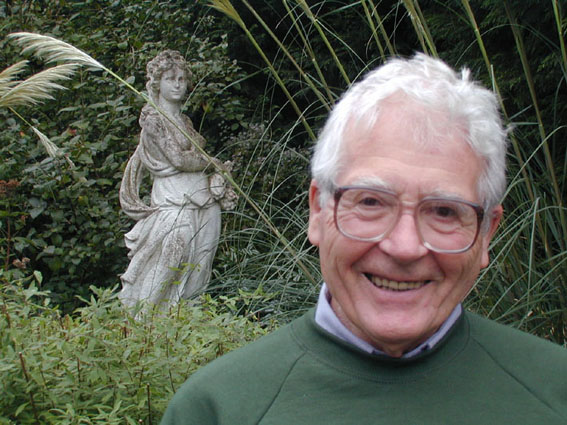
James Martin believes that by using logic, and by understanding history, technology and the behaviour of complex organisms we can explore the future properly and find solutions.

James Martin founded the 21st Century School at Oxford University which is concerned with the most urgent problems that humanity faces. It has 10 institutes covering science and civilisation, the future of the mind, ageing, information and communication technology, emergent infections in humans, migration, future of humanity, bioscience ethics, environmental change and world education.

Markets and capitalism
are the solution to some very big problems requiring complex, expensive solutions and the only safe bet is to do this through corporations. You can set up corporations motivated by profit to deal with these big problems such as global warming. General Electric has set out to transform 12 product lines into the kind of ecologically inventive products they think customers will want five years from now.

I have this idea of a World Upper House, rather like the UK's House of Lords, which oversees the elected House of Commons. It would be populated by statesmen who have been through the political mill and know how to get action, as well as scientists who can talk to and trust the statesmen. This world upper house would make decisions about the new energy sources or forms of transport etc.

And they would choose anything other than carbon. Right now there seems to be a strong motivation not to have non-carbon solutions because of the subsidies. The total subsidy for the car and petroleum industries is around a trillion dollars. Huge profits are being made out of huge subsidies and these profits are going to destroy the planet.

I think James Lovelock's view of runaway global warming is going to be proved right. The ice in the Arctic - which is the size of the US - is melting, and if it disappears, the Earth will absorb massive amounts of extra heat. If we took action right now, we could slow it down, though it's not clear whether we could stop all the self-perpetuating processes that have already begun.

Mass Human Extinction

Writing in the British newspaper The Independent in January 2006, James Lovelock argues that, as a result of global warming, "billions of us will die and the few breeding pairs of people that survive will be in the Arctic where the climate remains tolerable" by the end of the Twenty First century.

James Lovelock claims that by the end of the century, the average temperature in temperate regions will increase by as much as 8°C and by up to 5°C in the tropics, leaving much of the world's land uninhabitable and unsuitable for farming. He suggests that "we have to keep in mind the awesome pace of change and realise how little time is left to act, and then each community and nation must find the best use of the resources they have to sustain civilisation for as long as they can."

We may not have time to solve the real problems of humanity because there is a lot of apathy. If everyone was excited about solving the problems, it would work fine, but that's not the case. It will take a catastrophe to get most people interested - this is how things happen. For example, the US Food and Drug Administration tightened up its regulations after the thalidomide scandal, and the UN Declaration of Human Rights & Preamble with 30 Articles was drafted after the Holocaust.

We're almost certainly going to get some kind of catastrophe in the next 20 years or so, such as a bird flu pandemic.

Right now it isn't poor people who are damaging the planet, it's the rich. What if you could turn them to eco-affluence, with a high standard of living which doesn't harm the planet? This will involve a huge transition away from a consumer society. And a lot of ideas to solve global warming will be politically controversial. If you put shades up in space to shield our planet from the sun, for example, this would affect countries around the world differently, so would cause controversy.

James Martin Quotes

It isn't the poor people who are damaging the planet, it's the rich

"Now people are driven to develop specific skills to make money."

"There's a wisdom deficit in our world."

"I feel like I'm at the beginning of my life aged 73. When I was 18, I remember Bertrand Russell saying that the key to being 90 is to keep learning."

"A lot of apathetic people are as happy as pigs, watching reality TV shows and getting drunk on a Friday night."

"The biggest problem in solving the urgent problems that face humanity is apathy: the public is not putting pressure on the politicians."

From issue 2568 of New Scientist magazine, 13 September 2006, page 46-47 (with other links added by Chris Street)
Profile

After reading physics at the University of Oxford in the 1950s, James Martin worked as a rocket scientist before joining IBM. In 1981 he set up a management consultancy, Headstrong, which holds seminars for politicians and business leaders. His latest book is called The Meaning of the 21st Century.


Friday, November 17, 2006

Cancer - The Basics


Cancer - Learn more about one of the world’s biggest killers in New Scientist comprehensive special report.

One in three of us will get cancer at some point in our lives. Once so feared its name was whispered, the disease is no longer an inevitable death sentence. Today, almost two-thirds of those who develop cancer will still be alive five years later, compared with just half in the 1970s....

Thursday, November 16, 2006

Nanotechnology - The Basics

Nanotechnology - Learn more about all things nuclear in New Scientist explosive special report.

Imagine a world where microscopic medical implants patrol our arteries, diagnosing ailments and fighting disease; where military battle-suits deflect explosions; where computer chips are no bigger than specks of dust; and where clouds of miniature space probes transmit data from the atmospheres of Mars or Titan....

Cosmology - The Basics


Cosmology
- Keep up with the latest ideas in New Scientist special report
.

Cosmologists study the universe as a whole: its birth, growth, shape, size and eventual fate. The vast scale of the universe became clear in the 1920s when Edwin Hubble proved that "spiral nebulae" are actually other galaxies like ours, millions to billions of light years away....

Quantum World - The Basics


Quantum World - Learn more about a weird world in our comprehensive special report.

If successful scientific theories can be thought of as cures for stubborn problems, quantum physics was the wonder drug of the 20th century. It successfully explained phenomena such as radioactivity and antimatter, and no other theory can match its description of how light and particles behave on small scales....

Evolution - The Basics


Evolution
- Learn more about the struggle to survive in New Scientist comprehensive special report
.

In 1859 Charles Darwin published his theory of natural selection amid an explosion of controversy. Like the work of Copernicus in the 16th century revealing the movement of the Earth, Darwin's idea shook the foundations of the establishment and profoundly altered humanity's view of its place in the universe....

Stem Cells - The Basics


Stem Cells - Learn more about the promise and the controversy in New Scientist cutting edge special report .

Fast-forward to the end of the 21st Century: surgeons can create new organs to order, regrow crippled spines and hearts and reverse the damage of Parkinson's disease or diabetes with ease. Immune rejection and waiting lists for replacement organs are consigned to history.....

More from New Scientist ... or from Wikipedia or from the BBC

Chris Street 's - Blood Pressure & Cholesterol levels


Today i booked myself to see the local nurse at my GP. This was prompted by my Boots cholesterol test. I wanted to know my HDL ratio.

My blood pressure is 130/70 mmHg.

I am overweight: 12st 13lbs, height 5'7.5" hence BMI 28.3 (BMI calculator). I'm more at risk from high blood pressure, high cholesterol or diabetes.

A blood sample test:

  • Total Cholesterol (TC): 5.1
  • HDL ratio (TC/HDL): 5.0
  • LDL: 3.0

By my calculation HDL = 5.1/5.0 = 1.02 mmole / Litre (40 mg/dL). From the table below I have (borderline) low HDL levels with a heightened risk of heart disease.

Recommended HDL range

HDL levels and risk for heart disease are:-

Level mg/dL Level mmol/L Interpretation
<40 <1.03 Low HDL cholesterol, heightened risk for heart disease, <50>
40-59 1.03-1.52 Medium HDL level
>60 >1.55 High HDL level, optimal condition considered protective against heart disease

More sophisticated laboratory methods measure not just the total HDL but also the range of HDL particles, e.g. "lipoprotein subclass analysis", typically divided into several groups by size, instead of just the total HDL concentration as listed above. The largest groups (most functional) of HDL particles have the most protective effects. The groups of smallest particles reflect HDL particles which are not actively transporting cholesterol, thus not protective.

Certain changes in lifestyle can have a positive impact on raising HDL levels:

Recommended LDL range

The American Heart Association, NIH and NCEP provide a set of guidelines for fasting LDL-Cholesterol levels, estimated or measured, and risk for heart disease. As of 2003, these guidelines were:

Level mg/dL Level mmol/L Interpretation
<100 <2.6 Optimal LDL cholesterol, corresponding to reduced, but not zero, risk for heart disease
100 to 129 2.6 to 3.3 Near optimal LDL level
130 to 159 3.3 to 4.1 Borderline high LDL level
160 to 189 4.1 to 4.9 High LDL level
>190 >4.9 Very high LDL level, corresponding to highest increased risk of heart disease

At 3.0 mmoles/ Litre (~ 115mg/dL) test result for LDL I have near optimal LDL level.

NB. My total cholesterol analysed by Boots last month was 5.2mmoles/L.


My LDL-C is 115 mg/dL (3.0 mmole/l)
My HDL-C is 40 mg/dL (1.02 mmole/l)

Diagram source Postgraduate Medicine online.

Although statin therapy has revolutionized management of coronary heart disease (CHD), the lowering of low-density lipoprotein cholesterol (LDL-C) levels is not the whole story. Increased plasma concentrations of high-density lipoprotein cholesterol (HDL-C) have a cardioprotective effect that is just as important for reducing risk of heart attack and stroke.

Blood Pressure


Blood pressure values are stated in millimetres of mercury (mmHg). The systolic pressure is defined as the peak pressure in the arteries during the cardiac cycle; the diastolic pressure is the lowest pressure (at the resting phase of the cardiac cycle).

Typical values for a resting, healthy adult human are approximately 120 mmHg systolic and 80 mmHg diastolic (written as 120/80 mmHg), with large individual variations. These measures of blood pressure are not static, but undergo natural variations from one heartbeat to another or throughout the day (in a circadian rhythm); they also change in response to stress, nutritional factors, drugs, or disease.

Normal values of blood pressure

Normal ranges for blood pressure in adult humans are:

Clinical trials demonstrate that people who maintain blood pressures at the low end of these pressure ranges have much better long term cardiovascular health and are considered optimal. The principal medical debate is the aggressiveness and relative value of methods used to lower pressures into this range for those who don't maintain such pressure on their own. Elevations, more commonly seen in older people, though often considered normal, are associated with increased morbidity and mortality. The clear trend from double blind clinical trials is that lower Blood Pressure is found to result in less disease.

My Results
With these results (TC/HDL ratio = 5.0, Systolic Blood Pressure = 130, Age 50, Non Smoker) I calculate my risk of CHD (Coronary Heart Disease) - see diagram below as " less than 15% risk of CHD over next 10 years". Or from the European Study the risk of a fatal CardioVascular Event is 1%-2% over the next 10 years.

Climate Change - The Basics


Climate Change - Learn more in New Scientist continually updated special report.

Climate change is with us. A decade ago, it was conjecture. Now the future is unfolding before our eyes. Canada's Inuit see it in disappearing Arctic ice and permafrost. The shantytown dwellers of Latin America and Southern Asia see it in lethal storms and floods. Europeans see it in disappearing glaciers, forest fires and fatal heat waves.

Scientists see it in tree rings, ancient coral and bubbles trapped in ice cores....

Humphrys in Search of God with Professor Tariq Ramadan


: download mp3 interview


:broadcast interview 29m

: extended interview 48m

http://www.bbc.co.uk/religion/

Unedited broadcast interview (my highlights in blue)

Humphrys in Search of God

Professor Tariq Ramadan - broadcast interview

7 November 2006

John Humphrys: Last week at this time I talked to the Archbishop of Canterbury, Dr Rowan Williams. His job was to try to persuade an old sceptic like me that God exists, to convert me if you like. In a way it was the easiest of the three interviews in this series because I was brought up in his church, believing in Christianity. This interview's a bit trickier, I've had to do a bit of a crash course in Islam to get any sort of a grip on it and it hasn't been easy. How to reconcile the Muslim's merciful God with the fanatics that kill in his name. And there's something else: when you raise doubts about Christ with a Christian leader like Dr Williams you can expect a gentle, reasoned, entirely civilised argument. There seem to be plenty of Muslims out there who take a rather more militant view of any sort of challenge to their faith. And that was the first point I raised with Professor Tariq Ramadan who is a leading Muslim academic.

Tariq Ramadan: I think you have to be er careful not to confuse all the reactions you can get. Of course if we just look at what happened during the last months with the cartoon issues and now with the Pope statement. In the Islamic majority countries you can be scared about the fact that er you know the reaction are very very harsh and I I think...

John Humphrys: Threatening.

Tariq Ramadan: Threatening yes. I think that many Muslims, er you know and and I am among these Muslims, think that this not the the right way. We're not used by the way to laugh at religion, it's not something which is part of the culture among Muslims.

John Humphrys: But it goes rather beyond not used to having a religion laughed at, it's as though your religion looks for offence.

Tariq Ramadan: It's not true, what we are expecting from ourselves and from the people who are we talk to is really mutual respect, out of mutual knowledge. Now in fact today because of er the perception that Islam is under pressure and stigmatised, the reaction is really emotional and the Muslims are very often overreacting. But I don't think that you can say you know you are looking for that.

John Humphrys: If I were, and I have absolutely no wish to be, disrespectful to Mohammed during the course of conversation, some of your co-religion, some of your fellow Muslims will be not just offended, of course they are perfectly entitled to be offended, but they will be angry with me, some of them may even threaten me violence.

Tariq Ramadan: It could happen, I cannot deny this, and this is why having a kind of discussion with you, if it happen, it's really important for me also to turn towards my own community and say look we need to take an critical intellectual critical distance because it's a debate and the people want to know. And sometimes they are critical and they can ridicule the religion of their counterpart of their er fellow citizens.

John Humphrys: Mmm, some of the things they say about Jews and about Christians, it's hugely offensive.

Tariq Ramadan: Exactly, and so. But it's really you know when during the cartoons issues, what I said to the Muslims and I was in Denmark and then here, it it was really take an intellectual critical distance. Don't over react, it's not an emotional discussion that we have. So, I think that you also have to put things into context, you know I am in a situation where I am in a democrative society, I can speak and listen to me, I can listen to you, we can take a distance. I know this culture, I know the western culture, I know in which we are dealing with such issues, and it helps me to react in the right way. I can understand that the people who are not used to that, who are under political pressure, or sometimes they have even nothing to survive with.

John Humphrys: But some of these people that you refer to are not under pressure are they?

Tariq Ramadan: I'm not saying that this dogmatic approach is only coming from the people that are, you know, marginalised or socially er facing difficulties. You are right some are nurturing this mind set and they have this mind set "if you touch my religion, if you insult or if you laugh at it or say something which is wrong according to me, I can just be violent with you and insult you and I can threaten your own life".

John Humphrys: They claim to find plenty of justification for that in the Qur'an, they will quote you plenty of chunks from the Qur'an which entirely in their eyes justify them doing it.

Tariq Ramadan: Yes er this is right, and this is why we have to respond that the quotations they are er making are wrong and they are not put in the global message of Islam, so we need this intra community debate among Muslims. But it's also very important for me and for the Muslims, for you not only to be obsessed by the few who are vocal and visible and forget the many who are nurturing this understanding of the Islamic teachings open to the other, referring to verses of the Qur'an, at the end of the day they are the great great great majority. You have to listen to this silent majority of people telling you look for example myself, I will not accept just to promote tolerance between you and me, it's much more than that, tolerance is not enough. There is something which is a kind of a superiority relationship when you tolerate me because you cannot just remove me from you know your own society. Tolerance is something which is not enough. In Islam if we go to the deep teaching of this religion is respect, and the difference between tolerance and respect is that you can tolerate me without knowing me, but you can't respect me without knowing me, so it's knowledge and respect. And this is the message that the great majority of the Muslims are promoting and are faithful to, so you also have to listen to this.

John Humphrys: And yet most Muslims, many Muslims,

Tariq Ramadan: It's not the same, it's very important.

John Humphrys: Yes, of course it's very important. Many, let's say many Muslims, er you yourself obviously accept that the Qur'an is literally the word of God. It was not what Mohammed interpreted God as saying and wrote it down, because he was illiterate wasn't he, he was reciting the literally over a period of twenty three years the word of God. So what you read in the Qur'an you believe to be quite literally the word of God.

Tariq Ramadan: Yes but you have to be very very precise. The fact that it's literally the word of God doesn't mean that I have to read it literally, it's not the same. It's the word of God sent to a human being, a prophet, in a specific historical context.

John Humphrys: But how am I as somebody... let's remember that this series is Humphrys in search of God. I mean, I turn to the Qur'an because I am told by your Imams, by the leaders of your religion, that this is the word of God. So I read it and I read things that strike me as being not just extraordinary but rather dismaying. And I see things that calls for you know the dissertation of death for non believers, uh yeah and I'm appalled by that.

Tariq Ramadan: No no but yes, you can be appalled by that.

John Humphrys: But that's the word of God.

Tariq Ramadan: No, the word of God is something which is exactly this, it's God revealing a text. At the end what we have as a word in the Qur'an is that this is a kitab, it's a book, a book to be read.

John Humphrys: Written by God.

Tariq Ramadan: Writ yes.

John Humphrys: I keep coming back to this.

Tariq Ramadan: Exactly but but be careful. From the very beginning this was understood by the Muslims as the eternal word of God revealed in the specific history. And from the very beginning you have some verses of the Qur'an that you cannot understand if you don't put them into context. For example some of the principles er revealed in the Qur'an are immutable, not going to change. The first one is the oneness of God, the second is all what are the pillars of the Islamic faith, and then the practices we pray as they are praying. But we have in the Qur'an many many verses dealing with specific historical situation. You cannot take these and read them in an absolute way.

John Humphrys: You are a moderate Muslim. There are plenty of people who can turn to exactly those words and take from them the justification for the most appalling behaviour.

Tariq Ramadan: Exactly but let me tell you, let me tell you something, if you are an atavist, are you for example?

John Humphrys: I don't think so.

Tariq Ramadan: You can be an atavist or you can be a Marxist, how many people were reading the words of Marx literally.

John Humphrys: It's different, Marx wasn't God.

Tariq Ramadan: It's... no he was not God, but the question is not the source of the text, the question is the way to you read it. So for example we have Marxists saying like you are saying, as you are saying now, it was, he was not God but they were reading his text in a dogmatic way. So with God or without God you can have a dogmatic mind, meaning by that when you read a text you take it literally. Now what we have to say is that the text has been revealed and there is a global message, and then they are verses. What we are asked to do is to come with our intelligence, our mind, to try to understand their meaning.

John Humphrys: All right.

Tariq Ramadan: So there are things that we have to put into context, and things that we cannot put into context. But if someone is coming to me and he's reading the text literally, and telling me for example because of these verse I can kill a Jew, a Christian, a non Muslim, only because he or she is Jew, Christian and non Muslims. I will say look this is not an accepted reading because in you...

John Humphrys: In your view.

Tariq Ramadan: No not only in my view, in the way you read this specific verse is a betrayal of the global message. The text is what, at the end of the day, it's a pedagogy. It's the divine, pedagogy yes pedagogy, helping the Muslims in a specific period of time to understand what are the objectives of the religion. Helping us to use our mind, to read the sources, the scripture sources, to understand the context and then to try to implement our principles in a specific context.

John Humphrys: Alright, I thought er the Qur'an was rather more than that.

Tariq Ramadan: It's this when we speak about rules, of course it's more than that when it comes to morality, ethics, and to remind us of the presence of God.

John Humphrys: Right well I want to come onto that. But first of all what is God, there is no God but Allah, Mohammad is the messenger of Allah, that that is absolutely clear. And if I say that twice in the presence of two witnesses I am a Muslim, that's right isn't it.

Tariq Ramadan: Depending on on the state of your heart.

John Humphrys: Right, er, alright.

Tariq Ramadan: It's not something you say. So the way you are now is not enough.

John Humphrys: Oh what what what do you mean the way I am now, I am being denied this access?

Tariq Ramadan: No you are not denied this, that it's sure out of our discussion that you are not saying this from the bottom of your heart. It's something...

John Humphrys: How do you know?

Tariq Ramadan: I don't know, it's out of your questions.

John Humphrys: But if having talked to you at the end of it I am persuaded that you are right, and I have a faith now. If I come to believe in God, upon the recitation of those two sentences, in the presence of witnesses, I am a Muslim, that is all it takes.

Tariq Ramadan: Yes exactly.

John Humphrys: And what do I then believe in. What sort of God do I then believe in. What am I required to believe, because as you say I have to come to it with my heart and not just with my lips.

Tariq Ramadan: First there is something which is the essential point, the oneness of God, he is only one, this is something which is the unity of God. The second point which is really important is that you cannot imagine how he is and you cannot define him. The only thing you can say about him is what he's saying about himself, so no image, no representation, his name everything. You know there is a Chinese proverb saying when er the wise man show you the moon the foolish is looking at the finger. And this is why we avoid representing any prophet because they were just men, messengers coming to show us the road towards the one.

John Humphrys: But if I say to a devout Muslim oh Mohammad was just a messenger, doesn't he say no no he was more than that, else why should we treat him with such reverence.

Tariq Ramadan: No no he was a messenger, he would not say anything else, and this is the right way to speak about him, he was a messenger. Now the relationship between me as a believer and him, it's a relationship of love, and this is the way he was speaking about himself. Your faith is complete the very moment you love me more than yourself, meaning by that there is something which is a relationship to the prophet which is based on not only knowing what he did, knowing what he said, but loving who he was. So there is something which is a deep relationship, so this is why you know we pray on him every time his name is mentioned. We have a relationship of someone we love, and this is why we have to be very very respectful towards who he was and what we came with.

John Humphrys: If I become a Christian, if I am a Christian, I observe broadly speaking the pieties. In the case of Islam you surrender your life to Islam, Islam directs determines the way you live in every respect.

Tariq Ramadan: Yes, you know, my life belongs to him, you know, we have a verse telling us to say when someone passes away is, er in the (name) we belong to him and to we to him we are going back, that there is something which is belonging to him. Now it means that in which way am I belonging to him. There is something which are the pillars of Islam, so the fact that we are praying, the fact that we are fasting, these are you know the practices showing that we are with him in in our daily life. So it's not something which is a blind you know submission. When the people are translating Islam by submission that is wrong, so there is something which you know what we seek, what we are trying to get at the end of the day is what, is peace, to be in peace with ourselves and with him. So to get that peace there are conditions, one of these conditions is to be at peace with yourself, and to be at peace with yourself is to use everything that we have in the right way. So it's doesn't mean a blind completely submission with no use of what you have, no.

John Humphrys: But again that is your interpretation, if if you speak to many devote Muslims they will tell you, and I have a little list in front of me, that Islam is a complete way of life, and let me give you the list. Governing dress, economics, business ethics, rates of taxation, justice and punishment, weights and measures, politics, war and peace, marriage and inheritance, family and domestic life, care of animals and livestock, sexual relations within marriage, education, diet, cookery, social behaviour, forms of greeting, rules of hospitality, even I am told the way in which a glass of water is to be drunk, and, which fascinated me I have to say, and on and on and on. Islam is a complete way of life.

Tariq Ramadan: Yes but be careful, once again it's not wrong to say it's a complete way of life. Now in your way of life not everything is at the same level. For example you have ethics, you have some convictions, you have rules in your life, these rules are...

John Humphrys: Self imposed.

Tariq Ramadan: Self imposed, it's not the problem. The problem is: where do they lie in your life? Are they on the margin of your life? For example, when for yourself you are trying not to lie, it will direct your whole life.

John Humphrys: Slightly different from telling me how to drink a glass of water.

Tariq Ramadan: Yes once again, you have some details here for example, you know, why is it, is it so it's just when you drink to remember when you take it with your right hand to remember him. It's a question of remembrance.

John Humphrys: Do you do that, as a matter of interest?

Tariq Ramadan: Yes of course, for me it's really important to understand the secret er dimension of my life, it's really to put my ethics into action in motion in my life, and this is consistency. But once again if you whatever is your belief, you try to be constant with your values and your ethics, it mean that your values and your ethics are everywhere in your life.

John Humphrys: If I were to talk to you er about Islamic punishment, the death penalty, corporal punishment, stoning to death, removing of limbs, amputation of limbs, you would call as I have read you've done, for a moratorium on Islamic punishment. Now if even you cannot say there must be an end to it then one wonders how great the zeal for reform is.

Tariq Ramadan: Look I'm a believer, and I really think that the the Qur'an is the the very word of God as we said. So in the Qur'an we have reference to you know corporal punishment and er death penalty, and in the prophetic tradition we have something about stoning. These are the texts and as I've told you my understanding and the understanding of the great majority of the Muslims throughout the the Islamic history is that we have to put things into context, and we have to come with conditions, and to understand the context within which this could be implemented. So I'm talking to Muslims okay look it's in the text, but the way you read the text and you want to implement this literally is betraying the very objective of the text.

John Humphrys: But you don't call for an end to it.

Tariq Ramadan: My point is to talk to Muslims, say okay look come to the meaning of this text, come to the reality of this text, and open a debate on which way and how we can integrate the text.

John Humphrys: Why can you not say it is wrong, it is wrong to stone people to death, full stop.

Tariq Ramadan: Look look look. No, it is not the way, it's not the way you are dealing with belief, you are dealing with people believing in the text. Islam is a simple religion, my life is complicated, and you cannot just ask simple question dealing with your complicated life.

John Humphrys: What is complicated about stoning somebody to death?

Tariq Ramadan: No no, about text, the relationship with the text. It was revealed like this. We are believing in the text, how are we dealing with this. Is it an immutable, non disputable text that we have to implement or is there something we have to understand out of our reading.

John Humphrys: Stoning to death. This for me you see, in my search for faith, this would be an absolute stumbling block. If I were persuaded that Islam was the path for me to follow and somebody...

Tariq Ramadan: You want also that yes...

John Humphrys: I want to know that my fellow Muslims do not believe that it is right to stone somebody to death, I want absolute assurance on that.

Tariq Ramadan: Look when it happened in Nigeria, when it's happening now in Saudi Arabia, I condemn that, it's not, it's not implementable, it's not...

John Humphrys: So it is wrong to stone people to death.

Tariq Ramadan: I said that.

John Humphrys: Right.

Tariq Ramadan: My position as a believer, I want to open a debate, I'm not alone, we have, this is my personal conviction, but I I'm dealing with Muslims. I want to open a debate, and to open a debate I have to do something which is really important. Stop using intrumentalising Islam to kill poor people and woman because they are the victims of what we're doing now. So stop to do that and open a debate. You know what am Amnesty International is doing in the States, they are against this penalty. But in some States they cannot say that, it's not possible, it's not going to be accepted. So what's the first step of the discussion, moratorium. Do you understand that.

John Humphrys: Alright, I'll accept that.

Tariq Ramadan: This is the point.

John Humphrys: Let me turn in the last stages of this conversation to another huge stumbling block that I have, and this may be the biggest, and it is the notion of the merciful God. You describe Allah as all merciful, and this is an entirely predictable question, forgive me for asking it, and it's crucial, and it may even be simplistic but there we are. Why does Allah allow suffering in the way that he does?

Tariq Ramadan: There are limits between what we understand and what he wants. And then here what we are asked to do is to deal with our reality as much as possible to the limit of what is possible.

John Humphrys: God created the reality.

Tariq Ramadan: Yes, it he created the reality. So we were born, this is the difference between the Jewish, the Christian and the Muslim tradition. We were born innocent, and we became responsible and we have to deal with our own responsibility, so we are responsible at a certain age. You know, all the kids, all the children are going to paradise according to the Islamic tradition because they are innocent.

John Humphrys: So it's all right if they suffer on this earth in the knowledge, in your knowledge, that they will go to paradise.

Tariq Ramadan: No, to my intelligence, to my understanding it's difficult to accept it as something which is intellectually understandable. But this is life, we are going to suffer because at the end of the day life is suffering.

John Humphrys: But why did God want that to happen, why did Allah want that to happen?

Tariq Ramadan: I don't know you, I don't know why even he wanted me to be here, or you to be here. I don't know why sometimes he makes me happy or sad, but this is life. The only thing which I know is that I have responsibility trying to do your best with what you do and what you are facing, that's it. We have a verse in the Qur'an - he creates death and life in order to put you in a test, it's to test you, this is test. You are a test for me, because you are not me, you are different from me. So our encounter is full of happiness, potential happiness, and a possible threat, a possible sadness and possible difficulties, because diversity is a gift and a problem at the same time. Suffering is a gift and a problem, is very often of course for us a problem, we we live with this with great difficulty. And sometimes out of our suffering we become better, we become wiser, we become more knowledgeable about life.

John Humphrys: We might, you and I, but our children?

Tariq Ramadan: Maybe not, and this is this is you know when I'm I'm travelling in these southern countries and I see what I see and you know, these children and these kids dying, it's very difficult. But at one point I am not dealing with it on an exclusively rational way. Not everything is rational, I can don't worry you can like you or love someone, it's not everything should be put in our logic, sometimes we have to be. This is why humility means exactly this, you don't know everything, you don't understand everything, but deal the best way you can with what you know, what you understand.

John Humphrys: So it is blind faith in the end.

Tariq Ramadan: Sometimes sometimes people are saying you have double talk. And the problem I have with some is the double hearing. I said exactly the opposite of what you heard. I said...

John Humphrys: You said you look at the suffering child and you do not know why that child, paraphrasing, you don't know why that child is being allowed to suffer, but in the end you have to accept it. But if that is not blind faith I don't know what is.

Tariq Ramadan: No it's not blind faith. I said something else which you didn't quote right now. I said you have to do your best with what you know and what you can. This is exactly the opposite, it is not blind faith.

John Humphrys: Is it?

Tariq Ramadan: You are dealing, we are dealing with people who are suffering. What you can do when are a doctor, when you are a social worker, do your best to make them suffer less. You know you are comparing what I am saying with passivity, it's exactly the opposite. And I refuse passivity and fatalism in order to say you have to do what you can do to change the morality of this world for the better. And in the end every human being is a reformer, you reform your own self, you reform you family, you reform your society, you reform around you. Whatever you can do do it, this is the least you can expect from you. But at one point remain humble, because at the end you cannot change everything and you have to accept the reality of life.

John Humphrys: If I as a non Muslim fail to find a faith, fail to believe in god, if I fail to achieve that blessed state, what happens to me? You will go to paradise.

Tariq Ramadan: I'm not sure.

John Humphrys: You may.

Tariq Ramadan: I may, I may not.

John Humphrys: You've got a pretty good chance if you're a decent bloke and you do the right things and you pray and all that there's a fairly good chance that you will. Can I as a non believer according to your religion go to paradise, go to heaven?

Tariq Ramadan: To someone who at the end of his quest or her quest say there is no god, what isn't in the text and what was revealed in all the religion is that here there is a rapture between he or she and God. Now at the end the only thing that I can say to this - it's in Arabic or in English.

John Humphrys: I'd prefer the English.

Tariq Ramadan: "Allah, God knows best." I don't know. I don't know where you're going to be because I cannot assess your sincerity. If out of your sincere quest you have an answer that is yours, that you are sincere in getting it, what I know in my text that he's very close to the sincere people, so I don't know where you are going to be. But more than that, even if I I just spend my time to do the best that I can in the end, I'm trying but I don't know where I'm going to be. So, to this at that level humility among human being is to say I don't know, he knows, I don't. What does it mean at the end of our discussion here is that I have to respect your quest, respect your sincerity, and never judge you in a different because I don't know.

John Humphrys: And what about some of your fellow Muslims who behave in ways that you personally deplore, calling for the death of the Pope, bombing the world trade centre, flying the planes into the World Trade Centre - will they go to heaven?

Tariq Ramadan: I don't know.

John Humphrys: They might.

Tariq Ramadan: I don't know, I don't know if er two minutes before dying something happened. I don't know what could happen to any one of us, the only which can say, and this is the limit of what I can say - I condemn what they are doing. And at the end it's really important in our life sometimes to understand that we can be very harsh, and we must be very harsh on some actions done by people, but sometimes we have to be very humble not to confuse the actions with the being of the people. So you may do things that are very very bad and still there is something which is light in you. The final judgement is not in my hand.

John Humphrys: Tariq Ramadan thank you very much.


© British Broadcasting Corporation

Wednesday, November 15, 2006

Humphrys in Search of God with Dr Rowan Williams


: download mp3 interview

:broadcast interview 29m

: extended interview 54m

:extended interview part 2 37m

http://www.bbc.co.uk/religion/

Unedited interview (other than my highlights in blue)

Humphrys in Search of God

Dr Rowan Williams - broadcast interview

31 October 2006

John Humphrys: Radio 4 interviewers don't have to observe many rules, but we are required to be impartial, not to express our own convictions. Well I'm breaking that rule for these interviews with leaders of the Christian, Jewish and Islamic faiths. Indeed that's the point of them, I personally am involved. I'm inviting them one at a time to convert me, to persuade me if you like that God does in fact exist. I believed that once, but for nearly fifty years I've been a journalist and I've seen perhaps too much suffering, too many children dying, too much wanton savagery to continue to believe it. A God of mercy, any God, seems out of the question. The Archbishop of Canterbury, Dr Rowan Williams is my first interviewee. If anyone should be able to convince me, surely it should be he. First though I want to know if he believes there is a God or knows there is a God.

Rowan Williams: I don't know that there is God or a God in the simple sense that I can tick that off as an item I'm familiar with. Believing is a matter of being committed to the reality of God. The knowledge that comes, that grows if you like through a relationship. I believe I commit myself, I accept what God gives me, I try to accept what God gives me. Grow in that relationship and you grow in a kind of certainty or anchorage in the belief. Knowledge well yes of a certain kind yes, but not acquaintance with a particular fact or a particular state of affairs, it's the knowledge that comes from relation and takes time.

John Humphrys: But what do you say then to somebody like me, cos I've given it time if it's a matter of choice or a matter of giving is it happens. Um, I'm 63, I believed I had an unquestioning belief as a child, as children tend to do. I was brought up to believe and I was christened, I was confirmed, I remember that's one of the things one had to do, writing my own prayer book out, I prayed and I had an unquestioning belief. And over the years it was chipped away and now there's a gap where it previously existed. So I've given it time, and I think about it a great deal and have continued to think about it. Why has it not happened to me?

Rowan Williams: Well I'm not going to offer you a definitive answer to that but perhaps I could answer.

John Humphrys: I wish you would.

Rowan Williams: If I could, but I would like to ask what it was that chipped away, and what it was that was chipped away at. What did you think God was?

John Humphrys: Well I suppose originally I thought he was the old man with a beard, of course we all do. And eventually I suppose I thought God was a supreme being, the creator, supreme moral conscience, I toyed with conscience for a great deal of time and all the rest of it. And I suppose in the end what chipped away at it for me, what finally destroyed it for me indeed was the presence of so much suffering. It's the classic thing - this is hardly original, I'm very conscious of that, it's very clichéd, but none the less very real. And I could not any longer accept and we had a conversation about it, you and I, on the Today Programme, Beslan when Beslan happened. Although I'd seen lots of other things as bad as how do you make comparisons between these awful things? But none the less that was I suppose if there were a final straw that was probably it.

Rowan Williams: And you're obviously not very impressed by the free will defence here?

John Humphrys: I don't understand the free will defence. Heavens you're interviewing me now, what a nice, what a nice change, what a... there's a conversion. I'm not impressed by the free will, um, position no. Free will is fine for mature, reasonably intelligent or at least conscious adults, mature adults. Children have no free will, the murderer has the will, the victim doesn't.

Rowan Williams: But isn't that the nature of the case, the free will of one person, of you or of me, affects others whatever we do. And I can't quite see how a universe could be constructed in which some people's free will was if you like guaranteed to be aborted at certain points, so that it wouldn't damage others. When people talk about free will in relation to moral evil, I think what they're saying is something like this. God has made a universe in which conscious people emerge, people with decisions to make, with thoughts that can form their decisions. And because we don't live as isolated units, in little bubbles around the place, my thought my action impinges on yours, we're interconnected, our freedom affects others. Now what would it be like if we said okay God makes that sort of world but there is some sort of cut off point where the effect that my freedom has on other people is guaranteed not to make their life too difficult. What's the cut off point? Now that's where I think there's a rather stark choice. I think either you say that's the kind of world it is and go on reflecting in the light of God about it, try to make sense of it.

John Humphrys: Which is what you do.

Rowan Williams: Which is what I do. Or, you know, what do you say, well you know the whole notion of a God making a world with freedom in it just doesn't wash.

John Humphrys: Ah, except that that's not quite what I'm saying. You've used the word love; God is 'a God of love' and 'a merciful God'. How do you reconcile a God of love and a God of mercy with what we see happening? How do you say to the other whose child is dying of cancer that God is a God of love? Where is the love of God here?

Rowan Williams: In a way it's the same kind of question that arises, is there a point at which you know God has to intervene to clear his character. And how bad does it have to be? A child with cancer, an innocent in those circumstances, suffers and suffers appallingly because certain causes, certain processes have kicked in, we don't quite know why.

John Humphrys: But God created them.

Rowan Williams: God created the system in which they occur, just as God creates the system in which human freedom occurs.

John Humphrys: Indeed, but he created everything according to your basis.

Rowan Williams: That's right, that's right. Which doesn't mean that you know every single thing that happened, God says oh oh I'll make life difficult for them, I'll step in there. That's the system within which these things arise.

John Humphrys: Why? What was God getting at when he created this world in the certain knowledge, because God knows everything, in the certain knowledge that there would be enormous, intolerable, literally intolerable because many people go mad or kill themselves as a result of these awful things. I know of a family whose child has just died; they are now, their lives have been destroyed, they will never recover their life, ever, ever. Why did God create that world?

Rowan Williams: My faith tells me, and it's very hard to believe in these circumstances, but it tells me and I trust this. That the world, yes, is such that suffering arises in these unspeakable ways. It also tells me that what God can do with those circumstances and those persons is not exhausted by the world, there's more.

John Humphrys: Sorry, more what?

Rowan Williams: God has more to give. God has more to do with the mother, the child, whatever the circumstances are. God has an eternity in which to heal or to lead forward the people involved in those circumstances. I don't mean make it up to them but I mean that there's a future.

John Humphrys: But the child is dead, the parents' lives have been destroyed.

Rowan Williams: Humanly speaking that's the end of the story and that's the nightmare. Faith says that's not the end of the story.

John Humphrys: So we'll go to heaven.

Rowan Williams: God. God has eternity in which to go on working with those persons.

John Humphrys: So the best you can offer to the person whose child has died from cancer. The best you can offer those parents is bear up, there's a reason. As it were and forgive me for the clichéd language, but your reward will be in heaven.

Rowan Williams: No.

John Humphrys: Is that it?

Rowan Williams: No, that's not what I want to offer at all, because the conversation I'd have in those circumstances isn't the kind of conversation I'd have here. For one thing I think I'd need to say if someone says "where's God in that situation?", it would have to be answered partly in terms of - where are the people who as a matter of fact alongside those who are suffering, offering what love and healing they can? Whether in the name of God or not, the act of God is there as well. I'm not saying there's a purpose in the sense that God has said, oh yes don't, for that goal, for that end I will devise this disaster, or even that there's a reward in heaven, I'd say there's hope.

John Humphrys: Hope of what?

Rowan Williams: Hope of healing.

John Humphrys: When?

Rowan Williams: In God's perspective, in God's time, maybe within this world and maybe not. And part of the difficulty of living with faith is the knowledge which you've underlined so powerfully, that for some people in our time frame in this world there is not that kind of healing. It's not there. And that's not easy to face or to live with.

John Humphrys: But you can live with it?

Rowan Williams: Just, just.

John Humphrys: Let me be clear then. Is God or is he not an interventionist? Does he look at things that are happening and say enough already, or does he not? Cos in the bible that is what he did, in if we're to believe our Old and New Testaments God intervened, regular as clockwork.

Rowan Williams: What all that presupposes is, God is in one bit of the room and there's if you like chaos in the other end of the room. God looks at his watch and decides at what point he's got to step in to sort it out. At the same time I think although the bible uses such language, talks about miracle, there's already in the bible, in the Old Testament as well as the New Testament, a level of puzzlement about that. People are already asking "well if he does it there why doesn't he do it there?" And Jesus goes to his home town and he doesn't heal anybody, why not?

John Humphrys: Picks the odd person here and there.

Rowan Williams: Picks the odd person here and there. And I think the only way of making full sense of this is to say one thing, and going back to the basic questions, God isn't a person alongside other persons, a reality alongside other realities. There's someone on the other side of the room watching. God is the agency that's at work in everything and has set up the world in such a way that not only is evil possible, but moments are also possible where something breaks through of healing, of miracle for the newness. Why it breaks through here rather than there, we don't know the causes that make that possible.

John Humphrys: Something else we have to take on trust.

Rowan Williams: On faith, on faith. What I'm trying to outline, and I know it's not a, not a simple thought, is that God set up the universe in such a way that when certain causes come together, certain circumstances come together, more is possible than those immediately involved than I'd imagine, as if there's something breaks through. Not because God decides that there and not there, it'll happen, but because God has set up the conditions in which in this situation rather than that. As I've sometimes put it, the membrane is thinner, his action is nearer the surface. And that may be because of human prayer, because of human holiness, something more comes through than you might otherwise expect.

John Humphrys: Let me put to you what John Fowls wrote, you'll be familiar with the quote I'm sure. Freedom of will is the highest human good and it is impossible to have both that freedom and an intervening deity. Isn't that the reality? It is either/or?

Rowan Williams: No it's not because if that if our freedom is the highest good, and if that freedom is as the bible says - the image of God in us, then the full exercise of our freedom in let's say in holiness, in prayer, can allow something of God's action to come in with us. Not overriding our freedom but, if you like, working through it.

John Humphrys: But if we accept freedom of will, why do we pray? Why do you pray if you know that in the end God is not going to intervene, unless through a happy combination of circumstances, and that very rarely indeed. They prayed in Auschwitz.

Rowan Williams: They prayed in Auschwitz, and they prayed I imagine for two reasons. One is God is always to be praised, and the extraordinary thing is that they prayed in Auschwitz. That people felt that God's name was to be honoured even there.

John Humphrys: Or they were in total despair and they had no where else to go, that's the other explanation.

Rowan Williams: And I think there's something of both of them. But I don't think it's just about total despair and having no where else to go, they knew they were doomed, I think people who prayed in Auschwitz. I read about those especially, you know Hasidic Orthodox Jews, going into the chambers praising God. Now whatever that's about its not easy solutions, it's not rewards and success but they prayed because they had to do it, God's name had to be honoured. Now, that's one reason, the other reason that I think is that I pray so that in my own focus tempting to be loving focus on this person, this problem, I may somehow make a channel for God's action to come through into the situation. To what degree and with what effect I won't know, but I've got to do it because I believe that's one of the factors that might make a difference.

John Humphrys: Lets get back to my search, which is what that programme's supposed to be about I suppose. I can say to you, will say to, I want to believe. I have opened my heart if you like, I've gone down on my knees night after night and I have tried talking to God, and I have failed. Why can't I say, but hang on a minute, you have faith, lucky chap, I want it, and I want it perhaps just as sincerely as you do, but I am denied it.

Rowan Williams: What do you want to believe?

John Humphrys: I want to believe, I want to believe in the sort of vague God, if you'll forgive me, that you do.

Rowan Williams: Believe in, why?

John Humphrys: Because you clearly get great satisfaction from it, and because I want to make sense of the world because I cannot understand why we're doing what we're doing to each other, because there seemed to be many answers out there. Now, bizarrely those people who profess faith don't seem to worry about being able to find the answers. You see the number of times you've said to me, actually I don't know, but that's what I believe. I'd like to be able to do that. That's sounds more cynical than it's meant to be.

Rowan Williams: No I, no I hear you. I could say the basic question, the challenge if you like to you is, can you believe that you John Humphrys are the object of an unconditional eternal love which values you in such a way that your contribution as you to the world is uniquely precious to the one who made it.

John Humphrys: No I can't because I don't believe that there is one who made it, so I'm stuck.

Rowan Williams: Does it help at all to give the time not just to talking to God but to the silent waiting on the truth which for some people is the beginning of this. I mean pure sort of sitting and breathing in the, in the presence of 'question mark', because...

John Humphrys: Presence of what? You've got to remove the question mark.

Rowan Williams: Well I can remove it for you theoretically, I can't remove it for you personally. For me the presence of an eternal personal love, but thinking of people I've known who've found their way to faith, sometimes it's been in the context of that silence in the presence of and the question mark very very gradually, very gradually eroding, as something of love comes through.

John Humphrys: I've a six year old er child. He asked me the other day whether um Africa was bigger than England, and I, we had a little conversation about that. And I tried to explain the difference between continents and gave up at, it was three o'clock in the morning this, it wasn't an easy conversation and er...

Rowan Williams: I know these conversations.

John Humphrys: ...and er then I then I said but yes Africa is indeed bigger than England, and his next question was "why did God allow that to happen?" What do you say to a child who who er if you yourself do not believe apart from the blindingly obvious? There are some people believe in God, some people don't believe in God, you will decide for yourself. You can't quite do that to a six year old, what do you say?

Rowan Williams: Putting myself in the opposition. It's a very difficult question actually. I think I might say maybe you should ask somebody who does believe in God, and see what it sounds like. Not I think entirely irrelevant but belief in God appears to come more naturally to children than to adults. And you can take that in one of two ways can't you, you can take it as saying belief in God is one of those things like belief in Santa Claus that every sensible person...

John Humphrys: So that was what that was about.

Rowan Williams: indeed. Or you can say there's something instinctive about belief in God which life educates out of some of us in ways that are not always positive or constructive. There's something about the instinctual response to the world that is religious, which it takes quite a lot of doing to squeeze out of people. Remembering that, you know, that the modern 20th century North Atlantic mind set is a bit of a minority, both in history and in contemporary terms. And we ought at times I think to pause and say well is it so obvious that that's a set of responses and instincts that need to be squeezed out. Some would say yes I suppose because they'd say look at the results of not having it squeezed out. Look at you know barbarism and bigotry and religious violence and yet it is I think quite difficult to write it all off in those terms. And although I wouldn't rest an argument of the existence of God on this, I would say it is something worth pondering that as far back as you could trace a distinctive humanity, there's some sort of awareness of or relation to something more than just the pragmatic, the daily, the earthly. Just as in the life of most children, something of this seems to be going on.

John Humphrys: Given that you clearly believe that this is the truth, why do you, you know try to convert others? You're trying to convert me, if convert is the right word, during the course of this conversation. But why don't you go after the Jews, go after the Muslims and say "come on you guys", because you don't do that do you?

Rowan Williams: No and I don't, you know I don't exactly do it with you either.

John Humphrys: No no, you you did you didn't assault me in the street, that's perfectly true.

Rowan Williams: No no um I'll think about it. No, when you're talking about the truth of the Christian faith with anyone, whether it's a a non believer, whether it's a Muslim, a Buddhist or a Hindu or whatever, you don't I think simply begin by saying okay this is the truth, why don't you believe it, come on, you know, give me a quick answer, why don't you believe it?

John Humphrys: You're suggesting you're saying to them...

Rowan Williams: No.

John Humphrys: "you must believe it".

Rowan Williams: I could only ever get to that point I think by a long process of trying to understand the language they were speaking, what made sense to them. Again it's what happened at the very beginning of the churches life. The church didn't simply blaze out into the Greco-Roman world saying here's the truth, you must believe it. They said look this is what you say and that's very interesting as it echoes with what we say, and if we talk this through you might find that what you're saying has a much fuller expression in what we're saying. So here's the truth you must believe that has never been exactly what Christians have said.

John Humphrys: Well they did go around slaughtering in the most ghastly way an awful lot of people a few centuries ago because they didn't believe.

Rowan Williams: Who did?

John Humphrys: Christians.

Rowan Williams: Example.

John Humphrys: Crusaders.

Rowan Williams: It's a bad episode, it's a really bad episode because religion and geopolitics always mix in a rather explosive way as we've reason to believe, and to know.

John Humphrys: Which is why it mightn't be a bad idea to take religion out of...

Rowan Williams: Out of geopolitics.

John Humphrys: Out of geopolitics, out of everything else. If we had no religion, we would, if we had no religions at all, over the last many centuries, we'd have had much less strife in the world wouldn't we?

Rowan Williams: I don't see how you can know that, you know, we'd have had strife of other kinds are the basis.

John Humphrys: We might.

Rowan Williams: We'd have had differences, I mean racial class, tribal differences.

John Humphrys: Okay but religions added to it.

Rowan Williams: Religion is a very convenient peg on which to hang some of those other tensions. It's a short cut to say religion has always made it worse. I think there are times when religion has made it less bad than it might otherwise have been.

John Humphrys: But we don't need to go back centuries to see it do we? We can see it now, extreme Islam is threatening some would say civilization as we understand it.

Rowan Williams: So is the answer to say religion is the problem, or to say bad religion is the problem, good religion is the solution.

John Humphrys: What if you had...

Rowan Williams: Which is certainly what a lot of Muslims would say.

John Humphrys: If you had no religion you would not have the problem for which you had to find a solution.

Rowan Williams: Ah as I say I think that's illusory. I think that you're simply then saying there would not be enough other reasons to give grounds for genocide or slaughter. I mean that, sorry it's another very familiar trope but the biggest slaughter of the 20th century...

John Humphrys: I'd say too, Stalin.

Rowan Williams: Right, not religious. The biggest slaughters of the 20th century have not been religious men. And to say that you know conflict and butchery are so dependant on religious passions.

John Humphrys: Oh no I didn't say that, I said it added to it, it added to an explosive mix and without it we'd be better off.

Rowan Williams: So would people have been better off in Stalin's Soviet Union without religion?

John Humphrys: Didn't do them much good did it?

Rowan Williams: Would they have been better off?

John Humphrys: They still died.

Rowan Williams: They still died, but would they have been better off without it?

John Humphrys: It's vanishingly unlikely that I've said anything during this conversation that set you back on your heels and rocked your faith. Equally I suppose I'd have to say you've said nothing that...

Rowan Williams: Rocked you back on your own faith.

John Humphrys: That has knocked me back quite. The greatest puzzle to me remains why it is that faith - which is a gift, yes - has not been given to people like me.

Rowan Williams: It's gift of faith or no gift of faith. The gift of God is there for you and my longing would have to be that somehow or other that sense of being the object of God's loving concern comes alive. That's all I can pray for, all I can hope for. I don't believe that you're predestined as it were to unfaith that God says it's not much use wasting my time on Humphrys. But that God as the bible says stands at the door and knocks.

John Humphrys: What happens to me ultimately if I don't open that door?

Rowan Williams: If you don't open the door you're not fully in the company of God. And it's your choice.

John Humphrys: And after death?

Rowan Williams: What I'd love to think of course is that after death a possibly rather unusual experience might happen in which you'd say good God I got it all wrong.

John Humphrys: Too late then.

Rowan Williams: No.

John Humphrys: After death?

Rowan Williams: I think we continually have the choice of saying yes or no.

John Humphrys: So that death is not the end of us.

Rowan Williams: Death is not the end of us. I want that's rather axiomatic for a religious believer.

John Humphrys: A what, quite so, but I said us meaning 'us non believers'.

Rowan Williams: Non believers?

John Humphrys: Yes.

Rowan Williams: God alone can judge how much of your resistance to God is if you like culpable, it's to do with selfishness, laziness of spirit, bloody mindedness, and how much is just due to whatever it is that gets in the way. God alone can judge that. The willingness, the openness of the heart, even the wish to believe, God can work that out.

John Humphrys: Isn't the reality that ultimately you simply don't know, you can't by definition know?

Rowan Williams: About your eternal destiny or about God?

John Humphrys: About any of it.

Rowan Williams: I can be confident enough to say this is where my life must be, this is what I hope I want to take risks for. This is as clear, as certain as it gets, and the relationship that I hope and trust I develop day by day in prayer deepens that confidence. I can't either by argument or by magic just transfer that history and that confidence into another person's mind. In other words I can't make someone else know that.

John Humphrys: There's hope for me.

Rowan Williams: Oh yes there's that. There's even love for you.

John Humphrys: Archbishop Rowan Williams many thanks.


© British Broadcasting Corporation