Saturday, December 30, 2006

HeartScore


For the online interactive HeartScore - you can play Doctor and add your own details.

Intervention

Systolic blood pressure
is 130 mmHg, and that is above the normal range.

Raised blood pressure increases your risk for cardiovascular diseases.
It would be beneficial if your blood pressure was lowered from the present 130 mmHg to a level around xx mmHg.

You can contribute to this by choosing a diet rich on vegetables and fibres and by avoiding excessive intake of salt and animal fat.

If you increase your level of physical activity, it will also lead to a substantial reduction in your blood pressure.

In some cases, however, it is necessary to treat a high blood pressure with medicine.


Cholesterol

Your cholesterol is 5 mmol/L, and that is above the normal range.

The lower the cholesterol value gets, the lower the risk of cardiovascular disease.

I therefore recommend that your present cholesterol value of 5 mmol/L is lowered to a value around 5 mmol/L or less. This can be obtained by increasing the intake of vegetables and by eating less animal fat.

In severe cases, drugs may be needed to reduce a high cholesterol level.

GUIDELINES

Systolic Blood Pressure

Your patients blood pressure has been measured to 130 mmHg, 'and that is above the normal range.

The risk of cardiovascular diseases increases continuously as blood pressure rises from levels that are considered to be within the normal range.

The decision to start treatment, however, depends not only on the level of blood pressure, but also on an assessment of total cardiovascular risk and the presence or absence of target organ damage.

In patients with established CVD the choice of antihypertensive drugs depends on the underlying cardiovascular disease.

The decision to lower blood pressure with drugs depends not only on the total cardiovascular risk but also on presence of target organ damage.

Drug therapy should be initiated promptly in individuals with a sustained systolic blood pressure (SBP) > 180 mmHg and/or a diastolic blood pressure (DBP) > 110 mmHg regardless of their total cardiovascular risk assessment.

Individuals at high risk of developing CVD with sustained SBP of higher than 140 mmHg and/or DBP higher than 90 mmHg also require drug therapy.

For such individuals, drugs should be used to lower blood pressure to <140/90mmhg.>

  • diuretics,
  • betablockers,
  • ACE inhibitors,
  • calcium-channel blockers and
  • angiotensin II antagonists.

In many clinical trials, blood pressure control has been achieved by the combination of two or even three drugs, and drug combination therapy is often also necessary in routine clinical practice.

In patients with several diseases requiring drug therapy, polypharmacy can become a major problem and good clinical management is required to resolve it.

In all patients, blood pressure reduction should be obtained gradually.
For most patients, the goal of therapy is blood pressure less than 140/90 mmHg, but for patients with diabetes and individuals at high total CVD risk, the blood pressure goal should be lower.


Cholesterol Guidelines
our patients cholesterol has been measured to 5 mmol/L, and that is above the normal range.

In general, total plasma cholesterol should be below 5 mmol/l (190 mg/dl), and LDL cholesterol should be below 3 mmol/l (115 mg/dl).

For patients with clinically established CVD and patients with diabetes the treatment goals should be lower:total cholesterol <4.5mmol/l(175mg/dl)>1.7mmol/l(150mg/dl),serve as markers of increased cardiovascular risk.

Values of HDL cholesterol and triglycerides should also be used to guide the choice of drug therapy.

Asymptomatic people at high multifactorial risk of developing cardiovascular disease, whose untreated values of total and LDL cholesterol are already close to 5 and 3 mmol/l, respectively, seem to benefit from further reduction of total cholesterol to <>8mmol/l (320mg/dl) and LDL-cholesterol>6mmol/l (240mg/dl) by definition places a patient at high total risk of CVD.

If the 10 year risk of cardiovascular death is >5%, or will become >5% if the individuals´ risk factor combination is projected to age 60, a full analysis of plasma lipoproteins should be performed, and intensive lifestyle advice, particularly dietary advice, should be given .

If values of total and LDL cholesterol fall below 5 mmol/l (190 mg/dl) and 3 mmol/l (115 mg/dl), respectively, and the total CVD risk estimate has become <>5%, lipid lowering drug therapy should be considered to lower total and LDL cholesterol even further.

The goals in such persistently high-risk individuals are to lower total cholesterol to < style="font-weight: bold;" size="4">Diet
General recommendations:

  • foods should be varied, and energy intake must be adjusted to maintain ideal body weight
  • the consumption of the following foods should be encouraged: fruits and vegetables, whole grain cereals and bread, low fat dairy products, fish and lean meat.
  • oily fish and omega-3-fatty acids have particular protective properties
  • total fat intake should account for no more than 30% of energy intake, and intake of saturated fats should not exceed a third of total fat intake. The intake of cholesterol should be less than 300 mg/day
  • in an isocaloric diet, saturated fat can be replaced partly by complex carbohydrates, partly by monounsaturated and polyunsaturated fats from vegetables and marine animals
    Patients with arterial hypertension, diabetes, and hypercholesterolemia or other dyslipidemias should receive specialist dietary advice.
Priorities
The priorities for CVD prevention in clinical practice are :
  • Patients with established coronary heart disease, peripheral artery disease and cerebrovascular atherosclerotic disease
  • Asymptomatic individuals who are at high risk of developing atherosclerotic cardiovascular disease because of
    • multiple risk factors resulting in a 10 year risk of 5% now (or if extrapolated to age 60) for developing a fatal CVD event
    • markedly raised levels of single risk factors: cholesterol 8 mmol/l (320 mg/dl), LDLcholesterol 6 mmol/l (240 mg/dl), blood pressure 180/110 mmHg
    • diabetes type 2 and diabetes type 1 with microalbuminuria
  • Close relatives of
    • patients with early onset atherosclerotic cardiovascular disease
    • symptomatic individuals at particularly high risk
    • Other individuals encountered in your clinical practice
Strategies
Strategies to make behavioural counselling more effective include:

  • develop a therapeutic alliance with the patient
  • gain commitments from the patient to achieve lifestyle change
  • ensure the patient understands the relationship between lifestyle and disease
  • help the patient overcome barriers to lifestyle change
  • involve the patient in identifying the risk factor(s) to change
  • design a lifestyle modification plan
  • use strategies to reinforce the patients´ own capacity to change
  • monitor progress of lifestyle change through followup contacts
  • involve other health care staff wherever possible
SCORE
This new model for total risk estimation based on the SCORE (Systematic Coronary Risk Evaluation) system is now recommended and has several advantages.

The SCORE risk assessment is derived from a large dataset of prospective European studies and predicts fatal atherosclerotic CVD events over a ten year period.

This risk estimation is based on the following risk factors: gender, age, smoking, systolic blood pressure and total cholesterol.

The threshold for high risk based on fatal cardiovascular events is defined as "higher than 5%" , instead of the previous "higher than 20%" using a composite coronary endpoint.

This SCORE model has been calibrated according to each European country´s mortality statistics. In other words, if used on the entire population aged 40-65, it will predict the exact number of fatal CVD-events that eventually will occur after 10 years.

Using HeartScore total CVD risk can also be projected to age 60 which may be of particular importance for guiding young adults, at the age of 20 or 30, at low absolute risk, but already with an unhealthy risk profile, which will put them at much higher risk when they grow older.

Relative risk can also be estimated from the pie charts.

You can read more about the SCORE project in European Heart Journal, 2003, 24; 987-1003.

Peer Review

Peer review (wikipedia) (known as refereeing in some academic fields) is a process of subjecting an author's scholarly work or ideas to the scrutiny of others who are experts in the field. It is used primarily by editors to select and to screen submitted manuscripts, and by funding agencies, to decide the awarding of monies for research.The peer review process is aimed at getting authors to meet the standards of their discipline and of science generally. Publications and awards that have not undergone peer review are likely to be regarded with suspicion by scholars and professionals in many fields. Even refereed journals, however, have been shown to contain error, fraud and other flaws that undermine their formality.

The Root of all Evil? tv documentary by Richard Dawkins


The Root of All Evil? (wikipedia) is a television documentary, written and presented by Richard Dawkins, in which he argues that the world would be better off without religion. The documentary was first broadcast in January 2006, in the form of two 45 minute episodes (excluding advertisement breaks), on Channel 4 in the UK. Dawkins has said that the title "The Root of All Evil?" was not his preferred choice, but that Channel 4 had insisted on it to create controversy.[1] His sole concession from the producers on the title was the addition of the question mark. Dawkins has stated that the notion of anything being the root of all evil is ridiculous.[2] Dawkins' book The God Delusion, released in September 2006, goes on to examine the topics raised in the documentary in greater detail.

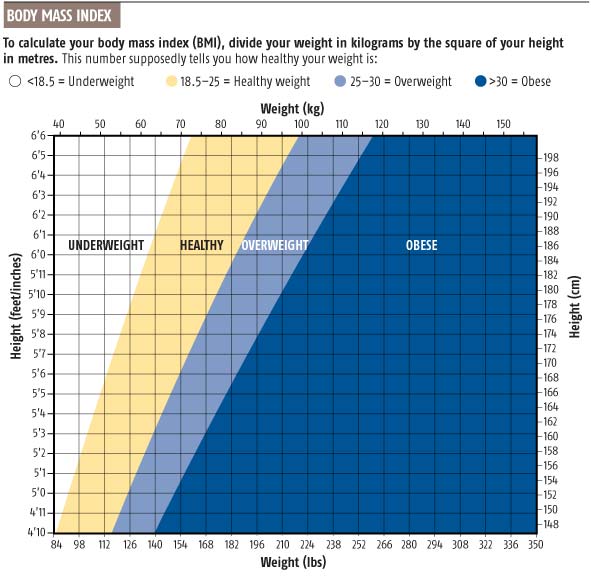
BMI - Body Mass Index


I'm overweight. BMI and Waist to hip ratio both indicate that fact.

At 5'7.5" and 12st 131bs or 181 pounds (was 13st 8lbs a few months ago!) my BMI is 27.9.

BMI is Body Mass Index defined by dividing weight in kilogrammes by my height in metres squared. BMI = kg/m2.

My current weight loss goal is to stabilise at 155 pounds (11st 1lb) giving a BMI of 23.9.

For a BMI of 24.9 my weight would be 161.5 pounds (11st 7.5lbs).

For a BMI of 20.9 my weight would be 135 pounds (9st 9Ibs).

I use a simple BMI calculator.

Back in February 1987 I was 11st 13lbs (BMI 25.8 - overweight) and by July 1987 in my first diet (strict calorie counting + exercise) I lost 2 stone to 9st 13lbs (BMI 21.4 - normal weight). Sharon said I looked emaciated at this weight!

By August 1990, 3 years on, I had put on all the weight I had lost in 1987 diet.

Sharon's weight today is 10st 2Ibs, 5'1" - BMI is 26.6. A 24.9 BMI for her is 9st 6Ibs. A 23.9 BMI would be 9st.

But how were these figures calculated in the first place? And is their any variation of these classifications? Wikipedia BMI page has answers.

the following are common definitions of BMI categories:

  • Starvation: less than 15
  • Underweight: less than 18.5
  • Ideal: from 18.5 to 25
  • Overweight: from 25 to 30
  • Obese: from 30 to 40
  • Morbidly Obese: greater than 40

During the past 20 years, says CDC obesity among adults has risen significantly in the United States. The latest data from the National Center for Health Statistics show that 30 percent of U.S. adults 20 years of age and older—over 60 million people—are obese. The U.S. National Health and Nutrition Examination Survey of 1994 indicates that 59% of American men and 49% of women have BMIs over 25.

Being overweight increases the risk of many diseases and health conditions, including the following:

  • Hypertension
  • Dyslipidemia (for example, high total cholesterol or high levels of triglycerides)
  • Type 2 diabetes
  • Coronary heart disease
  • Stroke
  • Gallbladder disease
  • Osteoarthritis
  • Sleep apnea and respiratory problems
  • Some cancers (endometrial, breast, and colon)
BMI or Quetelet Index was invented between 1830 and 1850 by the Belgian polymath, Adolphe Quetelet during the course of developing "social physics".

The BMI has become controversial because many people, including physicians, have come to rely on it for medical diagnosis - but that has never been the BMI's purpose. It is meant to be used as a simple means of classifying sedentary (physically inactive) individuals with an average body composition.

I wouldn't say i was physically inactive (how is that defined?) - I walk Jazzie the dog most days for an hour or so and ride a bike occassionally on a CRABS ride.

Have i got an average body composition?

BMI accuracy in relation to actual levels of body fat is easily distorted by such factors as fitness level, muscle mass, bone structure, gender, and ethnicity. As a general rule, developed muscle contributes more to weight than fat and the BMI does not account for this. Therefore a person with more muscle mass, such as a body-builder, will seem to be overweight. People who are mesomorphic tend to have higher BMI numbers than people who are endomorphic, because they have greater bone mass and greater muscle mass, respectively, than do endomorphic individuals.

Similarly, an ectomorphic individual could conceivably receive an unhealthily low reading, when in fact their body type makes them naturally thin no matter what they eat.

International BMI variations

These recommended distinctions along the liner scale may vary from time to time and country to country. In 1998, the U.S. National Institutes of Health brought U.S. definitions into line with World Health Organization guidelines, lowering the normal/overweight cut-off from BMI 27.8 to BMI 25. This had the effect of redefining 30 million Americans, previously "technically healthy" to "technically overweight". It also recommends lowering the normal/overweight threshold for South East Asian body types to around BMI 23, and expects further revisions to emerge from clinical studies of different body types.

Waist-to-Hip Ratio vs BMI May Be More Accurate Predictor of CV Risk

Chris Street edits in bold.

Wikipedia article Waist to Hip Ratio was updated by Chris Street today:-

WHR not Body mass index (BMI), is the best obesity measure for assessing a person’s risk of heart attack. If obesity is redefined using WHR instead of BMI, the proportion of people at risk of heart attack worldwide increases threefold.[2][3]

News Author: Laurie Barclay, MD
CME Author: Charles Vega, MD, FAAFP

Release Date: November 7, 2005;

Nov. 7, 2005 — Changing the standard from body mass index (BMI) to waist-to-hip ratio would improve accuracy of cardiovascular (CV) risk assessment across ethnic groups, according to the results of a standardized case-controlled study reported in the Nov. 5 2005 issue of The Lancet. The editorialists suggest that this marker should replace BMI.

Obesity and the risk of myocardial infarction in 27 000 participants from 52 countries: a case-control study
Waist-to-hip ratio, not body mass index (BMI), is the best obesity measure for assessing a person’s risk of heart attack, conclude authors of a study published this week. If obesity is redefined using waist-to-hip ratio instead of BMI, the proportion of people at risk of heart attack increases threefold. Heart-attack patients had a strikingly higher waist-to-hip ratio than people in a control group, irrespective of other cardiovascular risk factors......

"Our findings suggest that substantial reassessment is needed of the importance of obesity for cardiovascular disease in most regions of the world," lead author Salim Yusuf, MBBS, PhD, from Hamilton General Hospital-McMaster Clinic in Ontario, Canada, said in a news release.

The INTERHEART Study was a standardized case-control study of acute myocardial infarction (MI), which included 27,098 participants (12,461 cases and 14,637 controls) of varying ethnicity from 52 countries. The investigators evaluated the relationship between BMI, waist and hip circumferences, and waist-to-hip ratio to MI overall and in each ethnic group.

"Waist-to-hip ratio shows a graded and highly significant association with myocardial infarction risk worldwide," the authors write. "Redefinition of obesity based on waist-to-hip ratio instead of BMI increases the estimate of myocardial infarction attributable to obesity in most ethnic groups."

Study limitations include possible underestimation of the true contribution of visceral fat to CV disease risk, case-control design, and inability to determine the relationship between the different measures of obesity on other outcomes or whether there is an increased risk for some diseases in those who are lean.

"The INTERHEART investigators place what seems to be the final nail in the casket for body-mass index as an independent cardiovascular risk factor," Drs. Kragelund and Omland write. "The main message from the new INTERHEART report is that current practice with body-mass index as the measure of obesity is obsolete, and results in considerable underestimation of the grave consequences of the overweight epidemic. A direct consequence of these findings is that, for assessment of risk associated with obesity, the waist-to-hip ratio, and not body-mass index, is the preferred simple measure."

Lancet. 2005;366:1589-1591, 1640-1649

Clinical Context

Risk factors for MI have been extensively studied, but most of this research has focused on individuals in Europe and North America. The INTERHEART study reached out beyond cultures and ethnicities traditionally involved in medical research to include patients in Asia, Africa, the Middle East, and South America. In the original report from this study, published in the Sept. 11 - 17, 2004, issue of The Lancet, the authors found that common risk factors for MI included smoking, raised ApoB/ApoA1 ratio, history of hypertension, diabetes, abdominal obesity, and psychosocial factors. However, the intake of fruits and vegetables as well as alcohol consumption was protective against MI.

These data from the INTERHEART study suggested that waist circumference might be a better predictor of CV risk than another well-known anthropometric measurement, the BMI. The current analysis focuses on this issue.

Study Highlights

  • The study was a case-control trial comparing patients with their first MI vs age- and sex-matched controls. Patients with MI were eligible for study participation if they did not have cardiogenic shock or any major chronic illness. Subjects were evaluated in centers in 52 countries and 6 continents.
  • Cases and controls were compared in terms of demographic factors, socioeconomic status, lifestyle, medical risk factors, and a personal and family history of CV disease.
  • 12,461 cases were compared with 14,637 controls. Logistic regression was used to account for other confounding CV risk factors in comparing anthropometric values.
  • For the overall cohort, the mean BMI was lowest in Asia, intermediate in Europe, South America, and Africa, and highest in North America, the Middle East, and Australia. However, waist-to-hip ratio exhibited different geographic trends, being lowest in China, intermediate in North America, Europe, and other parts of Asia, and highest in the Middle East and South America.
  • Subjects in the highest quintile of BMI had an OR of MI of 1.44 vs those in the lowest quintile. However, the risk for MI associated with BMI was obviated after adjustment for other risk factors.
  • Conversely, subjects in the highest quintile of waist-to-hip ratio had an OR of MI of 1.77 vs those in the lowest quintile. After adjustment for other risk factors, this OR decreased to 1.33, but it remained statistically significant.
  • The risk of MI increased progressively with values for waist-to-hip ratio, with no evidence of a threshold. The association between MI and waist-to-hip ratio was significant regardless of BMI, sex, age, or the presence of other CV risk factors.
  • The waist-to-hip ratio, waist-to-height ratio, waist circumference, and hip circumference were all better predictors of MI vs BMI. BMI was the worst predictor of MI across all 8 ethnic groups, whereas waist-to-hip ratio was the best predictor in 6 of the 8 groups.

Waist to Hip ratio

I'm overweight. BMI and Waist to hip ratio both indicate that fact.

At 5'7.5" and 12st 11 1bs or 179 pounds at 30th December 2006 (was 13st 8lbs a few months ago!) my BMI is 27.6.

Methods for actually measuring body fat percentage are preferable to BMI for measuring healthy body size. Mayo Clinic researchers say the BMI doesn't accurately predict risk of cardiovascular death because it doesn't distinguish between muscle and fat. They say a better measure may be your Waist-hip ratio (wikipedia). The evidences is that in an analysis at Mayo Clinic led by Lopez-Jiminez of 40 studies involving 250,000 people, heart patients with normal BMIs were at higher risk of death from cardiovascular disease than people whose BMIs put them in the "obese" range. The ones in the study who had the highest death rates were people who weighed the least; in other words, they had the lowest BMIs (reference citation required).

My Waist-hip ratio is 104cm/99cm (41"/39") or 1.05, Sharon's is 34"/41" (86cm/104") or 0.83.

According to NICE NHS booklet (December 2006): target for men is <94cm>


Source: NICE Guideline Booklet

Women within the 0.7 range have optimal levels of estrogen and are less susceptible to major diseases such as diabetes, cardiovascular disorders and ovarian cancers. Men with WHRs around 0.9, are more healthy and fertile with less prostate and testicular cancer.

WHR is considered to be factor in a person's attractiveness. Women with a 0.7 WHR are often rated as more attractive by men regardless of culture, race, religion or ethnicity. Such diverse beauty icons as Marilyn Monroe, Twiggy, Sophia Loren, Kate Moss, Salma Hayek and even the Venus de Milo all have ratios around 0.7, even though they have significantly different weights. Congruent with an evolutionary perspective, evidence suggests that humans use subtle biological cues, such as WHR, to indicate mate potential and fertility.

Abdominal Obesity in INTERHEART study

This study found that BMI showed a modest and graded association with risk of Myocardial Infarction MI (Heart Attack). Waist and hip circumferences were both highly significantly associated with risk of MI. Waist-to-hip ratio was a better measure of risk than waist circumference alone.

Obesity and CVD: Biologic Mechanisms

The biologic mechanisms underlying the relation between obesity and cardiovascular risk are unclear. The waist-to-hip ratio is a simple measure for visceral obesity, and visceral adiposity is a manifestation of the metabolic abnormalities that underlie risk of future CVD events. It may be that the ratio of fat to muscle (sarcopenic adiposity) can be a measure of risk of CVD, which is best estimated by waist-to-hip ratio.

Visceral adiposity is the fat that is integrated within the abdominal organs, as opposed to subcutaneous fat, as measured by the "skin-fold" test.

These results suggest that it is not how much fat a patient has, but where it is stored that contributes to overall cardiovascular risk, insulin resistance, and glucose tolerance. It means that waist and hip circumferences provides a predictive power greater than that provided by BMI for estimating the risk of MI.

With the redefinition of abdominal obesity based on waist-to-hip ratio instead of BMI, the estimated risk of MI attributable to obesity was higher than previously assumed and the risk of MI rose progressively with increasing values for waist-to-hip ratios with no evidence of a threshold.

The global burden of obesity has been substantially underestimated by the reliance on BMI.

  • INTERHEART estimated
    • 63% of heart attacks were due to abdominal obesity indicated by a high waist to hip ratio (for men >0.95, for women >0.85).
    • Those with abdominal obesity were at over twice the risk of a heart attack compared to those without.
    • Abdominal obesity was a much more significant risk factor for heart attack than BMI.
    • men (33%) and women (30%) had a high waist to hip ratio.
    • benefits may accrue by redistribution of the body's fat stores to the hips or by increasing muscle mass.

Friday, December 29, 2006

Earth-like planet may be first of many

my edits in bold
  • 28 January 2006
  • Maggie McKee

PLANET hunters have detected what seems to be the smallest extrasolar planet so far, orbiting a red dwarf 22,000 light years away. Because red dwarfs are the most common type of star in the Milky Way, this might mean that Earth-like planets are abundant in our galaxy. In any case, it bodes well for "gravitational microlensing", the technique used to find this exoplanet.

Most planet-hunting techniques pick up massive planets in tight orbits around their host stars. About 170 exoplanets have been found around sun-like stars and until now the smallest had weighed in at 7 Earth masses. Now Jean-Philippe Beaulieu at the Institute of Astrophysics in Paris, France, and his team have found a planet that seems to be just 5.5 times the mass of Earth. To pick out the star they exploited the phenomenon called gravitational microlensing. When one star passes in front of another as seen from Earth, light from the background star is bent and magnified, or "lensed", by the gravity of the foreground star. If the star in the front is playing host to a planet, the planet's gravity can boost the light of the background star for a few hours.

The microlensing event that revealed the new planet was one of about 1000 picked up each year by OGLE, an international collaboration which monitors 170 million stars in the Milky Way's central bulge. Astronomers in Perth, Australia, who follow up some of these events for another consortium called PLANET, found the exoplanet's telltale signal on 9 August 2005.

But there is still some uncertainty as to the planet's mass - it could be anything from 2.8 to 11 Earth masses. That is because the microlensing measures only the ratio of the mass of the host star to the planet's mass, and researchers then have to use models to estimate the most likely mass of the star and the planet (Nature, vol 439, p 437).

The planet appears to orbit its star at about 2.6 times the distance of the Earth to the sun and is as frigid as Neptune and Pluto, with a surface temperature of about -220 °C. It is significant that the planet has been found around a red dwarf because such stars make up about 70 per cent of the stars in the Milky Way, so there could be many more such planets out there.

Other techniques have shown that Jupiter-sized planets are rare around red dwarfs. "This suggests that lower-mass planets are a lot more common than Jupiters around low-mass stars," says team member David Bennett at the University of Notre Dame in Indiana.

The find is also an important milestone for microlensing. "They've proven they can detect these low-mass [planets]," says Sara Seager of the Carnegie Institution of Washington in Washington DC. "It's just a matter of time before they get more."

From issue 2536 of New Scientist magazine, 28 January 2006, page 12

the Bladder is the first human organ ever grown in the lab and transplanted into patients

  • my edits in bold
  • 08 April 2006
  • Peter Aldhous
  • Andy Coghlan
  • Roxanne Khamsi

IT IS being hailed as a landmark in tissue engineering. Seven youngsters who faced a future of incontinence and serious kidney problems have been given new bladders grown in the lab from their own cells, and grafted onto their existing bladders.

Researchers in regenerative medicine are impressed by the results, which were announced this week by Anthony Atala of Wake Forest University in Winston-Salem, North Carolina. "This is the first human organ ever grown in the laboratory and transplanted into patients," says Bob Lanza, head of scientific development at Advanced Cell Technology in Worcester, Massachusetts. "It's the beginning of a new medical era."

Maybe so, but tissue engineers warn that it will be years before they crack the problem of growing more complex, solid organs, such as kidneys and hearts. And Atala's technique does not yet match the results of conventional surgical treatment for severe bladder problems. "It's pioneering work," says Stéphane Bolduc, a paediatric urologist at Laval University in Quebec City, Canada. "But clinically, I'm not yet convinced."

In the late 1990s, while at Harvard Medical School in Boston, Atala replaced dogs' bladders with organs grown from scratch (New Scientist, 13 June 1998, p 16). This week, his team reported on seven people who were all born with spina bifida, which left them with shrunken bladders missing normal nervous connections. They were incontinent, and the fluid in their bladders was at dangerously high pressure, which can damage the kidneys. Between the ages of 4 and 19 they were given lab-grown bladders, and have now had the engineered organs for an average of four years (The Lancet, DOI: 10.1016/S0140-673(06)68438-9).

Atala and his colleagues first took a biopsy from each person's bladder, containing about one million cells. These cells were grown in culture for a month, until they had multiplied to around 1.5 billion cells, and were then seeded onto a sac-shaped "scaffold" made of collagen, a structural protein found in most of our tissues. In some cases this was mixed with polyglycolic acid, a biodegradable material used in surgical stitches. After being grown for a further two months, the engineered bladders were grafted onto the patients' own.

“The patients' cultured cells were seeded onto a sac-like scaffold of collagen and then grown for a further two months”

The usual treatment to fix defective bladders is to cut out a section of a person's small intestine and graft this onto the bladder. However, this can cause complications, including the secretion of mucus from the intestinal tissue into the bladder, which can lead to urinary infections and bladder stones. Atala's patients didn't have these problems, and their bladder function improved. In general, the organ's overall capacity went up and the pressure inside it went down. Rather than leaking urine almost continuously, the patients could remain dry for several hours at a time, although because they still lacked normal nervous connections, they did not gain full bladder control.

It is an encouraging start, says Bolduc, who is also working on tissue-engineered bladders. But he says the gains in capacity and reductions in pressure reported by Atala's team are still less than conventional surgery can achieve.

Atala admits that he still has some work to do. One goal is to grow a complete bladder, offering hope for cancer patients who must have the entire organ removed. This will require sophisticated surgery to connect the ureters, the tubes that carry urine from the kidneys. It also means growing the sphincter that normally seals the organ shut, opening only when we urinate. "We are actually making sphincter muscles now," Atala says.

Surgical tricks learned with these first bladders should help in future attempts to replace the entire bladder. Atala's best results came when he wrapped the grafts with omentum, a flap of fatty tissue that normally sits over the front of the intestines. It is rich in blood vessels, and seemed to help the grafts establish a blood supply.

Getting a good blood supply is also a key obstacle to researchers trying to grow solid organs, such as hearts and kidneys, and they must find a way to infuse nutrients into the growing structures.

From issue 2546 of New Scientist magazine, 08 April 2006, page 10

Diet, physical activity and obesity statistics 2006

Diet, physical activity and obesity statistics 2006: - download here (pdf).

www.heartstats.org aims to be the most up-to-date source of statistics on cardiovascular disease in the UK.

Foreword

  • The past decade has seen unprecedented advances in the fight against diseases of the heart and circulation, collectively known as cardiovascular disease (CVD).
  • Premature deaths from CVD are falling and treatments are improving all the time. Nevertheless, it still remains the major cause of premature death and disability in the UK.
  • CVD is largely preventable and the risk factors for it are well known and amenable to modification through changes in life style.
  • a significant reduction in the amount of saturated fat that the UK population is eating
  • the population is becoming fatter, avoids eating healthy foods and takes little exercise.
  • The consequence is obesity, and in particular central obesity, caused by fat deposited inside the abdomen, which in turn leads to the development of type II diabetes, once a disease of old age but now increasingly a disease of the young.
  • People with diabetes are prone to develop vascular disease and suffer premature heart attacks and strokes.
Peter Weissberg, Medical Director BHF

Diet in England
• A diet which is high in fat, particularly saturated fat and in salt, and low in complex
carbohydrates and fruit and vegetables increases the risk of chronic diseases – particularly
CVD and cancer.
• Low fruit and vegetable consumption causes around 4% of the total disease burden and about 30% of CHD and 20% of stroke (source: World Health Report 2002)
• Only 13% of men and 15% of women, and 13% of boys and 12% of girls, consume the
recommended five or more portions of fruit and vegetables a day.
• Around 20% of adults exceed the recommended levels of saturated fat consumption.
• Saturated fat intake in children (around 14%), while lower than found in adults, is still above
the target of 11%.
• Salt consumption among men is almost double the recommended level of 6g/day.

Table 1.1 Selected dietary targets and objectives (also see Table 1.2)
  • Total fat: To maintain the average total intake of fat at 35% of food energy
  • Saturated fat: To reduce the average total intake of saturated fat from 13.5% to 11% of food energy
  • Fruit and vegetables: To increase the average consumption of a variety of fruit and vegetables from 2.7 (325g) to 5 portions (600g) per day
  • Fibre: To increase the average intake of dietary fibre (Non-starch polysaccharide fibre) from 15 to 18 grams per day
  • Sugar: To reduce the average intake of added sugar from 13.6% to 11% of food energy
  • Salt: To reduce the average intake of salt from 11 to 6 grams per day by 2010
Physical activity in England
• Low levels of physical activity (less than 2.5 hours per week moderate intensity activity or 1 hour per week vigorous activity) cause around 3% of the total disease burden and about 20% of CHD and 10% of stroke.
• only about a third of men and around a quarter of women meet the Government’s recommendation of a minimum of 30 minutes of at least moderate intensity activity on five or more days of the week.
• the ambitious target that 70% of adults should meet the recommended level of
physical activity by 2020 is unlikely to be met. Between 1997 and 2004 the proportion of
people meeting the government guideline for physical activity increased from 32% to 37%
in men and from 21% to 25% in women.
• Around 70% of boys and 60% of girls were active for at least an hour a day.

Overweight and obesity in England
• Over 7% of the total disease burden is caused by raised body mass index (BMI), around a third of CHD and ischaemic stroke and almost 60% of hypertensive disease is due to overweight.
• rates of obesity for men are 22% and for women 24%.
• The percentage of adults who are obese has increased by over 50% in the last decade. This
increase is particularly marked in men who are now as likely to be obese as women.
• around a third of boys and girls are overweight or obese.
• Between 1995 and 2004 the prevalence of obesity nearly doubled among boys (from
11% to 19%) and increased by over a half in girls (from 12% to 19%).

The adverse effects of excess weight are more pronounced when fat is concentrated in the abdomen (central or abdominal obesity) assessed using the waist to hip ratio.
  • INTERHEART estimated
    • 63% of heart attacks were due to abdominal obesity indicated by a high waist to hip ratio (for men >0.95, for women >0.85).
    • Those with abdominal obesity were at over twice the risk of a heart attack compared to those without.
    • Abdominal obesity was a much more significant risk factor for heart attack than BMI.
    • men (33%) and women (30%) had an high waist to hip ratio.

Alzheimer’s Disease and Parkinson’s Disease - a free 360 degree perspective from Nature


Approaching Alzheimer’s Disease and Parkinson’s Disease from many perspectives, Nature Publishing Group (NPG) provides the full-spectrum coverage these diseases deserve. From genetics and behaviour to pharmacology, brain circulation and mapping, NPG continues to publish top-tier research spanning the breadth of Alzheimer’s and Parkinson’s Diseases.

We have gathered together a sampling of top quality research papers on these diseases for you to preview (most at no charge) from a number of our highly-rated journals.

An article linking use of statins to reduction in Alzheimer’s Disease is here.

Stem Cell Research - The 'untouchables' of US science

my edits in bold.

Stem cell research


When George Bush banned funding he effectively put researchers into quarantine

Ed Pilkington in Cambridge, Massachusetts
Friday December 29, 2006
The Guardian


Ampoules containing a medium for stem cell storage
Ampoules containing a medium for stem cell storage. Photograph: Peter Macdiarmid/Reuters


A bridge next to Kevin Eggan's laboratory overlooks one of the most concentrated square miles of scientific fire power in the world: North Yard, the science hub of Harvard. The bridge, a recent construction in glass and steel, was intended to facilitate collaboration between two research teams.

On one side is the lab run by Dr Eggan, an assistant professor of molecular and cellular biology who specialises in human embryonic stem cell research; on the other is the Bauer Centre for Genome Research, which focuses on genes.

Working together, the teams started devising projects to analyse the genetics of human embryonic stem cells, with Dr Eggan's team generating the cells on one side of the bridge and their DNA being analysed on the other side.

But on August 9 2001 a metaphorical shutter came down that closed the bridge as effectively as if it had been bricked up. George Bush issued a presidential decree banning the use of federal funds for research on new human embryonic stem cell lines.

He delighted anti-abortionists and the Christian right, who oppose what they see as scientists making life and death decisions. This is despite the fact that most stem cell lines derive from surplus fertilised eggs from IVF treatment that would be destroyed in any case.

Dr Eggan and his team were able to carry on their work only because Harvard was committed to it and wealthy enough to fund it privately. But overnight, the ban turned them into the equivalent of dogs suspected of carrying rabies. Everything they did or touched, from high-tech equipment down to paperclips and the electricity used in the building, had to be quarantined from federally funded labs around them.

The joint project between the Eggan lab and the Bauer Centre was an immediate casualty. It was suspended to avoid "contamination" with the centre, which does receive federal funds.

Kafkaesque

Over the past five years the imperative of segregating all stem cell research has created a jumble of red tape. This has allowed collaboration to restart, but at a price. In the Eggan lab each piece of equipment is marked with a sticker: green for privately funded machines that can be freely used; red for those bought by the National Institutes of Health, the federal funding body, which must not be used in stem cell research.

The most Kafkaesque is the yellow sticker. This is applied to equipment that is federally owned but where a deal has been reached: whenever a scientist uses the machine they record it in a book and the NIH is reimbursed.

In one room there are two cryostats, used to prepare tissue for the microscope, standing side by side. One has a green sticker, the other red. Someone has put a label above the red machine, showing Mr Bush pointing straight out and saying: "You there! No human ES cell sectioning on this machine!"

For Dr Eggan, a young scientist of 32 who is itching to get on with research, the result has been agony and frustration: "I've spent the last three years of my life trying to get this sorted. At least a third of my time is still spent keeping the accounts and equipment separate."

No one yet knows where stem cell studies might lead, but most experts in the field believe there is huge potential for discovering new ways of treating diseases including diabetes, Parkinson's and Alzheimer's, or the cruel wasting disease spinal muscular atrophy.

Embryonic stem cells are the basic building blocks created when an egg is fertilised. About 100 cells cluster to form a ball known as a blastocyst, and at this stage each cell is capable of turning into any organ or tissue of the body. In Dr Eggan's laboratory, the computers show stem cells that have just transformed themselves into heart cells, pulsating under the microscope.

The Holy Grail for researchers is to control that process so that cells can be instructed to turn into different parts of the body. That could allow more accurate and humane ways of testing drugs on diseased cells grown in Petri dishes rather than on patients, and pave the way for a new generation of medicines.

None of this can be realised, scientists say, unless there is concerted and collaborative effort, with the US as the world's research engine. "This work is so hard and so in its infancy that to be counting paperclips because of a federal injunction is, to put it politely, unfortunate," said Susan Solomon, chief executive of the New York Stem Cell Foundation, a privately funded research body.

The Bush administration has sought to disarm criticism by allowing experiments to go ahead on supplies of cells created before the decree was issued in 2001. But, beside what some scientists point to as questionable logic, several of these "presidential lines" have proved faulty or been contaminated by being grown in animal culture. As a result, stem cell research in the US is now largely confined to a small number of prestigious establishments such as Harvard and the New York foundation, which can pull in sufficient private money to generate their own lines.

Other institutions, more dependent on federal funding, have been dissuaded from entering the field.

Paul Nurse is the president of the Rockefeller University in New York, which has seven Nobel laureates. Like Harvard it has the private funds to support stem cell research, but he is aware of several institutions unable to take the risk. "In theory if we used one plastic test-tube bought with just one cent of federal money for stem cell research we could jeopardise our entire research programme of $100m (£52m). That has created a climate of fear," he said.

The worst effect of the ban, he believes, is that it is pushing away a generation of young scientists. He knows people who have been inhibited from taking on stem cell research because of the bureaucracy.

Scientists' hopes are focused on the incoming Democrats who take control of Congress in January. But with a majority of two-thirds needed to overturn a presidential decree, Mr Bush is likely to be able to block any attempt to lift the ban. Few expect any change until he leaves the White House in two years' time. Until then Dr Eggan and his colleagues will carry on wrestling with their stickers and double accounting.

Explainer: Gains could be huge

Stem cells can divide to produce a variety of cell types, such as those in the blood or brain. The most useful to scientists are embryonic stem cells, from human embryos that are a few days old. These cells go on to produce every cell and tissue type in the body.

It is this ability that has scientists so excited. Already adult stem cells are used in, for example, bone marrow transplants for leukaemia, and if the power of stem cells to grow new tissues can be harnessed, doctors might be able to treat diseases such as Alzheimer's by using stem cells to replace missing structures in the brain. One day it might even be possible to regrow limbs or organs.

These clinical applications are a long way off. In the short term, studying embryonic cells will help scientists understand how structures in the body are formed and how congenital diseases develop. That could lead to treatments. Drugs will be tested on stem cells that mimic features of genetic diseases, so fewer animals will be used.

Progress is being made. A recent study published in the journal Nature successfully tested a stem cell treatment for muscular dystrophy in dogs. The researchers are next moving on to human trials.
James Randerson


Related articles
25.07.2006: US faces science brain drain after Europe backs stem cell funding
24.07.2006: EU reaches deal on stem cell research
20.07.2006: Bush vetoes stem cell funding
08.07.2006: Cardinal's stem cell comment sparks anger
01.06.2006: US 'falling behind' in stem cell research

Hwang Woo-suk
20.01.2006: Journal backs verification of cloning work in wake of scandal
12.01.2006: Disgraced stem cell scientist blames researchers
24.12.2005: Rise and fall of clone king who doctored stem-cell research
23.12.2005: Korean scientist resigns over fake stem cell research

Comment and analysis
13.01.2006: Richard Horton: The cloning fraud case is a scientific success story
01.01.2006: Justin McCurry: Disgrace
21.05.2005: The challenge of the biotech century
20.05.2005: A new medical frontier
13.02.2004: Why we shouldn't fear human cloning

The issue explained
08.02.2005: Q&A: stem cells
View our interactive guide to stem cells

Wednesday, December 27, 2006

Space telescope to hunt planets

Artist's concept: Corot

The French-led Corot mission has taken off from Kazakhstan on a quest to find planets, not much bigger than Earth, outside our Solar System.

The mission is expected to provide a better understanding of planets smaller than Saturn, of which only a small number of examples are known so far.

The vast majority of the more than 200 extrasolar planets found to date have been detected from the ground by watching for the slight gravitational tug they exert on their parent stars, called the radial velocity technique.

The space telescope will monitor about 120,000 stars for tiny dips in brightness that result from planets passing across their faces.

The mission is capable of detecting tiny drops in light of only 300 parts per million, which is good enough to detect planets as small as two or three times the size of Earth.

The COROT mission is led by France's Centre National d'Etudes Spatiales (CNES) with participation from the European Space Agency (ESA). It will be put in a circular orbit 900 kilometres above Earth.

COROT will start its scientific observing campaign around the end of January 2007, after mission managers have tested its instruments to make sure everything is working properly. The entire mission is scheduled to last 2.5 years.

The multinational mission will also study the stars directly to uncover more about their interior behaviour.

Corot blasted off from the Baikonur Cosmodrome at 1423 GMT, carried into a polar orbit on a Soyuz-2-1b vehicle.

A European Space Agency (Esa) spokeswoman said the take-off had gone smoothly.

However, officials would not know until later whether the satellite had separated from its launcher correctly, she said.

From its vantage point 827km (514 miles) above the Earth, Corot will survey star fields for approximately 2.5 years.

The French space agency, Cnes, is working with six international partners: Esa, Austria, Spain, Germany, Belgium and Brazil.

'Chance' observation

Ian Roxburgh, professor of astronomy at Queen Mary, University of London, UK, is the Esa scientist on the mission.

"The exciting part of this mission is to look, or to try to find, planets that are similar to the Earth," he told the BBC.

Artist's concept: Planet crosses in front of star (Esa)
Finding a transit will involve a bit luck
"That is, they'll be somewhat bigger than the Earth, but they'll be made of rocky material able to sustain an atmosphere, and probably provide the sort of environment in which life could form.

"And of course subsequently, many years downstream, we will have more sophisticated measurements, instruments that will look for signatures of life. But at this stage, we need to understand how often there are planets like the Earth around other stars."

Corot will monitor the brightness of stars, looking for the slight drop in light caused by the transit of a planet.

This is a rare event - it relies on the chance alignment of the star and the planet with Earth. As a consequence, Corot must keep an eye on more than 100,000 stars.

Star tremors

With Corot, astronomers expect to find between 10 and 40 rocky objects slightly larger than Earth, together with tens of new gas giants similar to our Jupiter, in each star field they observe.

Every 150 days, Corot will move to a new field and begin observing again.

Its first target field is towards the centre of our galaxy, the Milky Way. Its next will be in the direction of the constellation Orion.

Corot's instrumentation is also designed to detect the subtle variation in a star's light caused by sound waves rippling across the surface. These waves are the equivalent of seismic waves on the Earth.

By studying these "starquakes", astronomers can gain a detailed insight into the internal conditions of the star.

Corot stands for "COnvection ROtation and planetary Transits".

The satellite is the first of a number of spacecraft that will hunt and study distant planets over the next few years.

Corot satellite (BBC)
1. 4CCD camera and electronics: Captures and analyses starlight
2. Baffle: Works to shield the telescope from extraneous light
3. Telescope: A 30cm mirror; it views the star fields
4. Proteus platform: Contains communication equipment, temperature controls and direction controls
5. Solar panel: Uses the Sun's radiation to power the satellite

From New Scientist, 27th December 2006 and BBC

A man who believes in Darwin as fervently as he hates God by Rod Liddle in The Spectator

I've highlighted in bold The Spectator article.

For those who don't feel like reading another hit piece, here's a quick quote from below to get the gist of it:


"Like all scientific theories, Darwinism will be amended — perhaps beyond recognition. Perhaps it will be discarded entirely. Either way, disavowing a divine being because it doesn't quite fit in with another here-today-gone-tomorrow theory seems a tad peremptory."

I sure hope the "here-today-gone-tomorrow theory" of gravity doesn't get any ideas. -Josh.

Reposted from:
http://www.spectator.co.uk


In the downstairs loo of Richard Dawkins's house in Oxford there's a framed award from the Royal Society; to remind visitors, or maybe Richard himself, that here lives a man of some purpose, some gravitas and intellectual clout. The Faraday prize is given to those who communicate science with brilliance and verve to the scientifically ignorant, thick general public. Richard has done a lot of that, ever since The Selfish Gene in 1976. It is his job these days; he holds the Simonyi chair in the public understanding of science at Oxford University. His latest wife, the actress Lalla Ward, has done her bit too, helping out various bereft timelords in Dr Who.

Richard himself is a bit of a timelord, if you like. A scientist forever battling an intractable foe — the daleks of religion. He is probably more famous these days for kicking God around than for the hard science of his earlier work (a fact he accepts, with some misgivings); he is our most belligerent and brilliant atheist. Show him a deity — Jehovah, Allah, Sat Guru, whoever — and he will stand up straight and nut it right between the eyes. He rarely yields, as I discovered when I interviewed him for Channel 4.

His latest book does all this and more. It is the (surprise) publishing success of the year and easily outsells those awful football autobiographies (170,660 so far). It is a book of rhetoric rather than science. The God Delusion is, like all the best books, riven with beguiling contradictions, full of interesting holes into which one can clamber and find oneself instantly transported to an alternative universe. It is Dawkins's broadside against God and those who are stupid enough to believe in him, or her, or it. A book against belief written with the fervour of one who believes utterly in non-belief. A book which insists that science must be a humble undertaking but which — driven by the logic of his argument — contains Dawkins's own abbrievated version of the Ten Commandments (for which thanks, mate). A book that, for a disinterested non-believer, shows a simple and touching faith in the scientific creed of Darwinism — which theory, only 147 years after its inception, is already looking rather flawed and careworn. And finally, as a neat little irony, a book that will trouser its author an enormous sackload of dosh, not because it is beautifully written and at times exquisitely argued, but because it is about that thing which the author believes must be banished — God.

The author is, as ever, affable, eloquent and charming. He settles into his armchair and immediately tells me, to my surprise, about the religious renewal he experienced when he was 14.

'I think it was Elvis. I mean, I should have known better because of course practically all Americans of that class are religious maniacs. But when I discovered that Elvis was religious I went back on to religion for a bit.'

It didn't last long; the man who gave the world 'Heartbreak Hotel' was soon replaced, in Richard's canon, by the man who gave us The Origin of Species. If Elvis rocked, Darwin rocked more. He rocks still, apparently. And thence there devolved along the years an insuperable belief in atheism.

'There seems to be a tension,' I venture, 'between what I suspect you believe — that there is no God — and what science will allow you to say: that it's extremely improbable that there is a God.'

'Right. I don't think you can disprove God. But I don't think you can disprove God as you can't disprove fairies and unicorns. It's a kind of scientific purism that makes me say I can't be an absolute 100 per cent atheist.'

'But, to read your book, you are 100 per cent, aren't you?'

'No. Some of my friends and colleagues would say that [for them] it's 100 per cent.'

Well, I counter, having read the book: it's 100 per cent for you, too; it burns through on every page. Otherwise the acres of rhetoric would have been displaced by pure, disinterested science.

'I think there is some truth in that. I think there are times when one has to resort to rhetoric. For a lot of people, religion is a question of feeling rather than rationality.'

But rhetoric is a device which must necessarily be in opposition to scientific discourse; in other words, Dawkins appropriates the tools of the believer when he feels that it is expedient to do so — and hang the science. But still, let's move on. By far the weakest part of The God Delusion is when Dawkins attempts to explain why atheistic regimes have far outdone religious regimes in their murderousness, their inhumanity. I asked Dawkins when he would leave the god- botherers alone, and he responded by saying, 'When they leave the rest of the world alone. When they leave children alone, stop fighting each other and endangering the rest of us.' Which is fair enough, but the record of those regimes which presciently forsook religion is far, far worse.

'Oh,' he says. 'I think that it is incidental that Stalin was an atheist. I don't think that Hitler was. Stalin did his deeds in the name of a kind of Marxism, and you can argue as to whether that's a religion or not.'

Isn't that the point, I suggest. That with one set of values removed, another will always fill its place? That if you remove religion, there is a gap which will always be filled — and usually by something worse than belief in a deity? Are we ever worse than when we feel ourselves to be unconstrained masters of our domain, answerable to nobody but ourselves?

'I agree with you that I have not sufficiently explained that. This gap, this absence — it could be a psychological weakness of the human mind. I did have one chapter at the end, but I think I didn't do it justice, from your point of view. If I were to, then I wouldn't have any trouble filling it — it might be science, it might be human love. Relationships, something like that.'

Relationships indeed. Richard has handily provided a new bunch of commandments to replace those which Moses handed down to the rest of us. But they are terribly ephemeral things, unintentionally hilarious — the sort of stuff that might be dreamed up by Polly Toynbee after someone had slipped an ecstasy tablet in her San Pellegrino after a long day in the Guardian offices. 'Have an enjoyable sexual relationship with someone of either gender but try not to hurt anyone while doing so' — that sort of thing. They have no resonance, not the slightest suggestion that they might outlast even our current generation, never mind provide us with a template for 2,000 years. 'I'm astonished you think it a good thing, longevity,' Dawkins counters, 'You say that my commandments are here today and gone tomorrow — but that's a good thing and that's one of the points I am trying to make. That there is a steadily shifting moral zeitgeist.'

But all this leaves you with a sort of damp and most unconvincing historical relativism. By Dawkins's argument, the moral imperatives of 500 years ago were, de facto, right then — and wrong now. In the end, it leaves you without a real sense of right and wrong, merely a constantly shifting plane — and thus open to the malefactions of a Hitler or a Stalin or a Mao or a Pol Pot. But of course, as I concede to Dawkins, the simple fact that Christianity has given us a moral code which has, to an extent, lasted 2,000 years is no reason to believe in a divinity. It is, though, a very valid reason to doubt ourselves — as the historical evidence would attest.

Which brings me to the difficult stuff — and Darwinism. It is a creed to which Dawkins cleaves with the fervour of the fundamentalist, the true believer. And it is the real chink in his armour. For example, because Darwin showed us that life forms progress from the simple to the complex over hundreds of thousands of years of gradual modification, it therefore follows (according to Dawkins) that there cannot have been a divine being present before the amoebae swam in those soupy oceans at Earth's toddler stage — because he would have had to be more complex than those organisms which followed him. And that doesn't fit with the theory. But what if the theory, in its entirety, doesn't hold — as Dawkins concedes might be possible? Even now, a century and a half after Darwin wrote The Origin of Species, the notion of gradual, cumulative change in every case is being challenged (most recently by the evo-devo school, which believes that sudden change can occur within species within a single generation). Like all scientific theories, Darwinism will be amended — perhaps beyond recognition. Perhaps it will be discarded entirely. Either way, disavowing a divine being because it doesn't quite fit in with another here-today-gone-tomorrow theory seems a tad peremptory. The question Dawkins can never satisfactorily answer is: what if Darwin was wrong? And yet, as a scientist, he must be aware that the likelihood is that Darwin was wrong here or there. In which case, where does that leave his philosophical argument?

And then there is this. For Richard Dawkins, the human being is a creature propelled by the blind impetus of his or her genes. Everything we do is, at root, guided by a cold mechanism designed to propagate the survival of these incalculably minute and ruthless constituents. There is nothing more. And yet Dawkins insists that as human beings we might uniquely overcome this mechanism. Why should we, alone among animals, be able to do so, to defy our genes? And how?

'I mean that it is the selfish gene, not the selfish individual,' Dawkins says.

Well, yes, sure; we talk about reciprocal altruism for a time. Clearly, though, Dawkins means that we can progress beyond even that. So what was it that gave us the ability mysteriously to overcome this implacable mechanism?

'Because we've got very big brains. I mean ...no other animal practises contraception, for example.'

'But,' I say to him, 'there is no reason why the complexity and size of our brains should lead us to do something which is precisely what our genes do not wish us to do, is there?' It would surely be the reverse: it is perfectly counter-Darwinian.

'Yes. But it happens to be true. Darwinian selection couldn't possibly ever have favoured contraception. That's simply a demonstration that it's possible to decide to do other noble things, like being nice....' Does that sound very scientific to you? It doesn't to me. It sounds horribly like a devout believer — a believer in non-belief, except when it comes to Darwinism — rather ineffectually attempting to dig himself out of a hole.

At the end, as we sip our coffee in this agreeable secular house, I ask Richard Dawkins if he has ever had a religious experience, i.e., something more profound than signing up to God because Elvis had done so before. 'No,' he says.

'What would convince you?'

He looks askance for a moment. 'Of a supernatural being?'

'Yep.'

'Well.' He has a think. 'I suppose a large-scale miracle which could not have been engineered by a conjuror. But I, um, find it hard to imagine exactly what that might be,' he concludes.

The question, I suspect, has never even occurred to him. It is one of those possibilities to which he is not — being human and fallible, and thus wedded to a certain train of thought and resistant to being diverged from it — wholly open.

Richard Dawkins's Commandments

1. Enjoy your own sex life (so long as it damages nobody else) and leave others to enjoy theirs in private whatever their inclinations, which are none of your business.

2. Do not discriminate or oppress on the basis of sex, race or (as far as possible) species.

3. Do not indoctrinate your children. Teach them how to think for themselves, how to evaluate science, and how to disagree with you.

4. Value the future of things on a timescale longer than your own.

The Trouble With Atheism is being shown on Channel 4 on 18 December.

*****************
Here are a few of the comments:

13. Comment #11837 by Noodly on December 7, 2006 at 3:26 pm

 avatarIt's funny how Liddle emphasises that science will have to modify evolution theories, discarding and adding bits as new information comes to light - WELL THAT'S THE WHOLE BLOODY POINT OF SCIENCE. KNOWLEDGE EVOLVES.

He can't find anything to discredit Dawkin's destruction of God so he tries to make him out as some sort of Darwinian fundamentalist. Dawkins has stated that he would the first to dump Darwin and/or admit to God's existence if new evidence was overwhelming.

No one's forcing anyone to change their view on God. The Zeitgeist is encouraging frank exchanges of views rather than sweeping them under the carpet in order to avoid "offense".

The tide is turning.


43. Comment #12082 by rmgantt on December 10, 2006 at 9:00 am

Darwinism flawed and careworn? Little doesn't understand that the point of scientific theories is to under go change and metamorphosis as new evidence is discovered which refines the theory. These changes do not suggest that the theory is flawed or careworn, rather, that it is more and more relavent, becoming more polished over time.


46. Comment #12474 by Umslopogaas on December 12, 2006 at 5:35 am

Liddle says that "By far the weakest part of the God Delusion is where Dawkins attempts to explain why atheistic regimes have far outdone religious regimes in their murderousness, their imhumanity". Whether Dawkins's argument is weak or not is totally irrelevant to whether God exists. Even if every religious regime throughout history were all sweetness and light and every atheistic state brutal and fascistic, it makes not a jot of difference to nor throws any light on the argument. God either exists or does not and what authority, secular or divine, administrations appeal to when justifying their actions has no bearing on the issue.

47. Comment #13114 by Michael on December 15, 2006 at 3:26 pm

I was so incenced by Liddles article that I sent the following repost to the Spectator. Not suprisingly they haven't printed it! Seeing Liddles contribution this week I can see that he really is the Tory party at prayer.

Sir.
Why is it that critics of Dawkins and his recent book, imbued with faith, attack by innuendo but without evidence. They attack the messenger and not the message. Rod Liddle's interview is one such and it starts in the first paragraph; "his latest wife, the actress Lalla Ward……." Is he gratuitously questioning Dawkins' domestic stability and might the pot be calling the kettle black? In any event, domestic state does not impinge on the thesis that religions are not based on evidence.

Liddle goes on to criticize The God Delusion as a book of rhetoric and not science. He is wrong in that there is plenty of science, but religions are based on rhetoric and so it is hardly surprising that Dawkins uses religious rhetoric for some arguments.

Liddle makes another egregious error in suggesting that Darwin's theory of evolution is 'flawed and careworn'. It is not. For professionals it remains as fresh and coherent as the day it was written. There is so much evidence in support of the theory that it is now as much scientific fact as Newtonian physics. Ever more research data serves to reinforce the original concept, but refine the detail, much as physics has developed from Newton through Einstein to Quantum. The very nature of science is to progress, refine, refute, develop and enlarge our understanding of the world and space. If Liddle doubts the mechanics of evolution, he might like to consider why Northern races of humans have lost skin pigment and why human faces are so different across the world. Our current species of Homo sapiens migrated out of Africa as recently as some 40,000 years ago and yet so much has changed so quickly. Why? He might also like to consider how long it might have taken for humans to have actually speciated again; something happily prevented by widespread travel and migration these last few hundred years.

Liddle goes on to say that Dawkins clings to the creed of Darwinism like the true believer. Wrong again. Dawkins merely adheres to evidence, for which there is much in biological science but none for religions. The latter alone depends on faith and creeds.

'Relationships indeed' sneers Liddle when Dawkins discusses the changing Zeitgeist as if religions haven't evolved over time. How many different sects of Christianity and Islam are there today? All catering for the imperatives of their various adherents, as wishes have changed over 2000 years. Yet all professing the absolute truth. Religions are themselves a product of the Zeitgeist and move with it.

Liddle repeats the hackneyed contention that leaders without faith have propounded the most and greatest evils. Oh yes! Where is the evidence? Stalin yes, but nearly all the rest have been religious adherents including Hitler and Genghis Khan. Even Blair and Bush, devout Christians, deliberately deceived their public when invading Iraq. And isn't the indoctrination of our children with elaborate fairy stories and great guilt, serious ongoing abuse? There is no evidence that morality stems from religion but has indeed been incorporated into religion. Morality derives from biological pragmatism and simpler variants are common among many social species. It also predates the present 'great religions'.

One might ask why religions are so pervasive despite being based on so little evidence. It is probably because it provides such a powerful aid for the alpha males ruling their people. It overrides the alpha male and cannot be dismissed with the same ease as deposing the leader. It invests the leader with supernatural authority. It is also a useful means of making large groups of people cohesive. Clan or tribe size has clear advantage in defending territory against neighbours. Religion then becomes very much part of the clan scent, to use an animal analogy. A possible example of group selection and not merely a by-product of our long adolescence.

Liddle ends his piece with the 'killer question'. 'What would make you believe in God?' The question, Liddle suspects, has never occurred to Dawkins. Well, if he had followed some of Dawkins many public appearances he would realise that it is a recurrent question, which always draws a variant of the same answer. The only possible answer. Evidence. Sound objective evidence and Dawkins would change his mind as any good scientist

Scan could spot early Alzheimer's


Alzheimer's tissue. Picture: UCLA
The brown amyloid plaques are linked to Alzheimer's. Pic: UCLA
Patients with the earliest symptoms of Alzheimer's disease could be diagnosed using an advanced scanning technique.

A team at the University of California, Los Angeles, says it has found a way to highlight distinctive brain changes linked to Alzheimer's.

Although the disease can be diagnosed by assessing mental decline, physical changes within the brain can usually be confirmed only by a post-mortem.

The study appears in the New England Journal of Medicine.

The UCLA team says its technique might be effective long before disabling symptoms emerge.

This might allow drugs and other therapies to be employed at an earlier stage to slow the progression of the illness, although no cure for Alzheimer's exists.

Marking the spot

Alzheimer's disease is strongly linked to the appearance of abnormal areas called 'amyloid plaques' and 'tangles', although the precise role of these is not fully understood.

However, they do not show up using conventional MRI or CT scanning, and are visible only during an autopsy.

This imaging technology may also allow us to test novel drug therapies and manage disease progression over time
Dr Gary Small, UCLA

The UCLA team has invented a chemical which not only shows up on scans, but will bind to plaques and tangles.

Using 'Positron Emitting Tomography' (PET), another type of scanner, damaged areas show up clearly.

However, more evidence was needed that the scan results could be linked to the progression of other symptoms in the disease.

More than 80 people volunteered for the research, some of them healthy, some with 'mild cognitive impairments' such as memory loss, and 25 of whom had received a diagnosis of Alzheimer's because their symptoms were more advanced.

After being injected with the chemical, they were scanned to see if there were any differences between the groups.

The levels of the chemical appearing on the scans were much higher among the Alzheimer's patients compared with the others, and the technique also highlighted more subtle differences between the healthy volunteers and those with the mild symptoms.

In severely affected patients, concentrations of the chemical appeared highest in parts of the brain usually affected by Alzheimer's plaques and tangles.

The researchers then waited two years before scanning the same patients again - and found that those who had worsened during that period, showed clear increases in the levels of the chemical in their brain.

Results confirmed

In addition, when one of the trial patients died 14 months after the first scan, an autopsy confirmed the appearance of amyloid plaques and tangles in exactly the locations the scan had suggested.

The ability to diagnose at the earliest possible stage is of huge importance to people with Alzheimer's disease
Professor Clive Ballard, Alzheimer's Society
Dr Gary Small, who led the study, said: "This suggests that we may now have a new diagnostic tool for detecting pre-Alzheimer's conditions to help us identify those at risk, perhaps years before symptoms become obvious.

"This imaging technology may also allow us to test novel drug therapies and manage disease progression over time, possibly protecting the brain before damage occurs."

Professor Dorothy Auer, from Nottingham University, is also working to develop techniques to spot the telltale amyloid plaques using conventional scanners.

She told BBC News Online that any method which could highlight both tangles and plaques was 'exciting'.

"It would be extremely useful to have an accurate method of diagnosis for Alzheimer's disease - however, it is early days for these techniques."

Professor Clive Ballard, director of research at the Alzheimer's Society, said: "This new research could prove significant in the early diagnosis of Alzheimer's disease.

"The ability to diagnose at the earliest possible stage is of huge importance to people with Alzheimer's disease."

Statins block synthesis of Coenzyme Q10 and ATP production

As James Kingsland wrote in his article on statins, "blocking of HMG CoA reductase inhibits the production of many other molecules beside cholesterol".

Statins also block the synthesis of coenzyme Q10. In a 30-day study using atorvastatin blood levels of CoQ10 were halved (Archives of Neurology, vol 61, p 889). This block was neither mentioned in Kingsland's article nor considered by the Clinical Trials Service Unit (CTSU) - whose report is at http://www.ctsu.ox.ac.uk/~hps/statin_paper.shtml - although three other antioxidants were included in the trial. CoQ10, an antioxidant, is a key component of the oxygen-driven electron transport system in mitochondria, and this system plays a large part in ATP (adenosine triphosphate) synthesis in all our cells except red blood cells.

ATP is the crucial energy source of heart and brain and its loss is ultimately responsible for deaths following myocardial infarction or ischaemic stroke.

The potential for a fall in CoQ10 was recognised long before these reports. A major drug company was granted a patent for combined CoQ10/statin therapy in 1990 - see US Patent 4933165 at www.uspto.gov. One can only speculate as to the reason why this was never taken up.

The reported side effects of statins in muscle and cognitive function could be the result of blocking CoQ10 synthesis.

Finally, the CTSU studied people who already had a substantial risk of death within five years. As your article said, the meta-analysis cranked out significant positive results, but there was no dramatic effect on outcome, even in these patients, at the doses which have to be used to minimise side effects.

So prescribing statins for almost everyone - or putting them in the tap water, as one madcap enthusiast in the UK suggests - could benefit only those who profit from selling them. If "you bet your life on" taking statins, you should insist on a coenzyme Q10 supplement. As the article suggests, there are alternatives such as a healthy lifestyle, boosting vitamin D and perhaps - for those whose can take it - low-dose aspirin.

Falmouth, Cornwall, UK

From issue 2576 of New Scientist magazine, 04 November 2006, page 25

Tuesday, December 26, 2006

Statins - Radio 4 & Vivienne Parry

In September I became interested in Statins after i heard Vivienne Parry discuss healthy hearts on Radio 4.

'Longevity gene keeps mind sharp'

Image of an elderly woman
The gene variant alters blood cholesterol transport
A gene variation that helps people live to a ripe old age also appears to preserve memory and thinking power, US work suggests.

The "longevity" gene alters the size of fatty cholesterol particles in the blood, making them bigger than normal.

This stops them causing the fatty build up in blood vessels that is linked with brain impairment, and deadly strokes and heart attacks, Neurology reports.

The study involved nearly 300 Ashkenazi Jews in their 70s, 80s and 90s.

In studying these centenarians, we hope to learn what factors lessen their risk for diseases
Lead researcher Nir Barzilia

The nonagenarians who possessed the longevity gene were twice as likely to have good brain function than those who did not have the gene variant.

Their performance on tests of memory and concentration was far superior.

Also, those who had reached a century were three times more likely to have the longevity gene variation than their 70-year-old counterparts.

Lead researcher Nir Barzilia, director of the Institute for Aging Research at Albert Einstein College of Medicine in New York, said the same gene variation might also protect against Alzheimer's dementia.

He said: "In studying these centenarians, we hope to learn what factors lessen their risk for diseases that affect the general population at a much younger age."

He said as well as the gene having a favorable effect on the vascular integrity of the aging brain, it could also have a positive action on the brain tissue itself.

The brain relies on a good blood supply to keep its functions and processes in top order.

Long life

About one person in every 10,000 reaches the age of 100.

Researchers have known that genes play a role because longevity often runs in families.

Scientists are working to develop drugs that can mimic the effect of the gene CETP.

An American woman is officially recognised as the world's oldest person, dying at the age of 116 earlier this month.

She assumed the title of world's oldest person following the death of Esther de Capovilla of Ecuador in August - also at the age of 116.

Her successor looks set to be Emiliano Mercado del Toro of Puerto Rico, who is 115, according to Robert Young, adviser to Guinness World Records.