Saturday, November 25, 2006

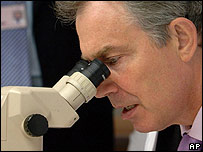
Tony Blair on Science


Note: This article contains the entire interview with Tony Blair. Edited highlights of this interview were published in the print edition of New Scientist - that shorter version is available here.

Audio: Download our exclusive podcast of the entire interview here (11MB, mp3 format).

During the 10 years he has been in office, British prime minister Tony Blair has presided over some dramatic developments in science and the way it has impacted on society in the UK, from advances in cloning to the closening relationship between science and business.

He’s also been in power during two hugely controversial incidents: the refusal of people in Europe to accept GM crops, and the refusal of British parents to have their children vaccinated with the measles, mumps and rubella vaccine.

On the eve of an important speech Blair is making on the future of UK science, he talked to Jeremy Webb about why he thinks science is so important to society, where he think things went wrong with GM and MMR, and how such issues would be resolved far more easily if scientists engaged more in the public debate.

How good were you at science at school?

I’m very open about this. I was very poor at science at school. I’ve become a lot more interested in it in later life, and I’ve also started to regret that when I was younger I didn’t engage with it more fully and learn more.

Why didn’t you?

I found the basic concepts difficult to understand. It’s only in later life I’ve started to think about it more and look at it more. It’s also only as a political leader that I’ve really taken to the importance of science to the country’s future, and that’s how I’ve come to it now. So I don’t pretend any scientific knowledge but I do I think understand it’s importance to Britain’s future.

What do you think are the virtues of science?

For the future of the British economy, it is as important as economic stability. If we do not take the opportunities that are there for us in science then we are not going to have a successful modern economy. We will be outcompeted on labour costs: you can export capital and technology anywhere. It is our human capital that is the most important and it is at the cutting edge of science that our human capital can be most exploited for the country’s future.

We’ve got to give the country a great deal more confidence about science and it’s place in the future. I first talked about this a few years back, and everything I have seen here and around the world has only increased my sense of its importance.

Many scientists get in to science because of what they can discover about the universe. Do you follow this side of science at all?

One of the reasons we have more than doubled the science budget, why we have introduced the research and development tax credit, and why we encourage so much the link between the academic and business world, is because Britain has been very good at invention and discovery and not so good at its commercial exploitation. For me, those two things go together.

How do you bridge the gap between science as an academic interest-discovering more about the universe-and science as an commercial enterprise?

You need a certain amount of pure research, and the excitement and creativity of scientific discovery. But if you also have universities and research centres sufficiently in tune to what is going on in the private sector, then hopefully discoveries will be made that have a real utility. In areas like climate change and the biosciences, we should be the lead nation. We have a lot of strengths in science and we have to build those. I’d like to see us getting high quality science teachers in schools, and also having businesses getting involved in how science is taught in the classroom.

How do you get more schoolchildren inspired by science?

I would like to see some of the leading entrepreneurs in the scientific field-both academics and business people-going into the schools and giving children a sense of excitement, not just about scientific discovery but also about the huge job opportunities in science today. In environmental technology we’ve gone from a few years ago 150,000 people employed in the field to almost half a million, and these people are going to make money.

The tendency when I was at school was to see science as something that “the boffin” did and business as something the hard-headed person did. Today there is an interaction between the business and academic worlds, and we should be intensifying that.

Is there a danger in making science close to business that you lose that sense of scientists as impartial-or is that idea past its time?

The more enthusiasm and inspiration you get around science, the more people realise that there are practical applications of science that are immensely exciting and rewarding, that generates support for the whole field of science. There are difficult issues to do with conflicts of interest that come up from time to time but I think that pales into insignificance given the huge boost that comes from science, for example when developing practical ways of meeting challenge of climate change.

The contribution that British industry makes towards research and development is considerably lower than in many other European countries and the US. How do you convince industry to pick up the challenge?

You need to convince them with the vision of business opportunities for the future. It is one reason why we’ve taken such a lead role on the climate change issue, other than the obvious reason to protect the climate. The government has made a big extra investment in science. We aren’t doing as well as we should, on the other hand there are improvements happening.

The research and development tax credit is worth almost two billion pounds now, and some industries such as pharmaceuticals are big investors here. Research and development is the future economically for the country. Over time, this is something we can put right.

You’ve been in power during two extraordinary science-related occurrences: the refusal of people to accept GM crops, and the refusals of parents to have their children vaccinated with the MMR vaccine. What have you taken away from those experiences?

The first is to be very careful about the media and its reporting of these things. The reporting of MMR was disgraceful. There was no real scientific basis for the allegations that were made and it’s caused a great deal of difficulty.

GM, I think, is a different issue. We’ve also had stem cell research, where the outcome has been rather different and more positive. The lesson I learn is that it’s best to start with the public good. In the GM debate, I used to say to people that a lot of the life-saving drugs now being produced are the product of the same type of science as GM crops. This is why you need scientists to be engaged fully in proper public debate. The public should have confidence in science, and the scientific community has to interact with the public to explain things. Once you explain these things, people at least see another point of view.

You said recently that if America doesn’t want stem cell research, we do. Why do you think George Bush is so wrong here, and do you see any ethical problems with stem cell research?

I think we have taken care of the ethical problems. There obviously are ethical issues to do with it, but I think that if it is the case that done properly and in a controlled way, and we have got all sorts of procedures around it, the fact is it can benefit people’s lives enormously.

But I think that we have approached that in the right way, just in the same way frankly, it is a different type of ethical issue but there are ethical issues about animal testing and you have to get those right and we have got actually the toughest regime in the world now. But on the other hand I have seen myself the experimentation that has been done in order to show how you can save lives through the treatment of heart disease for example and this is something that is right to do.

In certain areas, we seem to be moving further away from rational thought, whether it’s the rise of fundamentalist religious beliefs or the use of unproven alternative therapies. Do you see any shift in this direction?

I don’t. I think most people today have a rational view about science. My advice for the scientific community would be, fight the battles you need to fight. I wouldn’t bother fighting a great battle over, say, homeopathy. It’s not going to determine the future of the world. What is going to determine the future of the world, however, is the scientific community explaining-for example-the science of genetics and how it develops, or the issues to do with climate change. I think most people are prepared to be very rational about these issues.

There is a dimension that concerns and frightens scientists, let alone other people, because as the science progresses there are so many possibilities. I was in California recently seeing something of how genetics will develop in the future, and it is immensely exciting, but it will also raise a lot of issues. There will be massive questions around this. This is why the scientific community, just as it is coming out into the business community, has got to come out and engage in a very strong and deep dialogue with wider society.

I personally think people aren’t anti-science. I think as the stem cell debate showed, people come to a fairly rational point of view. However, I think people will be quite staggered at some of the scientific advances that are going to be possible and it’s important the scientific community is out and actually engaging with the issues.

One subject that is of great concern to scientists is creationism. There has been a suggestion that creationism is being taught in some British schools. What are your views on this?

This can be hugely exaggerated. I’ve visited one of the schools in question and as far as I’m aware they are teaching the curriculum in a normal way. If I notice creationism become the mainstream of the education system in this country then that’s the time to start worrying. As I’ve said, it’s really quite important for science to fight the battles it needs to fight. When MMR comes out, or stem cells, or GM, that’s the time to have a real debate.

What about the other big battle: climate change. Where do you go from here in that fight?

The next step is internationally to get a framework agreed with the major countries with a binding set of agreements for when the Kyoto protocol expires in 2012. I set up this process with the G8 countries plus China, India, Mexico, Brazil, South Africa. The agreements will incentivise private business and industry to go after the scientific and technology solutions. They’re out there, they just need to be developed and brought to market. Getting the right carbon price is absolutely vital for doing this. We should be world leaders in this area, so let’s do that.

How do you do that?

You do that not only through investing in renewables-we’re putting in several hundred million pounds-but also explaining to our business and academic world that there is going to be this opportunity. The same applies, more controversially, if we develop the new nuclear power stations. At least half the European countries are thinking about the next stages of nuclear power. Again, we have expertise in this area and we should develop it. Clean energy, clean coal, renewables, energey efficienty-this is going to be a vast market.

WANT to be the first one on your block to live to 100?

From New Scientist issue 2579 of New Scientist magazine, 25 November 2006, page 19

WANT to be the first one on your block to live to 100? You are in with a fighting chance if you're the first-born child of a young mother.

Natalia Gavrilova and Leonid Gavrilov of the University of Chicago sifted through data gathered on 991 centenarians born in the US between 1875 and 1899 and used US census and Social Security Administration records to reconstruct the family histories of 198 of them, searching for anything they had in common.

It turned out that first-born children were 1.7 times as likely as their siblings to live to be 100. An even stronger predictor of longevity was how young their mother was when they were born. Those whose mothers were less than 25 years old were twice as likely to survive beyond a century.

While the researchers aren't certain why this should be, they suspect younger mothers are less likely to have acquired latent infections during their life that could damage the health of the fetus. Younger mothers may also have better-quality eggs. "If the best, most vigorous maternal ova cells are used first - very early in life - this could explain why particularly young mothers produce particularly long-lived children," Gavrilov says.

The results were presented at a meeting of the Gerontological Society of America in Dallas, Texas, this week.

'Don't fall for the cult of immortality' Olshansky

'Don't fall for the cult of immortality'

says S Jay Olshansky in a reply to the de Grey article. What do the ancient purveyors of physical immortality all have in common? They are all dead. False promises'


S. Jay Olshansky: "Physical immortality is seductive"
S. Jay Olshansky

Some 1,700 years ago the famous Chinese alchemist, Ko Hung, became the prophet of his day by resurrecting an even more ancient but always popular cult, Hsien, devoted to the idea that physical immortality is within our grasp.

Ko Hung believed that animals could be changed from one species to another (the origin of evolutionary thought), that lead could be transformed into gold (the origin of alchemy), and that mortal humans can achieve physical immortality by adopting dietary practices not far different from today's ever-popular life-extending practice of caloric restriction.

THE ALTERNATIVE VIEW
I think the first person to live to 1,000 might be 60 already
Aubrey de Grey

He found arrogant and dogmatic the prevailing attitude that death was inevitable and immortality impossible.

Ko Hung died at the age of 60 in 343 AD, which was a ripe old age for his time, but Hsien apparently didn't work well for him.

The famous 13th Century English philosopher and scientist, Roger Bacon, also believed there was no fixed limit to life and that physical immortality could be achieved by adopting the "Secret Arts of The Past". Let's refer to Bacon's theory as SATP.

According to Bacon, declines in the human lifespan occurred since the time of the ancient patriarchs because of the acquisition of increasingly more decadent and unhealthy lifestyles.

What do the ancient purveyors of physical immortality all have in common? They are all dead.
S Jay Olshansky
All that was needed to reacquire physical immortality, or at least much longer lives, was to adopt SATP - which at the time was a lifestyle based on moderation and the ingestion of substances such as gold, pearl, and coral - all thought to replenish the innate moisture or vital substance alleged to be associated with aging and death.

Bacon died in 1292 in Oxford at the age of 78, which was a ripe old age for his time, but SATP apparently didn't work well for him either.

Physical immortality is seductive. The ancient Hindus sought it, the Greek physician Galen from the 2nd Century AD and the Arabic philosopher/physician Avicenna from the 11th Century AD believed in it.

Alexander the Great roamed the world searching for it, Ponce de Leon discovered Florida in his quest for the fountain of youth, and countless stories of immortality have permeated the literature, including the image of Shangra-La portrayed in James Hilton's book Lost Horizon, or in the quest for the holy grail in the movie Indiana Jones and the Last Crusade.

What do the ancient purveyors of physical immortality all have in common? They are all dead.

Prophets of immortality

I was doing a BBC radio interview in 2001 following a scientific session I had organised on the question of how long humans can live, and sitting next to me was a young scientist, with obviously no sense of history, who was asked the question: "how long will it be before we find the cure for ageing?"

Roger Bacon, English philosopher
Roger Bacon thought immortality lay in the Secret Arts of The Past
Without hesitation he said that with enough effort and financial resources, the first major breakthrough will occur in the next 5-10 years.

My guess is that when all of the prophets of immortality have been asked this question throughout history, the answer is always the same.

The modern notion of physical immortality once again being dangled before us is based on a premise of "scientific" bridges to the future that I read in a recently published book entitled Fantastic Voyage by the techno-guru Ray Kurzweil and physician Terry Grossman.

They claim unabashedly that the science of radical life extension is already here, and that all we have to do is "live long enough to live forever".

What Kurzweil and others are now doing is weaving once again the seductive web of immortality, tantalising us with the tale that we all so desperately want to hear, and have heard for thousands of years - live life without frailty and debility and dependence and be forever youthful, both physically and mentally.

The seduction will no doubt last longer than its proponents.

'False promises'

To be fair, the science of ageing has progressed by leaps and bounds in recent decades, and I have little doubt that gerontologists will eventually find a way to avoid, or more likely delay, the unpleasantries of extended life that some say are about to disappear, but which as anyone with their eyes open realises is occurring with increasing frequency.

There is no need to exaggerate or overstate the case by promising that we are all about to live hundreds or even thousands of years.

The fact is that nothing in gerontology even comes close to fulfilling the promise of dramatically extended lifespan, in spite of bold claims to the contrary that by now should sound familiar.

What is needed now is not exaggeration or false promises, but rather, a scientific pathway to improved physical health and mental functioning.

If we happen to live longer as a result, then we should consider that a bonus.

S Jay Olshansky is a professor at the School of Public Health, UIC and author of The Quest for Immortality.


Friday, November 24, 2006

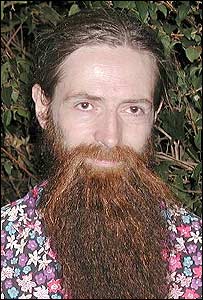
How to live long and prosper - "I think the first person to live to 1,000 might be 60 already." de Gray


Gerontology is the study of Ageing. Biogerontology is the subfield of gerontology dedicated to studying the specifically biological processes resulting in senescence. Biogerontologists are scientists who study these processes. Biomedical gerontologists are scientists who work to control, prevent, and reverse aging in both humans and animals. eg. Aubrey de Grey who extols The Seven Causes of Aging:-

  1. Nuclear Mutations/Epimutations:
    These are changes to the DNA, the molecule that contains our genetic information, or to proteins which bind to the DNA. Certain mutations can lead to cancer.
  2. Mitochondrial Mutations:
    Mitochondria are components in our cells that are important for energy production. They contain their own genetic material, and mutations to their DNA can affect a cell’s ability to function properly. Indirectly, these mutations may accelerate many aspects of aging.
  3. Intracellular Junk:
    Our cells are constantly breaking down proteins and other molecules that are no longer useful or which can be harmful. Those molecules which can’t be digested simply accumulate as junk inside our cells. Atherosclerosis, macular degeneration and all kinds of neurodegenerative diseases (such as Alzheimer's disease) are associated with this problem.
  4. Extracellular Junk:
    Harmful junk protein can also accumulate outside of our cells. The amyloid plaque seen in the brains of Alzheimer’s patients is one example.
  5. Cell Loss:
    Some of the cells in our bodies cannot be replaced, or can only be replaced very slowly - more slowly than they die. This decrease in cell number causes the heart to become weaker with age, and it also causes Parkinson's disease and impairs the immune system.
  6. Cell Senescence:
    This is a phenomenon where the cells are no longer able to divide, but also do not die and let others divide. They may also do other things that they’re not supposed to, like secreting proteins that could be harmful. Immune senescence and type 2 diabetes are caused by this.
  7. Extracellular Crosslinks:
    Cells are held together by special linking proteins. When too many cross-links form between cells in a tissue, the tissue can lose its elasticity and cause problems including arterioscerosis and presbyopia.
Get a FREE full issue (Dec 2005) here. For example The SENS Challenge: $20,000 Says the Foreseeable Defeat of Aging Is Not Laughable:-

FOR THE PAST FIVE YEARS, I have been refining and promoting an approach to life extension termed “Strategies for Engineered Negligible Senescence” (SENS).1,2 SENS differs from other approaches (such as antioxidants, hormesis, or calorie restriction mimetics) in two main ways: firstly it is an approach to reversal (repair) of eventually pathogenic age-related changes (“damage”), as opposed to the retardation of their further accumulation, and secondly it is a piecemeal approach, in which the various types of such damage are addressed individually, rather than being simultaneously combated by the downstream effects of a single “magic bullet.”

As reported by the BBC De Grey says "I think the first person to live to 1,000 might be 60 already."

Life expectancy is increasing in the developed world. But Cambridge University geneticist Aubrey de Grey believes it will soon extend dramatically to 1,000. Here, he explains why.

Ageing is a physical phenomenon happening to our bodies, so at some point in the future, as medicine becomes more and more powerful, we will inevitably be able to address ageing just as effectively as we address many diseases today.

I claim that we are close to that point because of the SENS (Strategies for Engineered Negligible Senescence) project to prevent and cure ageing.

It is not just an idea: it's a very detailed plan to repair all the types of molecular and cellular damage that happen to us over time.

This means that all parts of the project should be fully working in mice within just 10 years and we might take only another 10 years to get them all working in humans.

When we get these therapies, we will no longer all get frail and decrepit and dependent as we get older, and eventually succumb to the innumerable ghastly progressive diseases of old age.

We will still die, of course - from crossing the road carelessly, being bitten by snakes, catching a new flu variant etcetera - but not in the drawn-out way in which most of us die at present.

I think the first person to live to 1,000 might be 60 already

So, will this happen in time for some people alive today? Probably. Since these therapies repair accumulated damage, they are applicable to people in middle age or older who have a fair amount of that damage.

It is very complicated, because ageing is. There are seven major types of molecular and cellular damage that eventually become bad for us - including cells being lost without replacement and mutations in our chromosomes.

Each of these things is potentially fixable by technology that either already exists or is in active development.

'Youthful not frail'

The length of life will be much more variable than now, when most people die at a narrow range of ages (65 to 90 or so), because people won't be getting frailer as time passes.

There is no difference between saving lives and extending lives, because in both cases we are giving people the chance of more life.

The average age will be in the region of a few thousand years. These numbers are guesses, of course, but they're guided by the rate at which the young die these days.

If you are a reasonably risk-aware teenager today in an affluent, non-violent neighbourhood, you have a risk of dying in the next year of well under one in 1,000, which means that if you stayed that way forever you would have a 50/50 chance of living to over 1,000.

And remember, none of that time would be lived in frailty and debility and dependence - you would be youthful, both physically and mentally, right up to the day you mis-time the speed of that oncoming lorry.

Should we cure ageing?

Curing ageing will change society in innumerable ways. Some people are so scared of this that they think we should accept ageing as it is.

I think that is diabolical - it says we should deny people the right to life.

The right to choose to live or to die is the most fundamental right there is; conversely, the duty to give others that opportunity to the best of our ability is the most fundamental duty there is.

There is no difference between saving lives and extending lives, because in both cases we are giving people the chance of more life. To say that we shouldn't cure ageing is ageism, saying that old people are unworthy of medical care.

Playing God?

People also say we will get terribly bored but I say we will have the resources to improve everyone's ability to get the most out of life.

People with a good education and the time to use it never get bored today and can't imagine ever running out of new things they'd like to do.

And finally some people are worried that it would mean playing God and going against nature. But it's unnatural for us to accept the world as we find it.

Ever since we invented fire and the wheel, we've been demonstrating both our ability and our inherent desire to fix things that we don't like about ourselves and our environment.

We would be going against that most fundamental aspect of what it is to be human if we decided that something so horrible as everyone getting frail and decrepit and dependent was something we should live with forever.

If changing our world is playing God, it is just one more way in which God made us in His image.

Aubrey de Grey leads the SENS project at Cambridge University and also runs the Methuselah Mouse prize for extending age in mice.

'Don't fall for the cult of immortality'
says S Jay Olshansky in a reply to above de Grey article.
What do the ancient purveyors of physical immortality all have in common? They are all dead. False promises'

Diabetes Test

Sharon got her Capillary Plasma Glucose (Random) tested. It was 4.9 millimoles per Litre . All ok. But mine was 6.1 mm/L. Which is borderline fail (range 6.0-12.0mm/L). I'm on a fast tonight. The next day the fasting test gave a result of 5.9mm Glucose/L. A retest is required in 3 years, according to the nurse.

From Lloyds Pharmacy - a Free Diabetes Test:

There are 1.8M diagnosed with diabetes in the UK. There are thought to be up to 1 million people undiagnosed with Type 2 diabetes in the UK. That is why Lloydspharmacy are working with Diabetes UK, (diabetes myths) the charity for people with diabetes, to offer a free diabetes tests to help identify your risk of developing the condition.

Unfortunately, by the time that many people are diagnosed with diabetes they have already developed serious complications. Long term complications associated with diabetes include:

  • High blood pressure
  • Coronary heart disease and stroke
  • High cholesterol
  • Eye damage and blindness
  • Kidney failure
  • Nerve damage
  • Leg ulcers

We can check your blood glucose level by doing a simple test which is available to anyone aged over 16. Our pharmacists can also advise you on ways of reducing your chance of developing diabetes later in life and offer guidance on leading a healthy lifestyle. The service is free and no appointment needed (dont eat or drink for 2 hours before the test).

To get a diabetes test, please use the pharmacy finder to find your local Lloydspharmacy.

What is diabetes?

Diabetes is a condition in which the amount of glucose (sugar) in the body is too high because the body is unable to use it properly. Glucose provides the body with energy and is mainly obtained from the digestion of starchy foods such as bread, rice and potatoes and from sugar and other sweet foods.

After eating, the level of glucose in the blood increases and the pancreas releases a hormone called insulin. Insulin regulates your glucose levels to prevent them from becoming too high or too low. If you have diabetes, the body either produces too little insulin, or resists its effects. The body then uses other sources of energy and unused glucose builds up in the blood.

Download the diabetes leaflet (PDF document)

Diagnostic criteria ex Wikipedia

Diabetes mellitus is characterized by recurrent or persistent hyperglycemia (high glucose levels), and is diagnosed by demonstrating any one of the following:[1]
  • fasting plasma glucose level at or above 126 mg/dL or 7.0 mmol/l.
  • plasma glucose at or above 200 mg/dL or 11.1 mmol/l two hours after a 75 g oral glucose load in a glucose tolerance test.
  • random plasma glucose at or above 200 mg/dL or 11.1 mmol/l.

By definition, two fasting glucose measurements above 126 mg/dL or 7.0 mmol/l is considered diagnostic for diabetes mellitus.

Patients with fasting sugars between 6.1 and 7.0 mmol/l (110 and 125 mg/dL) are considered to have "impaired fasting glucose" and patients with plasma glucose at or above 140mg/dL or 7.8 mmol/l two hours after a 75 g oral glucose load are considered to have "impaired glucose tolerance". "Prediabetes" is either impaired fasting glucose or impaired glucose tolerance; the latter in particular is a major risk factor for progression to full-blown diabetes mellitus as well as cardiovascular disease.

Thursday, November 23, 2006

Science v Religion forum

From a forum in New Scientist (some comments excluded)

Robert Sarracino


Science & Religion
Posted: 16-Nov-2006 23:30


One of the greatest developments of the next 50 years, I believe, will be an acknowledgement on the part of the majority of the world's scientists and intellectual leaders that science and religion are "the two most potent forces of human life", and that when one penetrates through their great diversity of doctrine and custom, all religions, at their heart, are equally valid expressions of the sacred and the Divine.

Randal Leavitt

Re: Science & Religion
Posted: 18-Nov-2006 05:17 in response to: Robert Sarracino in response to: Robert Sarracino


Nope - if we want to have any chance of living on this planet in any form of comfort then we have to totally get rid of unfounded belief in make-believe gods. If we don't do this we face a never ending nightmare of warfare as gangs of god following hooligans try to kill each other and their rival gods off. We will live as the Vikings did, following Oden and the Raven into glorious battle day after day after day. Show me a god that can put a loaf of bread on my table every time I snap my fingers and I may change my opinion. Until we have evidence of gods that can do anything at all we have to cut ourselves free of the paranoid insanity which we call "divine". Every time I snap my fingers nothing happens, and as long as that continues I will treat discussions of the divine as attempts to get me to join an army. No thanks. As far as I can see the word "divine" promotes a scam. We have to break free from this trap.

greggles

Posts: 2
From: Auckland
Registered: 19/11/06

Re: Science & Religion
Posted: 19-Nov-2006 02:56 in response to: Robert Sarracino in response to: Robert Sarracino


no you are wrong - religion is about insecurity and science is about the way forward. religion is faith - science is fact. faith multiplied by faith equals war. fact multiplied by fact equals positive outcome. going forward is about losing sun worship and sacrifice which is basicley what all religion is about.

bitplane

Posts: 4
From: England
Registered: 19/11/06

Re: Science & Religion
Posted: 19-Nov-2006 14:09 in response to: greggles in response to: greggles


Religious and scientific thinking from a human language perspective are all about stories- we believe one story while they believe another, the stories of our tribe separate 'us' from 'them'.
As a science fan I have a burning passion for the scientific ideal and faith in those who persue the truth; I suppose it could be called religious, after all, it is only a particular form of idea which i subscribe to. Understanding is only a feeling like faith, and understanding an idea (no matter how true) is not true knowledge its self, it is an abstraction to fit the truth into our tiny minds.
I hope in the future, science can form the basis of a new religion, a kind of pantheistic love of the universe, the persuit of truth and knowledge, and celebration of it through education and the (subjective, religious, human) feeling of understanding.

jerry_cornelius

Posts: 1
Registered: 19/11/06

Re: Science & Religion
Posted: 19-Nov-2006 19:44 in response to: Robert Sarracino in response to: Robert Sarracino


This is all pretty straightforward really, isn't it? It's not possible for those who believe to prove that there is a god and scientists can't prove that there isn't. The intelligent designers are digging an amazingly deep hole for themselves because they appear to be too dim to recognise this fact.

I can't imagine a situation - whether it's within the next 50 or 5000 years - in which people will stop wanting to believe in the irrational, whether its Father Christmas, UFOs, fairies at the bottom of the garden or gods. People are just like that - they want to believe stuff that gives meaning to their lives, whether or not it has any basis in fact.

Science and religion cannot be reconciled (see my second sentence) and they therefore never will be. It's also worth noting that most religious people aren't fundamentalists - many of them do genuinely good work. A country like Tanzania, which I know quite well, would have virtually nothing in the way of effective healthcare if it wasn't for religious organisations.

People will want to belive in things that give meaning to their lives. To imagine that they won't is like imagining that somehow, through the force of rational argument and logic, we'll prevent people from killing each other and waging wars. Religion is just a fact of life - on the whole I don't like it, but I think I understand it and we're stuck with it.

Well, that's what I think anyway!

trembleclef

Re: Science & Religion
Posted: 19-Nov-2006 22:18 in response to: jerry_cornelius in response to: jerry_cornelius


What if science led to more people finding meaning in their lives than religion does? There's got to be a tipping point where the collective legacy of scientific study and rationality over time uncovers plain truths which undermine any lingering value in blind religious faith - and at the same time add context and meaning to our lives. After all, we're here after a long process of evolution. Increasing understanding of the forces that drive it should lead to a greater humanistic sense of purpose.

don secomb

Re: Science & Religion
Posted: 20-Nov-2006 02:44 in response to: trembleclef in response to: trembleclef


As a teenager doing a college landscaping course I was told "Never put a garden where people want to walk and a path where no one wants to go."

In other words we ignore fundamental human psychology at our peril.

The anthropologist Joseph Campbell in his book "A Myth to Live By" elegantly shows that for a large part of the population the prospect of the philosophy of science replacing or displacing religion is too bleak and austere for general acceptance. Any belief that this is possible is itself hopelessly naive.

Robert Kramarz

Re: Science & Religion
Posted: 21-Nov-2006 07:27 in response to: Robert Sarracino in response to: Robert Sarracino


More optimistic than many, I see the emergence of a new world view whose primary values are creativity and discovery (two sides of the same coin.) This way of thought will replace traditional religion whose primary values are faith and self-sacrifice. All knowledge will be viewed as "provisional" rather than absolute, leaving open the possibility of continuous improvements to our knowledgebase and humility. War has no place inside this context.

You may follow the development of this system of thought at www.intelliversity.com.

What do you think?

Chromodynamix

Posts: 4
From: UK
Registered: 21/11/06

Re: Science & Religion
Posted: 21-Nov-2006 15:24 in response to: Robert Kramarz in response to: Robert Kramarz


The sooner everybody gets used to the idea that we are in all probability the product of a freak chemical reaction, either here or elsewhere, the better off we will be. Just enjoy the ride!

Geoff D

Re: Science & Religion
Posted: 22-Nov-2006 02:23 in response to: Robert Sarracino in response to: Robert Sarracino

I think we look at the 'faith' vs. 'fact' argument in a fairly absolute manner; and if there is anything we should know about the universe now is that nothing is absolute. To me science and faith are not two forces diametrically opposed; but rather two faces of the same coin. Where one side ends, the other begins.

Sure, religion has been used over time as an excuse for war; but the pretext of such an excuse is almost primarily a land dispute or the issue of political leadership and not necessarily a difference in opinion of faith (apart from a few minor cases).

There will always be a need for religion, just as there is science to describe the physical universe around us and bind us together in thought; religion can help us comprehend the unknowable, those corners of the universe that science will never be able to touch, this too will bind us together in times of weakness so that we may have hope for an uncertain future.
Take for example the extreme case of cosmology. When it comes to the origins of the universe we don't know, and chances are we will never know. Alot of what is done and said in cosmology and the theory of the existence of the universe is philosophy cleverly disguised with mathematics (and some really interesting stuff at that). On that note, there is a massive void in philosophy, ethics, emotion and human creativity that is left in science, and although it may not be completely apparent religion has a history grounded in all of these things. I am not talking about literal views and somewhat backward beliefs, but religion that is somewhat compatible with science as a whole. One where we can keep the spirituality, faith in the unknowable and our sense of humanity; yet still challenge the unknown with keen intellect.

As such, I feel there is purpose and meaning in both science and religion; to discount one because of the other is absurd. In kind to assume that both are incompatible based on extreme cases is also absurd. Furthermore if we are merely going on the merits on each; science has given me knowledge, and a deeper understanding of how the physical universe works through studies in physics... yet one of the things science hasn't typically given me is a sense of community and even in some cases, humanity. So when it comes down to the tired 'religion' vs. 'science' argument, I often ask myself: "Is it really worth throwing it away?"

to finish; here is a quote that you may find interesting:

Science without religion is lame, religion without science is blind.
- Albert Einstein, "Science, Philosophy and Religion: a Symposium", 1941

Wednesday, November 22, 2006

TWO petitions to the Prime Minister to Abolish all faith schools

If you are a British citizen, then please take a moment to sign the Downing Street e-petition to abolish faith schools

We the undersigned petition the Prime Minister to Abolish all faith schools and prohibit the teaching of creationism and other religious mythology in all UK schools

Submitted by Nicola Holt – Deadline to sign up by: 15 November 2007 - Signatures: 1420

More details from petition creator

Faith schools remove the rights of children to choose their own religious, philosophical and ethical beliefs. They also sanction ethnic segregation and create tension and divisiveness within society. Schools should be places where children are given a free education, not centres for indoctrination. Creationism and other religious myths should not be taught as fact regardless of the funding status of a school. Abolishing faith schools will provide children with more freedom of choice and help to promote a fully multi-cultural, peaceful society.


and a SECOND petition from The Brights.

We the undersigned petition the Prime Minister to ban within government-funded schools the promotion or practice of any particular faith or religion.

Submitted by Quentin Brodie Cooper of UK Brights – Deadline to sign up by: 16 May 2007 – Signatures: 679

More details from petition creator

Faith-based or sect schools encourage and propagate divisions within our society.

Schools should be places where our children are taught to think about the world around them and come to their own conclusions. In short, they should be taught, not only about the profusion of religions and faiths but also about how moral and socially responsible lives can be led without them; rather than, at a time before they have sufficiently developed critical faculties, being indoctrinated.


Tuesday, November 21, 2006

Chris Street joins National Secular Society


After Dennis Cobell (NSS, President) meeting with the Dorset Humanists on 11th November, on 16th November 2006 I became a member of the National Secular Society.

Welcome

Those of us who value reason are becoming alarmed about the increasingly extreme religious influence in our government, our lawmakers, and our public institutions - especially in our education system. Many people, while standing up for freedom of religion, and freedom not to believe, feel that the proper place for religion is in the place of worship or home. They see the danger of religion becoming too politically ambitious.

The NSS is a rallying point for opposition to this religious resurgence. We must convince our politicians and public servants - as well as our friends, neighbours and colleagues - that our institutions and public life should be secular. A secular state should guarantee freedom of conscience, but eliminate religious privilege.

The only way to prevent the kind of religious power-seeking that leads to conflict is to make both religious discrimination and religious privilege constitutionally impossible.

We need a secular constitution that will:

  • End the privileged input of religious bodies to policy making and law-making
  • Keep all public services free from religious control so that that they remain equally available to all on the same terms
  • Abolish the established church and all its privileges (including 26 bishops in the House of Lords)
  • Put an end to the divisiveness of publicly funded religious schools by making them open to all without discrimination on grounds of religion, or lack of it, and bringing them under local authority controll
  • Abolish blasphemy and similar repressive laws, rather than extend them

Religious influence in Government has not been higher in living memory. The rise of fundamentalist religion of all shades has the potential to seriously erode hard-won freedoms.

Individually, we can only look on with mounting fear, but working together we can make a difference. Join the fight for a truly secular society and join the National Secular Society today.

Keith Porteous Wood
Executive Director
National Secular Society

Honorary Associates of NSS

Include

  • Prof. Richard Dawkins
  • Rt. Hon. Michael Foot
  • Prof. A. C. Grayling
  • Sir Ludovic Kennedy
  • Jonathan Meades
  • George Melly
  • Sir Jonathan Miller
  • Harold Pinter
  • Philip Pullman
  • Claire Rayner
  • Joan Ruddock MP
  • Dr. David Starkey
  • Lord Taverne QC
  • Polly Toynbee
  • Gore Vidal

Monday, November 20, 2006

Is being overweight healthy?

I've highlighted in bold main points.

From issue 2527 of New Scientist magazine, 26 November 2005, page 38

Nobody doubts that people living in developed countries are fatter on average than previous generations. But the widely repeated claim that this epidemic of flab is endangering the lives of millions of people is now mired in controversy.

Some scientists claim that the most apocalyptic estimates - which put obesity on a par with smoking as a public health hazard - are grossly inflated. They also argue that most of the people who fall into the "overweight" category between normal and obese are perfectly healthy.

Stranger still, there is evidence that advising these people to diet may actually put their health at greater risk than being overweight does. Is it time to rewrite the rule book on what constitutes a healthy weight?

The standard way of measuring whether someone is too heavy is to determine their body mass index or BMI (see Graphic). Calculated by dividing your weight by the square of your height, below 18.5 is defined as underweight, 18.5 to 24.9 is normal, 25 to 29.9 is overweight and 30-plus is obese. According to this yardstick, more than half of all adults in the UK are overweight and one-fifth are obese. In the US, around two-thirds of the population weigh too much and a third are obese. Worldwide, there are about a billion overweight or obese people out of a global population of 6.45 billion.

Such figures make shocking reading, but until recently it has been difficult to quantify the effect on public health. Sure, being overweight or obese has been linked with all sorts of health problems. But just how dangerous is it to be too fat?

In March last year a team at the Centers for Disease Control and Prevention (CDC) in Atlanta, Georgia, produced a sobering answer. It reported that overweight and obesity was causing 400,000 premature deaths a year in the US alone (Journal of the American Medical Association, vol 291, p 1238), putting it second only to smoking (438,000) as a preventable cause of death. The CDC later admitted a miscalculation and revised the estimate down to 325,000, but the figure still dwarfs the 85,000 for the third most common cause of premature death, alcohol consumption.

Even as the CDC was working on these figures, however, a few experts were starting to question the consensus about the impact of obesity on public health. In May 2004 Paul Campos, a law professor at the University of Colorado in Boulder, published a book called The Obesity Myth in which he argued that there was no good evidence that being overweight or obese per se is a health risk (New Scientist, 1 May 2004, p 20).

Shortly afterwards a leading obesity researcher told The New York Times that the apparent explosion in obesity in the US was not what it seemed. Jeffrey Friedman of Rockefeller University in New York, who in 1994 discovered the gene for the appetite-suppressing hormone leptin, told the paper the apparent surge in obesity was caused by a large number of already overweight people edging over the arbitrary dividing line into obesity. This produced a headline figure of a 30 per cent increase in obesity, he said, but in reality all that was happening was that the already fat were getting a little bit fatter.

Then, in April this year, another group at the CDC published an alternative estimate of the number of premature deaths caused by being overweight or obese in the US. Using newer data, a team led by epidemiologist Katherine Flegal put the number of excess deaths caused by obesity at a relatively modest 112,000.

That in itself didn't change anything - the previous estimate, after all, was for obesity and overweight combined. But when Flegal's team looked at the overweight category, they found something astonishing. Being overweight correlated with a reduced risk of premature death - there were 86,094 fewer deaths a year in this category than in the normal range (see Graph). In other words, overweight and obesity combined were causing nowhere near 325,000 deaths a year. The net figure was closer to 26,000 (JAMA, vol 293, p 1861).

The research unleashed a storm. One researcher said the quality of the Flegal paper was "pitiful", while another praised its statistical rigour and told New Scientist that the original CDC paper estimating 400,000 deaths per year was "a piece of trash". Conspiracy theorists on both sides lobbed accusations that the other was in the pay of an interest group such as the food or diet industry.

In response to the controversy, the Harvard School of Public Health quickly convened a symposium on obesity and mortality. It was a triumph for the orthodox view. Speaker after speaker seized upon Flegal's counter-intuitive findings about the overweight category as a sign the results were not to be trusted. Most critics argued that the apparent protective effect of being overweight was an artefact, caused by the normal weight category being full of smokers and people with undiagnosed wasting illnesses.

Surprised by the findings

Smoking certainly promotes weight loss and is, of course, associated with numerous fatal conditions. And some serious diseases such as emphysema cause wasting and may go undiagnosed for years. So it seems reasonable to assume that smokers and the undiagnosed terminally ill could be over-represented in the normal weight category. "A lot of these people have diseases that are going to kill them," says Walter Willett, the Harvard professor of medicine who chaired the symposium.

Flegal, however, insists her team went to great lengths to eliminate biases due to smoking or illness. For example, they excluded deaths that occurred in the first three years after subjects were weighed and measured, which should account for much of the effect of undiagnosed illness. Glantz believes epidemiologists should take the findings seriously. "I teach statistics and that paper is a really fine piece of work. It's bomb-proof," he says. "I've read the Harvard criticisms and they just don't make any sense to me."

Flegal was as surprised as anyone by her findings, but when she did some digging she discovered several other studies of BMI and mortality that showed the same pattern, with people in the overweight category less likely to die than either the obese or people with a "normal" weight. One recent analysis, for example, pooled data from 26 separate studies and found that even after controlling for smoking, being overweight was linked to a small drop in the risk of death compared with normal weight (Annals of Epidemiology, vol 15, p 87). "Although people think there's all this evidence out there showing a high mortality risk associated with overweight, in fact the literature doesn't show it," says Flegal.

"If correct, all these worries about a huge fraction of the population being overweight just go out the window," says Glantz. "It's not a trivial problem, but the focus should now be on the severely overweight." He believes the evidence from Flegal and others now demands a change in the healthy BMI range. "The current definition of overweight is not like the speed of light or pi. What was considered as the normal, desirable weight is too low."

But even if Flegal's results stand up, not everyone would accept that the BMI guidelines need to change. They point out that the sole purpose of Flegal's paper was to calculate excess mortality, and that this does not tell the whole story.

One problem with mortality figures is that they do not take people's quality of life into account. "If the only thing you're looking at is mortality you're missing the big picture," says S. Jay Olshansky, professor of epidemiology at the University of Illinois in Chicago. "Overweight people may not be dying so rapidly but they still face serious health problems." There is now good evidence, for example, that medical advances such as drugs to combat hypertension and high cholesterol are keeping overweight people alive in ever-increasing numbers (JAMA, vol 293, p 1868). But that does not mean they are leading healthy, happy lives. "To imply that it's OK to be overweight because we're better at treating its complications is ridiculous," says Olshansky. "It's like saying it's OK to get HIV because we can treat it better."

“All these worries about a huge fraction of the population being overweight just go out of the window”

Another problem with mortality figures is that they may hide the dangers that today's glut of obese and overweight youngsters face as they grow older. David Ludwig is director of an obesity programme at the Children's Hospital Boston, where he has witnessed the dangers at first hand. He says that overweight and obese kids are growing under "extraordinarily unnatural" circumstances. "The possible effects on the long-term health of this generation of children are really frightening," he says. Earlier this year, Ludwig, Olshansky and colleagues forecast that obesity and overweight would reduce average life expectancy in the US by as much as five years during this century (The New England Journal of Medicine, vol 352, p 1138).

Improved medical care may be saving the lives of thousands of overweight people, but that doesn't explain why this group seems to be at lower risk of dying early than people in the normal weight category. Willett points out that there are only a handful of common conditions for which being moderately overweight is known to make you less susceptible - bone fractures in the elderly and breast cancer before the menopause. "Apart from these there's really no common disease where being overweight is beneficial, but a long list of diseases where it has an adverse effect on health," he says. Willett claims there is no plausible biological mechanism that could make being overweight a benefit. As far as he's concerned, this ought to be the final nail in the coffin for Flegal's paper.

Flegal, however, does have an explanation. Too much fat may be a bad thing, but the weight of a human body is more than just fat. There is also "lean mass" - muscle, bone, organs and connective tissue. What Flegal may be seeing is a health bonus from extra lean tissue, rather than extra fat. "I wonder whether what we're picking up is an effect of lean mass, but it's speculation at this stage," she says.
Others claim that all the study does is illustrate the shortcomings of BMI. Judged solely on BMI, Brad Pitt and the fitness enthusiast George W. Bush are both overweight. "It's a crude measure that has very well known limitations," says Howard Strickler, an epidemiologist at the Albert Einstein College of Medicine in New York. "Muscle weighs more than fat, so a healthy athlete will often have a high BMI even though they are actually very fit." He believes the decreased mortality seen in the overweight category may reflect the health benefits of being fit and muscular.

But even that does not provide a complete answer. Surely there are just as many fit people in the normal weight category, if not more. How come overall mortality is slightly higher in this group than in the overweight one? The answer may not be lower levels of lean mass per se, but a surprising effect on people's health when they lose it.

In June, a study by researchers in Denmark and Finland suggested that people who succeed in losing weight may increase their risk of dying prematurely. It is well known that when people lose weight by eating less, they shed lean tissue as well as fat. And there may be a cost from losing lean mass that offsets the benefits of shedding the blubber.

Thorkild Sørensen of Copenhagen University Hospital and his colleagues looked at data from the Finnish Twin Cohort Study, in which volunteers filled in questionnaires about their health and lifestyle, first in 1975 and again in 1981. These included questions about height, weight and motivation to lose weight. Even after controlling for smoking and excluding anyone with a chronic illness that could have led to weight loss, Sørensen found that overweight or obese people who intended to lose weight in 1975 and succeeded were nearly twice as likely to have died by 1999 compared with those who had no intention to lose weight and stayed about the same (Public Library of Science Medicine, vol 2, e171).

Sørensen is not sure why weight loss should carry this extra risk, but he speculates that it has something to do with loss of lean tissue. He points to several studies showing that the lower your lean mass as a proportion of total mass the greater your risk of dying. "For some reason, to have a low or declining lean body mass is pretty dangerous, but why this should be so is not clear," he says.

His study was relatively small - only 2957 subjects - and it is too early to jump to conclusions. "I wouldn't want to say on the basis of our paper that anyone should stop trying to lose weight," he says.

Fortunately, there is lots of research showing that losing weight through exercise helps to preserve or increase lean mass. And Ludwig points to early evidence from animal studies that diets that cut out refined carbohydrates such as white bread may reduce fat mass while maintaining lean mass. "There's no reason why all diets should have the same impact on lean and fat mass," he says.

All this will be music to the ears of Stanton Glantz, who gave up sugary soft drinks years ago. His BMI may say he is borderline obese, but he reckons he's got plenty of lean mass and a robust heart. "That's a lot more important than what you look like," he says. If Flegal's work is to be believed, he can look forward to a long and healthy life.

James Kingsland is a freelance health journalist

From issue 2527 of New Scientist magazine, 26 November 2005, page 38

New Scientist Podcasts - listen to New Scientist "Radio"

I've just discovered this page. I have been subscribing to NS for several years but never knew that they have published Podcasts since November 2005!

Podcasting is a method of publishing audio and video files via the Internet. Users are able to subscribe via RSS feeds which can be downloaded onto your mp3 player or computer desktop, where you can listen via a media player.

Topics include:-

  • Stephen Hawking's Universe
  • Are Humans Still Evolving?
  • Will a pastry a day keep the doctor away?
  • The Creation with E.O. Wilson
  • Goldilocks' universe
  • Tony Blair on science
  • Science vs religion
  • The Big Questions

Atheism - Quotations

Read the funny and pithy Quotations on Atheism.

a couple of samples..

  • The worst moment for the atheist is when he is really thankful and has nobody to thank.
  • I always admired atheists. I think it takes a lot of faith.
  • The opposite of the religious fanatic is not the fanatical atheist but the gentle cynic who cares not whether there is a god or not.
  • I believe in God, only I spell it Nature.
  • I'm a born-again atheist.
  • I once wanted to become an atheist, but I gave up - they have no holidays.
  • Nobody talks so constantly about God as those who insist that there is no God.
  • An atheist is a man who has no invisible means of support.
  • I'm still an atheist, thank God.
  • Religion is about turning untested belief into unshakeable truth through the power of institutions and the passage of time.
  • We are all atheists about most of the gods that societies have ever believed in. Some of us just go one god further.
  • How can I believe in God when just last week I got my tongue caught in the roller of an electric typewriter?
  • If it turns out that there is a God, I don't think that he's evil. But the worst that you can say about him is that basically he's an underachiever.