Nigel Warburton talks about the significance of death


6 years ago
Nigel Warburton talks about the significance of death
 TIME | 2. LIFETIME Friday 20 October 2006 7pm-8pm TBC
Why is our time limited? And does it have to be? Could our age-old dream of immortality ever be possible? In episode two, Michio Kaku explores these questions and meets some of the key people involved in the cutting-edge research into ageing. He travels to the amazing Methuselah tree, which is almost 5000 years old and still producing new pine cones. He discovers that time does get faster as you get older and, under hypnosis, he goes in search of his lost time, stored as memories. But it only proves that lost time is really gone forever.
We are incredible machines for living - but if we're programmed to live, are we also programmed to die? As we grow, our cells divide into a complex colony of three trillion individual cells in our bodies. Sir Paul Nurse has spent a lifetime studying cells to search for the most basic process of life - the secret of cell division. We discover that cells seem to be potentially immortal. They continue to divide again and again perfectly. Even our own bodies are replaced through our lives - most of our cells are replaced in a roughly seven-year cycle. Yet we know that we age and that time wreaks changes on our bodies.
This episode reveals the biological changes in our cells that make our skin wrinkle and our bones become brittle. This new understanding is beginning to reveal the process of time in our bodies and, through this, scientists are now looking at ways of slowing or even stopping time. Scientists in California are studying sea urchins for clues as they not only live longer than ever thought before but they appear to show no sign of ageing. Genetic manipulation is extending the lives of mice. And a British scientist is now suggesting that the pace of advance is so fast that the first immortals are already living today; that before our children have reached the end of their natural lives, the technology to stop and even reverse ageing will exist. But what will that mean for our essential humanity?
WATCH VIDEO CLIPS
An experiment which proves time does get faster as you get older
How genetic research into ageing has produced extraordinary possibilities for extending life
'Don't fall for the cult of immortality'

S. Jay Olshansky: "Physical immortality is seductive"
Some 1,700 years ago the famous Chinese alchemist, Ko Hung, became the prophet of his day by resurrecting an even more ancient but always popular cult, Hsien, devoted to the idea that physical immortality is within our grasp.
Ko Hung believed that animals could be changed from one species to another (the origin of evolutionary thought), that lead could be transformed into gold (the origin of alchemy), and that mortal humans can achieve physical immortality by adopting dietary practices not far different from today's ever-popular life-extending practice of caloric restriction.
He found arrogant and dogmatic the prevailing attitude that death was inevitable and immortality impossible. THE ALTERNATIVE VIEW 
 Aubrey de Grey
Ko Hung died at the age of 60 in 343 AD, which was a ripe old age for his time, but Hsien apparently didn't work well for him.
The famous 13th Century English philosopher and scientist, Roger Bacon, also believed there was no fixed limit to life and that physical immortality could be achieved by adopting the "Secret Arts of The Past". Let's refer to Bacon's theory as SATP.
According to Bacon, declines in the human lifespan occurred since the time of the ancient patriarchs because of the acquisition of increasingly more decadent and unhealthy lifestyles.
All that was needed to reacquire physical immortality, or at least much longer lives, was to adopt SATP - which at the time was a lifestyle based on moderation and the ingestion of substances such as gold, pearl, and coral - all thought to replenish the innate moisture or vital substance alleged to be associated with aging and death. S Jay Olshansky
Bacon died in 1292 in Oxford at the age of 78, which was a ripe old age for his time, but SATP apparently didn't work well for him either.
Physical immortality is seductive. The ancient Hindus sought it, the Greek physician Galen from the 2nd Century AD and the Arabic philosopher/physician Avicenna from the 11th Century AD believed in it.
Alexander the Great roamed the world searching for it, Ponce de Leon discovered Florida in his quest for the fountain of youth, and countless stories of immortality have permeated the literature, including the image of Shangra-La portrayed in James Hilton's book Lost Horizon, or in the quest for the holy grail in the movie Indiana Jones and the Last Crusade.
What do the ancient purveyors of physical immortality all have in common? They are all dead.
Prophets of immortality
I was doing a BBC radio interview in 2001 following a scientific session I had organised on the question of how long humans can live, and sitting next to me was a young scientist, with obviously no sense of history, who was asked the question: "how long will it be before we find the cure for ageing?"
Without hesitation he said that with enough effort and financial resources, the first major breakthrough will occur in the next 5-10 years.  Roger Bacon thought immortality lay in the Secret Arts of The Past
My guess is that when all of the prophets of immortality have been asked this question throughout history, the answer is always the same.
The modern notion of physical immortality once again being dangled before us is based on a premise of "scientific" bridges to the future that I read in a recently published book entitled Fantastic Voyage by the techno-guru Ray Kurzweil and physician Terry Grossman.
They claim unabashedly that the science of radical life extension is already here, and that all we have to do is "live long enough to live forever".
What Kurzweil and others are now doing is weaving once again the seductive web of immortality, tantalising us with the tale that we all so desperately want to hear, and have heard for thousands of years - live life without frailty and debility and dependence and be forever youthful, both physically and mentally.
The seduction will no doubt last longer than its proponents.
'False promises'
To be fair, the science of ageing has progressed by leaps and bounds in recent decades, and I have little doubt that gerontologists will eventually find a way to avoid, or more likely delay, the unpleasantries of extended life that some say are about to disappear, but which as anyone with their eyes open realises is occurring with increasing frequency.
There is no need to exaggerate or overstate the case by promising that we are all about to live hundreds or even thousands of years.
The fact is that nothing in gerontology even comes close to fulfilling the promise of dramatically extended lifespan, in spite of bold claims to the contrary that by now should sound familiar.
What is needed now is not exaggeration or false promises, but rather, a scientific pathway to improved physical health and mental functioning.
If we happen to live longer as a result, then we should consider that a bonus.
S Jay Olshansky is a professor at the School of Public Health, UIC and author of The Quest for Immortality.
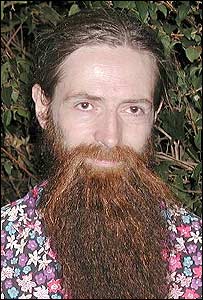
 Gerontology is the study of Ageing. Biogerontology is the subfield of gerontology dedicated to studying the specifically biological processes resulting in senescence. Biogerontologists are scientists who study these processes. Biomedical gerontologists are scientists who work to control, prevent, and reverse aging in both humans and animals. eg. Aubrey de Grey who extols The Seven Causes of Aging:-