Showing posts with label statins. Show all posts

Saturday, February 17, 2007

Here's a more cerebral reason to lower your cholesterol

An unhealthy western diet could harm more than just your waistline - it may also increase your risk of Alzheimer's disease.

Earlier work on mice fed high-cholesterol diets found that their brain cells produced more amyloid beta, a protein linked to Alzheimer's. There is also evidence that taking cholesterol-lowering statins makes people less likely to develop late-onset Alzheimer's.

To better understand this link, Brett Garner of the Prince of Wales Medical Research Institute in Sydney, Australia, and his colleagues used human and animal cells to probe how neurons regulate their levels of cholesterol.

They found that "ABC proteins", which help control cholesterol levels in arterial walls by expelling cholesterol from the immune cells called macrophages where it builds up, were also present in neurons. When the team over-expressed the genes for these proteins in hamster and human cell lines, production of amyloid beta protein fell (Journal of Biological Chemistry, vol 282, p 2851).

The work also showed that an extracellular protein called apoE is extremely good at regulating cholesterol removal from neurons. One form of the gene for apoE is already recognised as the major genetic risk factor for late-onset Alzheimer's disease.

Garner suggests that drugs that increase expression of ABC transporters might slow the progression of Alzheimer's. Such drugs are already being used in cardiovascular research. "A lot of people think there could be converging factors involved in these diseases," Garner says.

From issue 2590 of New Scientist magazine, 08 February 2007, page 15

reposted from: New Scientist
my highlights / emphasis / comments

Wednesday, February 07, 2007

those at risk of less severe heart attacks should receive early heart X-rays - social background to be figured into risk assessment.

Experts' plan to cut heart deaths
Heart attack
Experts believe thousands of lives could be saved
A radical new approach to preventing heart disease could save more than 7,000 lives over the next five years, according to health professionals.

Experts are recommending a new approach which they say could also prevent 27,000 heart attacks and other "cardiac events" in Scotland.

About 500,000 more people could be in line to receive preventative treatment.

The plans, which recommend regular risk assessments for all over-40s, aim to target those most at risk.

They have been produced by the Scottish Intercollegiate Guidelines Network (Sign), which draws up guidelines for the NHS.

It recommends that more people should be given statin drugs to reduce cholesterol.

Lifestyle advice

The guidelines also recommend that, for the first time, doctors take into account social status when deciding whether people need treatment to prevent heart disease.

This could be based on the Scottish Index of Multiple Deprivation, which has been created by the Scottish Executive to identify areas of deprivation across Scotland.

It is expected that 50% of men in Scotland and 20% of women over the age of 40 could be prescribed cholesterol-lowering statins.

The guidelines would see the over-40s undergo a risk assessment every five years, at which they would also receive lifestyle advice.

The health professionals say that those at risk of less severe heart attacks should receive early heart X-rays and be assessed for possible surgery.

These guidelines could save lives, and improve the quality of life of people living with heart disease
Marjory Burns
British Heart Foundation Scotland

Patients with the most serious type of heart attack should be admitted to regional centres to have the blood clots and narrowed arteries removed and replaced with a device to keep the arteries open.

If this is not possible within 90 minutes of diagnosis, they should rapidly receive the most effective clot-busting drugs.

More patients with heart problems should be given implantable defibrillators to reduce the risk of sudden death and discharge arrangements for hospital patients with heart failure should be improved.

Professor Keith Fox of Sign said: "These guidelines bring together the most robust and up-to-date scientific evidence and the very best clinical expertise to detail how we can save thousands of people from developing and suffering the complications of heart disease.

"The result will be thousands of deaths avoided and tens of thousands of people whose lives will not be blighted by heart attacks, angina, heart failure, heart rhythm disorders and other complications that impair quality of life."

Heart diagram
More people will be screened for heart problems

He said family history and social background could also be figured into risk assessment.

Coronary heart disease (CHD) claimed more than 10,000 lives in Scotland last year.

However, deaths have fallen by 30% over the last 10 years - partly because of previous Sign guidelines, according to the experts.

Marjory Burns, director of the British Heart Foundation Scotland, welcomed the new "milestone".

"These guidelines could save lives and improve the quality of life of people living with heart disease, but they will only do so if they are adequately resourced and implemented," she said.

"We would also therefore call on the Scottish Executive to ensure that the political will and the resources are found to implement them fully."

INTERACTIVE DEPRIVATION MAP

Many computers will open this web page automatically, but you may need Adobe SVG Viewer

The chief executive of Chest, Heart and Stroke Scotland, David Clark, welcomed the new guidelines and reiterated the need for adequate funding.

He added: "We also need to keep up the message that the best ways to keep your heart healthy are to stop smoking, watch your diet and take more exercise."

It is estimated almost that 200 extra staff would be needed in the first five years of implementing the guidelines, with the total cost of putting the recommendations into practice estimated at £44m in the first year, rising to £78m in the sixth year.

A spokesman for the Scottish Executive said the guidelines set out a long-term vision for preventing and treating coronary heart disease.

"The recommendations in the guidelines about prevention sit well with our anticipatory care programme, Keep Well, which is about increasing the rate of health improvement in the most deprived communities," he added.

reposted from: BBC
my highlights / emphasis / edits

Tuesday, February 06, 2007

Cholesterol reducing Statins to be recommended by NHS, Scotland to 50% of men over 40

Experts' plan to cut heart deaths.
Heart attack
Preventative treatment could prevent thousands of deaths
A radical new approach to preventing heart disease could save more than 7,000 lives over the next five years, according to health professionals.

Experts are recommending a new approach which they say could also prevent 27,000 heart attacks and other "cardiac events" in Scotland.

About 500,000 more people could be in line to receive preventative treatment.

The plans, which recommend regular risk assessments for all over-40s, aim to target those most at risk.

They have been produced by the Scottish Intercollegiate Guidelines Network (Sign), which draws up guidelines for the NHS.

It recommends that more people should be given statin drugs to reduce cholesterol.

reposted from: BBC
my highlights / emphasis / edits

REGISTER TODAY FOR GLASGOW: sign heart disease guidelines launch event SECC, Glasgow • Tuesday 6th February 2007

ASSIGN - new risk scoring tool

Existing risk calculators, such as that from Framingham, underestimate risk in deprived groups and in people from ethnic minorities such as British Asians. By adding social deprivation and family history to the formula we have produced a new tool for estimating risk, ASSIGN, which has the potential to reduce some of the social inequalities inherent in current CVD risk calculation methods. The new ASSIGN score is being evaluated for adoption in Scotland.
Professor Hugh Tunstall-Pedoe and Professor Mark Woodward who led the project to develop ASSIGN, and Dr Jim Grant, chair of the SIGN risk estimation subgroup will demonstrate the system, discuss the rationale behind this new development and take part in a Q&A session.

Lifestyle advice

The guidelines also recommend that, for the first time, doctors take into account our social status when deciding whether people need treatment to prevent heart disease.

It is expected that 50% of Scottish men and 20% of women over the age of 40 could be prescribed cholesterol-lowering statins.

The guidelines would see the over-40s undergo a risk assessment every five years, at which they would also receive lifestyle advice.

The health professionals say that those at risk of less severe heart attacks should receive early heart x-rays and be assessed for possible surgery.

These guidelines could save lives, and improve the quality of life of people living with heart disease
Marjory Burns
British Heart Foundation Scotland

Patients with the most serious type of heart attack should be admitted to regional centres to have the blood clots and narrowed arteries removed and replaced with a device to keep the arteries open.

If this is not possible within 90 minutes of diagnosis, they should rapidly receive the most effective clot-busting drugs.

More patients with heart problems should be given implantable defibrillators to reduce the risk of sudden death and discharge arrangements for hospital patients with heart failure should be improved.

Professor Keith Fox of Sign said: "These guidelines bring together the most robust and up-to-date scientific evidence and the very best clinical expertise to detail how we can save thousands of people from developing and suffering the complications of heart disease.

"The result will be thousands of deaths avoided and tens of thousands of people whose lives will not be blighted by heart attacks, angina, heart failure, heart rhythm disorders and other complications that impair quality of life."

'Milestone' welcomed

He said family history and social background could also be figured into risk assessment.

Coronary heart disease (CHD) claimed more than 10,000 lives in Scotland last year.

However, deaths have fallen by 30% over the last 10 years - partly became of previous SIGN guidelines, according to the experts.

Marjory Burns, director of British Heart Foundation Scotland, welcomed the new "milestone".

Extra staff

"These guidelines could save lives and improve the quality of life of people living with heart disease, but they will only do so if they are adequately resourced and implemented," she said.

"We would also therefore call on the Scottish Executive to ensure that the political will and the resources are found to implement them fully."

It is estimated almost that 200 extra staff would be needed in the first five years of implementing the guidelines, with the total cost of putting the recommendations into practice estimated at £44m in the first year, rising to £78m in the sixth year.

A spokesman for the Scottish Executive said the guidelines set out a long-term vision for preventing and treating coronary heart disease.

"The recommendations in the guidelines about prevention sit well with our anticipatory care programme, Keep Well, which is about increasing the rate of health improvement in the most deprived communities," he added.

Friday, January 05, 2007

Heart deaths fall by 36% - Statins save 9,700 lives in 2005

reposted from BBC News. Chris Street highlights in bold.

Heart deaths 'continue to fall'
Heart monitor
Heart disease death rates are falling
The government is on track to meet its target to reduce deaths from heart disease, official figures indicate.

Data from 2003-2005 shows that the death rate had fallen 35.9% since 1996; the government is aiming for a 40% fall by 2010.

The data also showed patients were getting quicker treatment and there were more consultants.

Experts said changes in lifestyle had also had an impact on death rates, which have been falling for decades.

The British Heart Foundation said heart disease deaths have been on a downward trend since the 1970s and while improved services had played a part, they were not the only cause.

This report shows the fantastic achievements the NHS has made since 2000
Patricia Hewitt, health secretary

The government published its National Service Framework for Coronary Heart Disease in 2000, which set out a 10-year plan to improve standards of care.

The latest report, Shaping the Future, gives an update on how care is being delivered.

As well as showing the fall in the death rate, latest figures also revealed a narrowing in the gap between the poorest areas and the national average.

In 1996 it stood at 36.7 extra deaths per 100,000, but has now dropped to 26.4 per 100,000.

Other data shows the number of lives saved through cholesterol-busting drugs called statins had tripled since 2000 to 9,700 in 2005.

The number of consultant cardiologists has risen by nearly 300 to 725 in the last six years and no patient now waits over three months for surgery compared to 5,663 in 2002.

Facilities

Professor Roger Boyle, national clinical director for heart disease and stroke, said: "The National Service Framework continues to set the standard in a local NHS which now has greater financial and decision-making power than ever before.

"Increased specialist facilities and better frontline treatments for heart attack victims continue to improve services for patients."

But he added: "It is still not perfect. We would like to get better rehabilitation and we need to look at how people are cared for at the end of their life."

Health Secretary Patricia Hewitt said: "This report shows the fantastic achievements the NHS has made since 2000, not only in treating CHD patients - with better use of statins and faster access to heart surgery - but also in helping to prevent it."

Professor Peter Weissberg, medical director of the British Heart Foundation, said: "It is true that significant improvements in services have helped, but death rates have been falling for a long time and that has also been due to changes in lifestyle, such as people giving up smoking."

Thursday, January 04, 2007

individuals with a 1% risk of heart attack or stroke, 35 or older, could benefit from taking statins to lower cholesterol.

My risk of a heart attack or stroke is 1-2% according to my recent cholesterol and blood pressure tests. Should I take statins?

Widening the use of statins, beyond current guidelines to people at low risk of heart attack or stroke, could be beneficial reported three newspapers (10 November 2006). The papers gave an accurate summary of a cost-effectiveness study, though the model had limitations that should be considered when interpreting the findings.

  • Three newspapers (1-3) reported that individuals with a 1% risk of heart attack or stroke, who are as young as 35, could benefit from taking statins to lower cholesterol. Two reported that the cost of prescribing statins for people at lower risk than currently receive this medication was less than the cost of caring for patients who have a heart attack or stroke (2,3).

  • The newspaper articles are based on a cost-effectiveness model (4). The researchers extrapolated data from a randomised controlled trial of patients with heart disease or diabetes comparing the drug simvastatin to placebo for an average of five years. They used the data to develop a model assessing the lifetime cost effectiveness of taking statins and the cost effectiveness of using the drug with older and younger age groups and people at lower risk of disease than those included in the RCT. The authors concluded that treatment with statins is cost-effective in a wider population than is currently routinely treated based on current UK guidelines.

  • The newspaper articles were accurate in their report of the research. However, the research did not aim to investigate the benefits of taking statins in lower risk groups; it was specifically concerned with cost-effectiveness. It is not clear that all relevant costs were considered in the analysis. Further, the exclusion of adverse events, given the life time horizon of the analysis, is likely to impact on the results obtained. The results should be interpreted in the context of these limitations.

Systematic reviews

Information staff at CRD searched for systematic reviews relevant to this topic. Systematic reviews are valuable sources of evidence as they locate, appraise and synthesize all available evidence on a particular topic.

There was one related systematic review identified on the Cochrane Database of Systematic Reviews (CDSR) (5) and one review which is currently being undertaken and will be available in the future (6). Five related systematic reviews were identified on the Database of Abstracts of Reviews of Effects (DARE) (7-11).

References and resources

1. 'Widen use of cholesterol drug'. The Independent, 10 November 2006, p22.

2. Lifesaver that costs £4 a month. Daily Express, 10 November 2006, p25.

3. Put 6m patients on statins, say doctors. Daily Mail, 10 November 2006, p4.

4. Heart Protection Study Collaborative Group. Lifetime cost effectiveness of simvastatin in a range or risk groups and age groups derived from a randomised controlled trial of 20 536 people. BMJ Online First.

5. Manktelow B, Gillies C, Potter JF. Interventions in the management of serum lipids for preventing stroke recurrence. Cochrane Database of Systematic Reviews 2002, Issue 3. Art. No.: CD002091. DOI: 10.1002/14651858.CD002091

6. Moore THM, Bartlett C, Burke MA, Davey Smith G, Ebrahim SBJ. Statins for preventing cardiovascular disease. (Protocol) Cochrane Database of Systematic Reviews 2004, Issue 2. Art. No.: CD004816. DOI: 10.1002/14651858.CD004816.

7. Vrecer M, Turk S, Drinovec J, Mrhar A. Use of statins in primary and secondary prevention of coronary heart disease . and ischemic stroke: meta-analysis of randomized trials. International Journal of Clinical Pharmacology and Therapeutics, 2003;41(12):567-557. [DARE Abstract]

8. Law M R, Wald N J, Rudnicka A R. Quantifying effect of statins on low density lipoprotein cholesterol, ischaemic heart disease, and stroke: systematic review and meta-analysis. BMJ, 2003;326:1423-1427. [DARE Abstract]

9. Balk E M, Lau J, Goudas L C, Jordan H S, Kupelnick B, Kim L U, Karas R H. Effects of statins on nonlipid serum markers associated with cardiovascular disease. Annals of Internal Medicine, 2003;139(8):670-682. [DARE Abstract]

10. Cheung B M, Lauder I J, Lau C P, Kumana C R. Meta-analysis of large randomized controlled trials to evaluate the impact of statins on cardiovascular outcomes. British Journal of Clinical Pharmacology, 2004;57(5):640-651. [DARE Abstract]

11. Amarenco P, Labreuche J, Lavallee P, Touboul P J. Statins in stroke prevention and carotid atherosclerosis: systematic review and up-to-date meta-analysis. Stroke, 2004;35(12):2902-2909. [DARE Abstract]

Consumer information

British Heart Foundation

NHS Direct - cholesterol

Previous Hitting the Headlines summaries on this topic

'Statins cut heart risk for diabetics'. Hitting the Headlines archive, 8 June 2004.

Wednesday, January 03, 2007

Bandolier reviews statins

In these pages contain stories from Bandolier relating to statins.

Probably the best review I've found on Statins: A 30-page (450 kb) essay on Statins summarises what is here.

To choose which statin to use is here.

Sunday, December 31, 2006

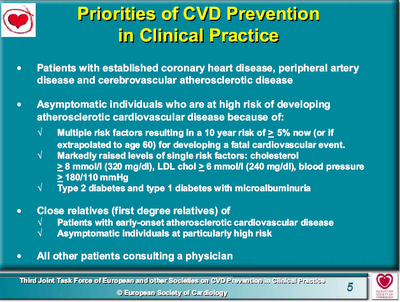
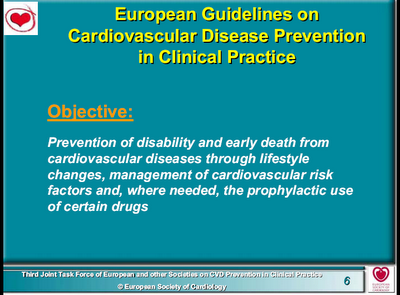
European Guidelines on CardioVascualar Disease


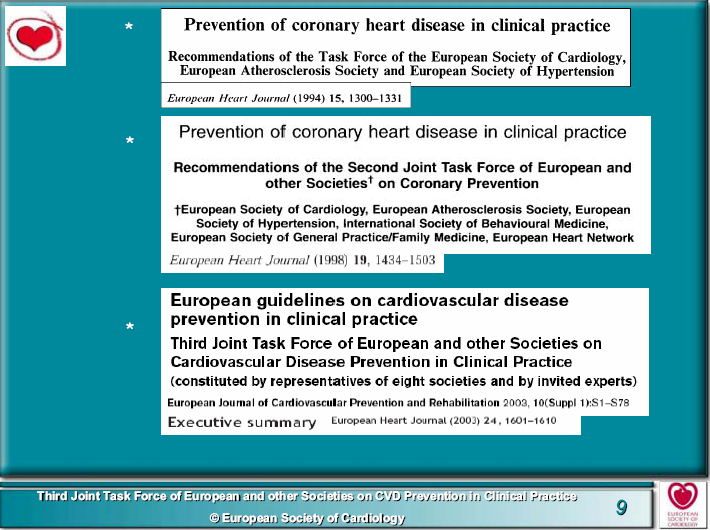
Exec summary - "European Guidelines on Cardiovascular disease (CVD) prevention in clinical practice" - download pdf (from our server) or here Download a series of excellent slides (updated Dec 2003).

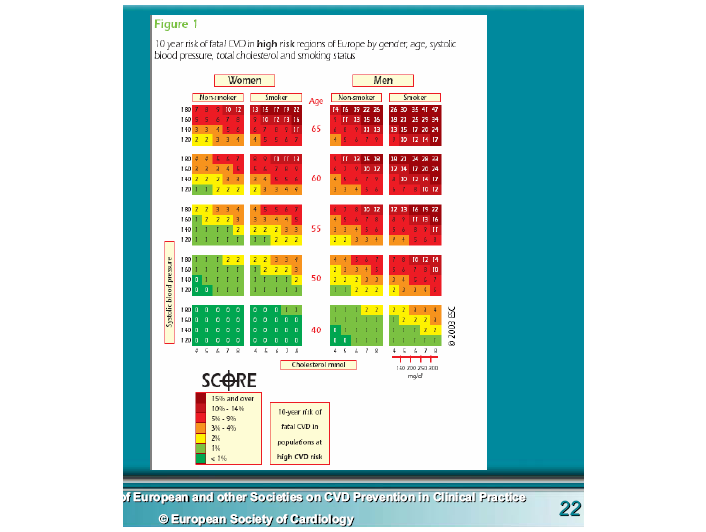
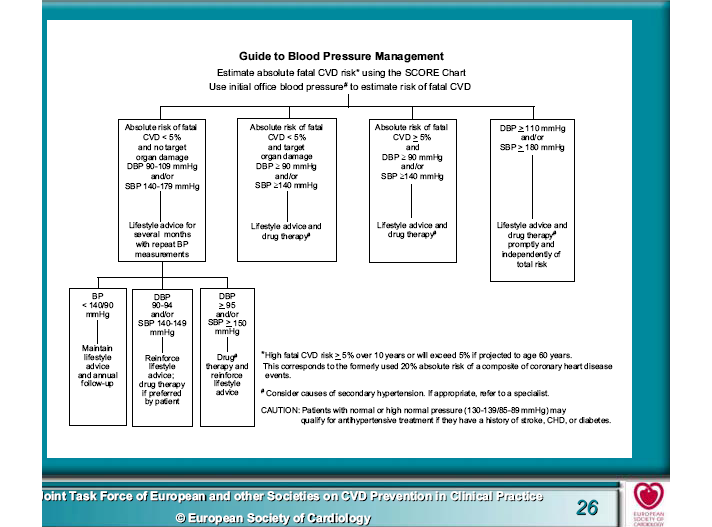
This new model for total risk estimation based on the SCORE (Systematic Coronary Risk Evaluation) system.

The SCORE risk assessment is derived from a large dataset of prospective European studies and predicts fatal atherosclerotic CVD events over a ten year period.

This risk estimation is based on the following risk factors: gender, age, smoking, systolic blood pressure and total cholesterol. The threshold for high risk based on fatal cardiovascular events is defined as "higher than 5%" , instead of the previous "higher than 20%" using a composite coronary endpoint.

Using HeartScore total CVD risk can also be projected to age 60 which may be of particular importance for guiding young adults, at the age of 20 or 30, at low absolute risk, but already with an unhealthy risk profile, which will put them at much higher risk when they grow older.

Relative risk can also be estimated from the pie charts. You can read more about the SCORE project in European Heart Journal, 2003, 24; 987-1003. source: European Society of Cardiology

Statins to reduce heart attacks or strokes

Chris Street edits in bold.

New Scientist magazine (7th October 2006) reports on the use of Statins to reduce heart attacks or strokes.

"So you think you're healthy? You are in your 40s, feel right as rain, normal blood pressure, normal cholesterol, pretty good diet, occasional exercise. How would you react if your doctor suggested you take a powerful drug every day for the rest of your life? The drug, known as a statin, will lower your cholesterol even further and reduce your risk of a heart attack or stroke.

According to one recent estimate, most men and many women over 40 could benefit from the drugs.

If you are worried about side effects, your doctor will reassure you that a meta-analysis that pooled data from 14 trials involving more than 90,000 people shows the treatment is very safe.

The same study suggests that even if your cholesterol level is normal, taking a statin can still reduce your cardiovascular risk. And the greater your risk - if you smoke, suffer from high blood pressure or diabetes, or have a family history of heart disease, for example - the greater the potential benefits."

New Scientist says "Lowering cholesterol is beneficial in pretty much everyone who has been studied," says Colin Baigent, who coordinated the meta-analysis by the Clinical Trial Service Unit (CTSU) at the University of Oxford. "It doesn't really matter what the cholesterol level is. It could be average or even low, but if you reduce it even further in a person who is at high risk you get benefits." Statins also have anti-inflammatory properties, and have shown promising results when used to treat diseases like rheumatoid arthritis, multiple sclerosis and Alzheimer's. Some research even suggests they can help tackle viral infections such as hepatitis C and HIV.

Can any drug really be that good? As enthusiastic doctors put ever more people on statins, sceptics are warning that we don't know enough about the possible adverse effects of taking them over a lifetime.

Others claim that statins' potency against heart disease has little to do with lowering cholesterol and instead results from their anti-inflammatory properties, leading some to dismiss them as "expensive aspirin". So could the rush to put millions more people on statins be a costly mistake?"

"The association between cholesterol, its transport in the bloodstream by a protein called low-density lipoprotein and heart disease is fairly well established. Cholesterol in the form of LDL, so-called "bad cholesterol", can infiltrate the walls of coronary arteries, contributing to the formation of a fibrous plug of immune cells called a plaque. If this ruptures it can trigger the formation of a blood clot that blocks the artery and starves the heart of oxygen - a heart attack, in other words. Equally disastrously, the clot can break free and block arteries in the brain, triggering a stroke."

"Some doctors, however, are alarmed by the trend towards dishing out statins to millions more people and giving higher dosages to lower cholesterol even further. They say the benefits for those who do not already have heart disease are small, while the potential risks are largely unknown. "What price should you pay for a modest effect?" Sutter asks. "The price shouldn't be very high because the effect is weak at best." A 20 per cent reduction in cardiovascular risk may sound impressive, but it doesn't look quite as good when you realise what it means for each individual: if your risk of having a heart attack over the next five years is 5 per cent, say, then taking statins will reduce it only to 4 per cent."

"Sutter and others say that statin researchers have failed to report adverse effects in enough detail to allow doctors and patients to weigh the potential costs against the benefits. "There's no good reporting of adverse effects at high doses and very modest reporting even at moderate doses," Sutter says. "If you are prescribed a statin, the doctor expects you to take it for the rest of your life," says Uffe Ravnskov, an independent researcher and former hospital doctor based in Lund, Sweden, who runs The International Network of Cholesterol Skeptics. He claims almost half of patients have adverse effects."

"Alleged side effects include memory loss, extreme irritability, aggression, suicidal impulses and impotence. Evidence for these remains sketchy, however, coming from small trials and case studies. Statins do cause liver damage in around 1 per cent of patients, but this should be picked up by routine liver function tests and can be reversed by coming off the drugs. It is also clear that statins can damage muscles. As many as a fifth of people taking the drugs in trials say they experience some muscle weakness or pain, and exercise seems to make things worse. These symptoms are commonplace anyway in middle-aged and elderly people, however, and a similar number of patients taking a placebo also report them. So it is difficult to determine the exact extent of the problem. "

"In very rare cases statins cause rhabdomyolysis, a severe form of muscle damage in which the breakdown products cause kidney failure. The rate was especially high with cerivastatin (Baycol), which caused 50 deaths and was withdrawn in 2001. "

"Confusingly, some small studies have hinted that statins increase the risk of cancer while others suggest they may guard against it. The CTSU meta-analysis found no association between cancer and statins, and a similarly large study from the US, which looked at 26 trials involving 87,000 patients, also found no link."

"Most trials, though, have lasted only five years or less. For some this leaves lingering doubts. "You don't get lung cancer after smoking for 10 years; it takes much longer to show up," Ravnskov points out. "Heavy smokers get lung cancer in their 50s and 60s and they have smoked for decades before that." Nevertheless, White, who led the US study, is confident that even after five years some signs of increased cancer risk would show up in trials. "Within the period we were looking at you should at least have started to see some trends," he says. "

"The crucial issue now facing policy-makers is how and where to draw the line that defines who should be offered statins. In the US and Canada, prescribing guidelines focus on lowering cholesterol below certain thresholds, depending on the individual's overall risk of a heart attack or stroke. The lowering of the US target levels in 2004, which is leading to millions more people being put on statins, sparked controversy when it was revealed that eight out of the nine experts involved had ties to statin manufacturers. "

"In Australia, New Zealand and the UK, the emphasis is on treating those with the highest overall risk rather than on cholesterol targets. This year, a Canadian study that modelled the effects of applying the various guidelines concluded that the high-risk approach is more effective in terms of number of lives saved per number treated (BMJ, vol 329, p 529). It found, for instance, that applying the US guidelines would result in twice as many people taking statins as the New Zealand guidelines without preventing any more deaths. "

"Yet even the more conservative guidelines will lead to millions more people taking statins for the rest of their lives, often starting younger or being given higher doses. You could be one of them. If the advocates of statins are right, this policy will come to be seen as a triumph for preventative medicine, saving tens of thousands of lives. If the critics are right, for those with a low risk of heart disease statins could do more harm than good. Which will you bet your life on when your doctor mentions the s-word? "

Friday, December 29, 2006

Alzheimer’s Disease and Parkinson’s Disease - a free 360 degree perspective from Nature


Approaching Alzheimer’s Disease and Parkinson’s Disease from many perspectives, Nature Publishing Group (NPG) provides the full-spectrum coverage these diseases deserve. From genetics and behaviour to pharmacology, brain circulation and mapping, NPG continues to publish top-tier research spanning the breadth of Alzheimer’s and Parkinson’s Diseases.

We have gathered together a sampling of top quality research papers on these diseases for you to preview (most at no charge) from a number of our highly-rated journals.

An article linking use of statins to reduction in Alzheimer’s Disease is here.

Wednesday, December 27, 2006

Statins block synthesis of Coenzyme Q10 and ATP production

As James Kingsland wrote in his article on statins, "blocking of HMG CoA reductase inhibits the production of many other molecules beside cholesterol".

Statins also block the synthesis of coenzyme Q10. In a 30-day study using atorvastatin blood levels of CoQ10 were halved (Archives of Neurology, vol 61, p 889). This block was neither mentioned in Kingsland's article nor considered by the Clinical Trials Service Unit (CTSU) - whose report is at http://www.ctsu.ox.ac.uk/~hps/statin_paper.shtml - although three other antioxidants were included in the trial. CoQ10, an antioxidant, is a key component of the oxygen-driven electron transport system in mitochondria, and this system plays a large part in ATP (adenosine triphosphate) synthesis in all our cells except red blood cells.

ATP is the crucial energy source of heart and brain and its loss is ultimately responsible for deaths following myocardial infarction or ischaemic stroke.

The potential for a fall in CoQ10 was recognised long before these reports. A major drug company was granted a patent for combined CoQ10/statin therapy in 1990 - see US Patent 4933165 at www.uspto.gov. One can only speculate as to the reason why this was never taken up.

The reported side effects of statins in muscle and cognitive function could be the result of blocking CoQ10 synthesis.

Finally, the CTSU studied people who already had a substantial risk of death within five years. As your article said, the meta-analysis cranked out significant positive results, but there was no dramatic effect on outcome, even in these patients, at the doses which have to be used to minimise side effects.

So prescribing statins for almost everyone - or putting them in the tap water, as one madcap enthusiast in the UK suggests - could benefit only those who profit from selling them. If "you bet your life on" taking statins, you should insist on a coenzyme Q10 supplement. As the article suggests, there are alternatives such as a healthy lifestyle, boosting vitamin D and perhaps - for those whose can take it - low-dose aspirin.

Falmouth, Cornwall, UK

From issue 2576 of New Scientist magazine, 04 November 2006, page 25

Tuesday, December 26, 2006

Statins - Radio 4 & Vivienne Parry

In September I became interested in Statins after i heard Vivienne Parry discuss healthy hearts on Radio 4.

Sunday, December 24, 2006

Statins - Check Up phone in

Edited by Chris Street. My highlights are in bold.

CHECK UP
Programme 6. - Statins RADIO 4

THURSDAY 01/08/05 1500-1530

PRESENTER: BARBARA MYERS / CONTRIBUTORS: SIMON DAVIES

MYERS
This week though we're taking your calls on a drug that is being taken by over a million of us and that number is set to rise. Cholesterol lowering drug statins have been tried and tested for 20 years and are known to reduce coronary heart disease and stroke by a third. As well as being effective they're usually well tolerated by patients, which is just as well because once you start on them you can expect to stay on them for life. So are they for everyone and are they the whole story? Dr Simon Davies, he's a consultant cardiologist at London's Royal Brompton Hospital.

We have our very first caller on the line, she's Sandra, she's calling from Swindon. Hello Sandra, with your question please.

SANDRA
Oh hello, hello to you both. Cholesterol levels - since I'm a diabetic I realise that I really have to keep a very strict check on these and I'm just wondering what are the acceptable levels, has the medical profession revisited and revised its view over time as to what is sort of acceptable?

DAVIES
It is. I think an oversimplified answer would be a cholesterol of 5. It's a quite good rule of thumb. I think an ideal cholesterol would be less 5 and if it's over 5 you'd start to think about improving diet and perhaps eventually drugs. But you've already got us into the point that the number isn't everything and for people with diabetes the lower the better, maybe 4.

MYERS
Have you any idea of your cholesterol level Sandra?

SANDRA
Yes it was 6 and we've got it down to 5. And that's with the help of statins.

DAVIES
Well that's pretty good but as you said the medical profession have revised their opinions and there's a tide of opinion that keeps shifting the goalposts and I think ...

SANDRA
Down.

DAVIES
The lower the better and I think that in 2005 for someone with diabetes it would be nice to have a cholesterol that bit lower, nearer 4.

SANDRA
Right.

MYERS
And how are you getting on with your statins though, it's lowering your cholesterol level and you're happy on that?

SANDRA
Yes, I actually can't - I'm unaware of any side effects at all and I'm perfectly happy to take them. And ...

MYERS
Well one satisfied customer.

DAVIES
Fantastic.

MYERS
It's doing the trick. I mean it's interesting to know Simon, I think you said very briefly, how statins - I mean they have been hailed as something of a breakthrough class of drug, very valuable - is there a simple way of our understanding how they do this - lower this important figure for blood cholesterol?

DAVIES
Yeah, they block a chemical in the liver that makes cholesterol. So it's fairly simple actually. They act on a key stage, they don't act immediately and if you start taking the tablets once a day it's actually a few weeks before the cholesterol gradually comes down to its new level. But they turn off the tap at source.

MYERS
Okay, so back to the doctor and see what he has to say or she. Let's go to another caller though if we may, thanks for that Michael, we'll go to Paul Hobbs who's in Surrey, who's calling on behalf of his wife who has high cholesterol but doesn't want to go on statins, perhaps like Michael in that case. Is that the case Paul?

HOBBS
Yes it is. Statins have not always had a good report and my wife is obviously concerned about going on something for life which has had press of bad effects. But the situation or question I have for you is that her last reading was 6.4 but - I'm not sure if it was the LDL or HDL was 2.3 and the ratio was 4.5.

MYERS
Alright, lots of figures there, let's get Simon Davies to unpick some of those for us. So we're talking now not just about the overall cholesterol level of six point something but actually sort of drilling down a little bit looking at good and bad cholesterol. Can you can help us with that first and then we'll try and answer Paul's question directly?

DAVIES
Sure. Well the cholesterol in the circulation is all measured in one lump, which is I guess the 6.4, but in fact there are two main forms - the good and the bad. The LDL, the low density lipoproteins are the bad ones, they fur up the arteries and do the damage. The HDL is actually good, the high density lipoprotein is good, it's the cholesterol that's a bit like a road sweeper going around tidying up the streets, it's taking the cholesterol out of the artery and bringing it back to the liver. So it's going the other way. So you're right, it's not just knowing that it's 6.4, it's knowing the balance of the HDL and LDL. But on a ready reckoner of the numbers you've given me I think your wife's cholesterol is too high. It's not just that the total is quite a way north of the ideal of 5 that we just mentioned but I think she has a fair amount of the bad LDL in there.

MYERS
So in and of itself that might be a good reason to have medication. Are there any other risk factors do you think Paul that perhaps would tip you or her over into accepting that medication was the answer?

HOBBS
Can I just ask, what is the importance of the ratio which is 4.5?

DAVIES
It's ...

HOBBS
One doctor's saying your ratio is very good you don't have to have statins, another one is saying the overall level of 6.4 is high you do need to go on statins.

DAVIES
Yeah, the ratio is just one way of looking at the balance of HDL and LDL and if the ratio is less than 5 that is a help but I still think that 6.4 is too high.

HOBBS
Fine, thank you very much. I'll ask you the other point. My wife does have a heart problem and history, high blood pressure, she's currently taking Atenolol for that and her father died of a heart attack when he was 55, mother had angina - so there is a history and we just want to make sure we're doing the right thing.

DAVIES
Well all the additional things you've told me - you know the fact there's a family history of disease, the fact that she also has high blood pressure has kind of kicked this into touch. I think the case then for having a statin is a really strong one. Remember we said that for all of us the ideal is to have a cholesterol of 5 or less but for somebody with these other factors even lower would be better and that just puts 6.4 at a level where the tablets would definitely, definitely have great benefits that I would have thought would outweigh any potential for side effects.

MYERS
But of course the point worth reiterating - we're not condemning someone to medication, I mean we're saying that this is actually going to really increase their risk of a long and healthy life without the risk of - or certainly a lower risk than otherwise - of a heart attack or a stroke.

DAVIES
Yeah, I mean it's longevity really. And it doesn't - a few people get aches and pains and a few side effects but they're uncommon and the fact is the amount of life to come free of a heart attack or a disabling stroke is a really positive thing.

MYERS
Paul, thank you for that, I hope the message is clear enough there. Let's take an e-mail though which links into what we've just been saying and this is from Chris who, he says, has a family with a history of raised cholesterol levels. His, he says, is slightly high, he says it's 6.5 and he's wondering if statins is the right answer or whether a low fat diet is a better answer.

DAVIES
Yeah. I think we'd always want to start the treatment with non-drug treatment, in other words lifestyle. So there's never any harm and there's possibly a lot of benefit in trying diet, exercise and above all losing weight as first measures. But if after three to six months of making a real effort with those things the cholesterol's still high then you would consider a statin. So I think lifestyle measures first, it's not necessarily that one is better than the other.

MYERS
And is it quite possible that you could lose weight, perhaps get down to a target weight and still have a high cholesterol?

DAVIES
Yeah. I mean there's no doubt that if you lose weight your cholesterol will come down. But in some people it'll come down so much that the statin is no longer needed and in other people it only comes down a little bit and they're often the people with a family history - so it's the genetic elements. So losing the weight always helps a bit but you're right and the people with a family history it may not be enough.

MYERS
Let's go to another call now and we've got Billie Marchmont, who's in Powys, with I think side effects, you said there aren't so many side effects but I think Billie you've got some, have you?

MARCHMONT
I have indeed.

DAVIES
I'm sorry to hear that.

MYERS
Better tell us about it.

MARCHMONT
Well I've been on statins now for many years and certainly they have reduced my blood cholesterol because it was 9.9 when I went on them. The current reading is 5.8. But just three weeks ago I had very, very severe muscle pain in my thighs and the back of my thighs and not quite so bad in the calf and I couldn't work out what the hell was happening to me basically because I do read all the contra-indications on all the literature of any medication that I take. But of course being on it for so many years you forget. And they sent bloods through to the local path lab and instead of the normal reading of what 150, although I understand GPs are not really worried if it doubles or trebles, mine was 11,000.

DAVIES
Gosh.

MARCHMONT
They took me off Simvastatin immediately, I had bloods done the following day and it had dropped to 9,000. My husband is a Reiki practitioner and he fortunately, once I had all the bloods done because I didn't want to cloud anything, got me out of pain. but I'm now extremely tottery and very weak in the legs. It got to the stage where I couldn't lift my foot even two inches off the ground, I couldn't get upstairs, I couldn't get on and off the loo, let's face it I couldn't even put my own knickers on and get them off. This pain was extremely severe.

DAVIES
Well you're right this is a known side effect of statins but something as bad as this is very, very rare indeed. I think 1, 2, 3, 4% of people can have minor aches and pains and no serious ill effects.

MARCHMONT
I've had nothing up till now at all.

DAVIES
Well less than one person in a thousand, quite literally, less than one person in a thousand the statins cause a serious inflammation in the muscles. Now what's particularly unusual in your case is that you took them for such a long time without a problem and it makes me think that something else has changed because this isn't the normal pattern. Normally if people have this reaction it happens in the first few weeks or months. One thing that's known to do this is if the thyroid gland becomes underactive and I know this is a long shot but I just wonder whether ...

MARCHMONT
They've checked it.

DAVIES

Have they? And was it normal.

MARCHMONT
Yes everything is normal.

DAVIES
Well then the other thing it makes me ...

MARCHMONT
But it is a new - it is a new drug, it's one I have not been on before.

DAVIES
Oh you've changed?

MARCHMONT
Well it changes every time you go doesn't it really?

DAVIES
Yeah, no ...

MARCHMONT
And then this one wasn't an APS one.

DAVIES
Right, I just wondered if there was something funny going on there. But I'm sorry to hear you've had such a bad problem. Minor aches and pains - 2, 3, 4% - this kind of severe inflammation in the muscles, it does always get better when you stop but thank goodness it is rare - less than one in a thousand.

MYERS
Okay thank you for that. I mean it raises a couple of questions. One is that they're clearly, although it's a class of drugs known of statins, there are different types within it, so is that a matter sometimes of trying a different one if what you've been put on may have some side effects?

DAVIES
I think that firstly some are a little bit stronger and some are a little bit milder, so it's always important to have some follow-up when you've gone on the statin the cholesterol should be measured about a month later and the dose increased or the drug changed if the cholesterol hasn't come down enough. But equally if you start to have aches and pains or another side effect it is worth asking your GP to change from one to another.

MYERS
Is dizziness a side effect? Someone's raised that on an e-mail.

DAVIES
Not that I've ever come across and as you can imagine as a cardiologist the vast majority of my patients are on statins for the heart in one way or another. I haven't really come across dizziness - aches and pains, very occasionally slight constipation or diarrhoea. I guess anything is possible but I don't think dizziness is a common one.

MYERS
And the next question really is whether there are different drugs altogether that are not statins that might have the same effect. Actually we've got a call from Una in Cheshire, I think that relates to your question doesn't it Una?

UNA
It does yes.

MYERS
What's your question exactly then?

UNA
Well I'm a diabetic, I'm 80 years old and I have neuropathy through the diabetes. I'm on Atorvastatin statin - 10 milligram - but they give me muscle aches and tummy upsets, mainly wind in the tummy and a pharmacist suggested I might be able to go on fibrates. Now would that have the same effect as the statin?

DAVIES
The short answer yes, the fibrates are a good class of drugs for bringing down the cholesterol. They don't quite bring it down as much as the statins, the statins are more effective. But the fibrates are useful in people who don't - who can't tolerate the statins, people like you who've been unlucky to have the muscle side effect and the little bit of tummy upset. But they also do something else - they tend to lower another fatty substance in the blood, something called triglycerides which often is high in diabetics. So it may not be a bad thing at all to take the fibrates.

UNA
My cholesterol at the moment is 5.3.

DAVIES
That isn't bad. Forgive me mentioning the fact that you're 80 but cholesterol in all of us tends to go up a little bit with age. So whilst the ideal would be to be under 5 and perhaps with diabetes even to be a bit lower, 5.3 isn't too bad.

MYERS
But the diabetes is a sort of in itself another risk factor is it?

DAVIES
It is. And the difficult thing here is not only does having diabetes push your cholesterol up but the sugar in the blood makes the cholesterol more sticky and that's why - is the reason why in a diabetic we'd be particularly keen to use some drug, whatever, to get the cholesterol down below 5.

MYERS
Are there any other conditions, if you have some other disease, that mean that you can't take statins, even if you might have a high blood cholesterol?

DAVIES
I think there are, I think the most important of those is a hormonal condition which is particularly common in women having an underactive thyroid. And this is a little bit of a catch because having an underactive thyroid leads to a high cholesterol but at the same time having an underactive thyroid makes your muscles more sensitive and makes it much more likely that you'll get the aches and pains or even the very bad effects that we were told about.

MYERS
Let's go to the calls again, we go to Pamela Goring who's in West Sussex. Hello and Pamela your question please.

GORING
My cholesterol is quite good, it's 5.2, but that HDL is 2.72, LDL 2.25 and triclycerides are .5. But I do have other reasons for being at increased stroke risk. I've had conflicting advice as to whether statins would be a good idea. One consultant said it would because they would smooth the endoselium [phon.] and another consultant said he didn't think it was worth my taking them and that he thought they might actually reduce the HDL.

MYERS
It sounds as though you're very knowledgeable, you've got all the numbers and not a bad idea to know your numbers in the first instance, that's very interesting I think isn't it, but take us on to answering that question of whether lowering your cholesterol, taking statins, would be helpful to reduce your risk of stroke.

DAVIES
Well you win the prize for the best cholesterol telephoned in so far this afternoon. So a total of 5.3 is pretty good and you have an unusually high level of the HDL, which is the good one, so that protects you - that's fantastic. So I don't think you are at increased risk of stroke from the point of view of cholesterol.

GORING
I think I am for other reasons.

DAVIES
Can I ask what the other reasons are?

GORING
Well I've had a TIA in the past and also I've got some cardiac reasons. I've got mitrovalve prolapse and I've had a bout of AS recorded recently.

DAVIES
Ah you see we're getting off the subject of statins a little bit but I think the slightly leaky valve and the irregular heart rhythm combines to cause small blood clots and I think - so I don't think you need a statin but I think aspirin or warfarin is what you need. And so I think your stroke risk is not through the mechanism of a high cholesterol which you don't - in fact you don't have.

GORING
I have read that statins are thought to be beneficial for preventing strokes even if you don't need your cholesterol reduced, is that not correct?

DAVIES
I don't think so, no, it's people in whom the carotid arteries, the big arteries in the neck, are furred up with cholesterol, they're the people in whom statins help.

MYERS
Now I don't know whether Pamela had her measurements taken in the first instance at the local chemist but I know there are opportunities so to do Simon, would you encourage people to go and get their numbers from the pharmacist?

DAVIES
I have mixed feelings. I mean we're in a country, in a population, where there is so much heart disease and stroke that anything that gets people interested in their cholesterol has to be good. But there are slight concerns that the test done in the chemist when they prick your finger and take a drop of blood are not as accurate as asking your GP or the nurse to take a proper sample in a test tube and send it to a lab. And I think the test that you can have generally just give you the total cholesterol, they don't give you the balance of the good and bad. So better to walk into Boots and have it measured than not to have it measured but even better would be to go to your GP and have a really full measurement.

MYERS
And what do you make of Heather's e-mail? She's asking whether you should buy your statins across the counter - again you can go to a chemist and you can pick up a pack of statins, would you do that?

DAVIES
Personally I wouldn't but again anything that gets people thinking about this has got to be good. My slight concern is there'll be a few people who have got underactive thryoids and they're the people who might react badly. So I think the policy of perfection would be to see your GP, have a full blood test and have all these other things looked into at the same time.

MYERS
Thank you very much indeed. Thanks to all our callers this afternoon and to all those who've taken the trouble to e-mail us. And thank you very much to Dr Simon Davies, our guest today. You can of course, as ever, listen to this programme again on our website, you go to bbc.co.uk and follow the trail to Check Up. You can get more information by calling our free and confidential help line, that's 0800 044 044. And join me again, if you will, at the same time next Thursday when we'll be taking your questions on stress.

Thursday, November 30, 2006

Statins - could 7% of people have INCREASED risk of heart attack? - June 2004

Statins are not "wonder drugs" for all

  • 21:00 15 June 2004

The cholesterol-lowering "wonder" drugs known as statins may be less wondrous for people with two genetic variations, reveals a new study.

Nearly seven per cent of the population have genetic features which make statins an average of 20 per cent less effective at lowering cholesterol levels, found Daniel Chasman of Harvard Medical School in Boston, US and his colleagues.

The researchers now plan to study whether those seven per cent of statin takers end up having more heart attacks and cardiovascular disease due to their weak response to the drug.

Statins are the most potent and popular cholesterol fighting drugs. They work by clogging a protein enzyme called HMG-CoA reductase which helps manufacture cholesterol. While at least ten proteins are known to influence the metabolism of cholesterol, Chasman's team wanted to test if naturally occurring variations in the genes that encode these proteins also influence the effectiveness of statin therapy.

They studied DNA from 1536 volunteers who took a statin called pravastatin during a 24-week trial. The researchers analysed the DNA for single polynucleotide polymorphisms (SNPs), DNA sequences which are used to track genetic differences between people.

In patients with two particular SNPs, both located in the gene for HMG-CoA reductase, statins were 20 per cent less effective at lowering total cholesterol and low-density lipoprotein, also known as "bad" cholesterol.

Journal reference: Journal of the American Medical Association (vol 291, p 2821)

Statins - can lead to memory loss? - 06 December 2003

ONE day former astronaut Duane Graveline came back from a walk and failed to recognise his wife. He blamed this temporary bout of amnesia on the drug Lipitor, which he had been taking for several weeks. Doctors dismissed his fears, but six weeks after he started taking the drug again he suffered another bout of amnesia. This time he could not remember anything after high school, not even his children.

Graveline is one of a growing number of people who say they have suffered from amnesia and other nervous-system side effects after taking statins, the cholesterol-lowering drugs being prescribed to millions of people at risk of heart disease. And now a few researchers are starting to believe their claims.

Beatrice Golomb at the University of California, San Diego, who is studying the effects of statins on cognition and mood, says she has documented at least 100 cases of memory problems that might be due to statins, including 30 cases of transient amnesia. "It's probably fairly rare," she says. But with tens of millions of people taking the drugs worldwide, such problems could still affect thousands of patients. One of the reasons Golomb thinks statins are to blame is that in more than half the cases of amnesia, people suffered a second episode, a far higher relapse rate than normal.

Around 60 accounts of memory problems after taking statins were also found by a team from Duke University in North Carolina, who analysed the Medwatch database of drug side effects (Pharmacotherapy, vol 23, p 871). In some cases the patients' memory problems returned only when they resumed taking statins. This "re-challenge effect" is considered to at least hint at a causal relationship between a drug and a side effect.

Though statins are generally considered very safe, it would not be surprising if they affect neural function. The drugs block the synthesis of cholesterol, a key ingredient in cell membranes. Last year, a Danish study concluded that patients on statins have a substantially increased risk of polyneuropathy, a condition characterised by weakness and numbness in the extremities.

But many patients on statins are older and have a high risk of memory problems, P. Murali Doraiswamy of the Duke team points out. The key question is whether patients suffer a higher rate of memory problems than expected. Eight trials have shown no harmful or beneficial effect, he says. "No one should be discouraged from taking a statin because of such anecdotal reports. The benefits of statins far outweigh any possible risks."

Yet his team's paper concludes that "statins, in rare cases, may be associated with cognitive impairment, though causality is not certain". Golomb is convinced by the number of re-challenge effects she has seen that there is a causal link. But because these side effects are not recognised, doctors tell patients they're imagining things, she says.

From issue 2424 of New Scientist magazine, 06 December 2003, page 14

Wonder drugs - 24 November 2001

Wonder drugs

  • 24 November 2001
  • From New Scientist Print Edition

STEP aside aspirin—here come statins, the latest wonder drugs. A huge study has shown that one type of statin can reduce the chance of a heart attack or stroke by a third, yet causes no serious side effects.

Till now, statins have been prescribed only to people with high cholesterol levels. But the study showed that even people with low levels benefited. That means doctors should dish them out to far more people, the researchers say.

"Doctors need to be aware just how definite these results are," says Rory Collins of Oxford University, director of the seven-year Heart Protection Study involving 20,000 volunteers aged between 40 and 80. "There's no room for doubt—they're the sort of results you dream of," he says.

He wants existing guidelines on prescribing statins to be ripped up. "The default has changed, so doctors should now ask if there's a good reason not to give the drug," he says. It may not even be necessary to measure cholesterol levels beforehand, he says.

Statins don't come cheap, however. A year-long course of simvastatin, the drug given to the volunteers, costs £360. If people keep taking them for decades, it could stretch the resources of public health services such as Britain's NHS. But cheaper, generic versions might soon be available.

Patent protection for simvastatin doesn't expire until 2003, but for lovastatin, patents have already begun to run out. Though the drug is not licensed for use in Britain, Collins says the NHS should have a look at how to get generic versions of lovastatin.

"Even if the cost comes down significantly, the [huge] demand might mean we can't use them as liberally as we would like," says Peter Fellows, chairman of the British Medical Association's prescribing committee. And the BMA is recommending caution despite the spectacular results. "It's still possible there might be long-term effects that might not yet have come to light," Fellows says.

Statins work by blocking a liver enzyme that makes cholesterol. The liver compensates by withdrawing the harmful, artery-clogging cholesterol complex—called low-density lipoprotein—from the blood.

Presenting their findings last week in Anaheim, California, at the annual meeting of the American Heart Association, Collins and his colleagues said that simvastatin reduced heart attacks and strokes by a third among all those at risk. Contrary to expectations, it helped women and elderly people with heart problems, and diabetics.

Statins also reduced the need for surgery or balloon angioplasty to de-clog arteries, and the need for amputations triggered by poor blood flow to limbs, usually a result of smoking. Nor were there any serious side effects. The researchers didn't see any sign of the muscle wastage that in August led to the withdrawal of Baycol, a statin made by Bayer of Germany.

From issue 2318 of New Scientist magazine, 24 November 2001, page 7

Statins block synthesis of Coenzyme Q10 - ATP production

Coincidentally, your article on statins arrived in the same mail delivery as my copy of the Australian Adverse Drug Reactions Bulletin (www.tga.gov.au/adr/aadrb.htm), which reported that the risk of depression from statins is about 1.4 per cent (7 October, p 46). You commented on the difficulty in determining the true benefit of these drugs, given the long time frames over which they are intended to be taken. We should all remember that similar time delays may well apply to discovering the true risks of statins.

From Richard Paterson

As James Kingsland wrote in his article on statins, "blocking of HMG CoA reductase inhibits the production of many other molecules beside cholesterol".

Statins also block the synthesis of coenzyme Q10. In a 30-day study using atorvastatin blood levels of CoQ10 were halved (Archives of Neurology, vol 61, p 889). This block was neither mentioned in Kingsland's article nor considered by the Clinical Trials Service Unit (CTSU) - whose report is at http://www.ctsu.ox.ac.uk/~hps/statin_paper.shtml - although three other antioxidants were included in the trial. CoQ10, an antioxidant, is a key component of the oxygen-driven electron transport system in mitochondria, and this system plays a large part in ATP (adenosine triphosphate) synthesis in all our cells except red blood cells.

ATP is the crucial energy source of heart and brain and its loss is ultimately responsible for deaths following myocardial infarction or ischaemic stroke.

The potential for a fall in CoQ10 was recognised long before these reports. A major drug company was granted a patent for combined CoQ10/statin therapy in 1990 - see US Patent 4933165 at www.uspto.gov. One can only speculate as to the reason why this was never taken up.

The reported side effects of statins in muscle and cognitive function could be the result of blocking CoQ10 synthesis.

Finally, the CTSU studied people who already had a substantial risk of death within five years. As your article said, the meta-analysis cranked out significant positive results, but there was no dramatic effect on outcome, even in these patients, at the doses which have to be used to minimise side effects.

So prescribing statins for almost everyone - or putting them in the tap water, as one madcap enthusiast in the UK suggests - could benefit only those who profit from selling them. If "you bet your life on" taking statins, you should insist on a coenzyme Q10 supplement. As the article suggests, there are alternatives such as a healthy lifestyle, boosting vitamin D and perhaps - for those whose can take it - low-dose aspirin.

Falmouth, Cornwall, UK

From issue 2576 of New Scientist magazine, 04 November 2006, page 25

So far we only have isolated case reports or uncontrolled studies suggesting that giving supplements of coenzyme Q10 can prevent or minimise adverse effects of statins such as induced muscle pain and fatigue (Web letters, 4 November). Medical authorities believe it is premature to support the widespread use of CoQ10 in patients treated with statins. Hopefully this issue will be addressed in a large-scale controlled study.

Institute of Biochemistry
From issue 2577 of New Scientist magazine, 11 November 2006,

Thursday, November 16, 2006

Chris Street 's - Blood Pressure & Cholesterol levels


Today i booked myself to see the local nurse at my GP. This was prompted by my Boots cholesterol test. I wanted to know my HDL ratio.

My blood pressure is 130/70 mmHg.

I am overweight: 12st 13lbs, height 5'7.5" hence BMI 28.3 (BMI calculator). I'm more at risk from high blood pressure, high cholesterol or diabetes.

A blood sample test:

  • Total Cholesterol (TC): 5.1
  • HDL ratio (TC/HDL): 5.0
  • LDL: 3.0

By my calculation HDL = 5.1/5.0 = 1.02 mmole / Litre (40 mg/dL). From the table below I have (borderline) low HDL levels with a heightened risk of heart disease.

Recommended HDL range

HDL levels and risk for heart disease are:-

Level mg/dL Level mmol/L Interpretation
<40 <1.03 Low HDL cholesterol, heightened risk for heart disease, <50>
40-59 1.03-1.52 Medium HDL level
>60 >1.55 High HDL level, optimal condition considered protective against heart disease

More sophisticated laboratory methods measure not just the total HDL but also the range of HDL particles, e.g. "lipoprotein subclass analysis", typically divided into several groups by size, instead of just the total HDL concentration as listed above. The largest groups (most functional) of HDL particles have the most protective effects. The groups of smallest particles reflect HDL particles which are not actively transporting cholesterol, thus not protective.

Certain changes in lifestyle can have a positive impact on raising HDL levels:

Recommended LDL range

The American Heart Association, NIH and NCEP provide a set of guidelines for fasting LDL-Cholesterol levels, estimated or measured, and risk for heart disease. As of 2003, these guidelines were:

Level mg/dL Level mmol/L Interpretation
<100 <2.6 Optimal LDL cholesterol, corresponding to reduced, but not zero, risk for heart disease
100 to 129 2.6 to 3.3 Near optimal LDL level
130 to 159 3.3 to 4.1 Borderline high LDL level
160 to 189 4.1 to 4.9 High LDL level
>190 >4.9 Very high LDL level, corresponding to highest increased risk of heart disease

At 3.0 mmoles/ Litre (~ 115mg/dL) test result for LDL I have near optimal LDL level.

NB. My total cholesterol analysed by Boots last month was 5.2mmoles/L.


My LDL-C is 115 mg/dL (3.0 mmole/l)
My HDL-C is 40 mg/dL (1.02 mmole/l)

Diagram source Postgraduate Medicine online.

Although statin therapy has revolutionized management of coronary heart disease (CHD), the lowering of low-density lipoprotein cholesterol (LDL-C) levels is not the whole story. Increased plasma concentrations of high-density lipoprotein cholesterol (HDL-C) have a cardioprotective effect that is just as important for reducing risk of heart attack and stroke.

Blood Pressure


Blood pressure values are stated in millimetres of mercury (mmHg). The systolic pressure is defined as the peak pressure in the arteries during the cardiac cycle; the diastolic pressure is the lowest pressure (at the resting phase of the cardiac cycle).

Typical values for a resting, healthy adult human are approximately 120 mmHg systolic and 80 mmHg diastolic (written as 120/80 mmHg), with large individual variations. These measures of blood pressure are not static, but undergo natural variations from one heartbeat to another or throughout the day (in a circadian rhythm); they also change in response to stress, nutritional factors, drugs, or disease.

Normal values of blood pressure

Normal ranges for blood pressure in adult humans are:

Clinical trials demonstrate that people who maintain blood pressures at the low end of these pressure ranges have much better long term cardiovascular health and are considered optimal. The principal medical debate is the aggressiveness and relative value of methods used to lower pressures into this range for those who don't maintain such pressure on their own. Elevations, more commonly seen in older people, though often considered normal, are associated with increased morbidity and mortality. The clear trend from double blind clinical trials is that lower Blood Pressure is found to result in less disease.

My Results
With these results (TC/HDL ratio = 5.0, Systolic Blood Pressure = 130, Age 50, Non Smoker) I calculate my risk of CHD (Coronary Heart Disease) - see diagram below as " less than 15% risk of CHD over next 10 years". Or from the European Study the risk of a fatal CardioVascular Event is 1%-2% over the next 10 years.

Monday, October 09, 2006

Taking Statins would reduce by 0.5% my chance of a heart attack or stroke in the next 10 years. Is it worth me taking this drug?

My Best Man, Harvey Clarke survived a triple by pass heart operation in 2005. Harvey told me on 14th October 2006 that, prior to the operation, he had an average Cholesterol level, low blood pressure and had not smoked for 20 years. But he has furred up arteries & Atrial Fibrulation. He now is treated with Warfarin. This reduces the risk, from 4% to 1%, of blood clots causing a stroke.

I booked a test at Boots in Ringwood on 9th October 2006. My result was 5.2 millimoles total cholesterol per litre of blood. I am a non smoker & 50 years young. My systolic blood pressure is 130mm Hg - the UK average is 135mm Hg. According to the European Society of Cardiology SCORE system (see table below) I have a 2% chance of a fatal cardiovascular event in the next ten years. If i had had a higher risk of 5% then the SCORE recommendation is to see a doctor who may well recommend statins - if you cannot reduce the risk below 5% by changes in lifestyle.

I dont have associated heart risk factors viz. neither my parents or brother or sisters have had a heart attack. I dont have diabetes (although my father at 70 has got diabates).

But I am overweight (BMI 28 kg /m2 at 13st 3lbs, height 5'7.5"). My BMI should be less than 25.

I do 30 mins exercise at least 3-4 times a week - thanks to Jazzie our Cocker Spaniel! This is the minimum recommended level of exercise.

The average total cholesterol in UK population is 6 millimoles / litre total cholersterol - the target is currently 5.2. This target is likely to be reduced in future years. But the lower the cholesterol level the better. You cannot get to zero because some cholesterol is needed by cell membranes. LDL Cholesterol (bad cholersterol) delivers cholesterol to the tissues. HDL Cholesterol (good cholesterol) has a beneficial effect. The ratio of Total Cholesterol to good cholesterol is important.

Statins lower cholesterol. Could i benefit by lowering cholesterol by 30% - eg 5.2 to 3.6? If you take Statins for 8 weeks I can reduce by Cholesterol levels by 20%. But I need to take Statins for life to maintain a reduction.

In my case with a 2% chance of a heart attack might reduce to a 1.6% chance (20% reduction) or 1.4% (30% reduction) if i took statins . Is a 0.4-0.6% reduction in the risk of a heart attack or stroke over the next 10 years worth taking? What are the side effects of taking statins?

For now, my conclusion is NOT to take statins. As a result of this decision I increase my chances of a heart attack or stroke by 0.5% in the next 10 years.