Showing posts with label climate change. Show all posts

Thursday, May 03, 2007

An attempt to block the DVD release of The Great Global Warming Swindle displays contempt for free speech

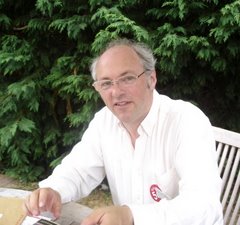
Francis Sedgemore

The right to be wrong

May 3, 2007 8:30 AM | Printable version

A recent reaction to a climate change denial documentary broadcast on primetime TV displays contempt for free speech and political ineptitude.

Bob Ward, a former press officer at the Royal Society, has published an open letter to Martin Durkin, maker of a documentary film broadcast recently on Channel 4 television that denies human influence on climate change. The letter is signed by a number of climate scientists and other academics with an interest in climate change.

I have no time for Durkin or his film, but take issue with Ward's letter, which, as reported by David Adam in the Guardian, demands that the DVD of Durkin's documentary be either withdrawn or corrected of its scientific errors.

The open letter states that " ... it is in the public interest for adequate quality control to be exercised over information that is disseminated to the public to ensure that it does not include major misrepresentations of the scientific evidence and interpretations of it by researchers."

If Durkin's Great Global Warming Swindle DVD should be withdrawn or corrected, what about Al Gore's hyperbolic An Inconvenient Truth, soon to be distributed to all schools in England courtesy of Her Majesty's government?

Ward complains that Wag TV, the production company responsible for Durkin's film, will not be bound by any Ofcom ruling against Channel 4. Channel 4 is restricted by a code of conduct when it comes to what may be broadcast, but Wag TV as an independent, commercial entity is free to distribute the DVD, and I'm not sure how it could be otherwise.

We are all of us surrounded by wild claims, ideological nonsense, misrepresentations and downright lies. But it is no business of the state, or assemblies of the scientific great and good, to pronounce on what may or may not be published.

So challenge Durkin and show him up as the dissembler he undoubtedly is. But win the battle by force of argument. The data are on the side of those arguing that human beings are largely responsible for current climate change, and do not require backing up with bullying tactics.

Durkin is reported by Raphael Satter in the Seattle Post-Intelligencer to have acknowledged two scientific errors, and said that these will be corrected in the DVD. That is an astute move by Durkin, but Ward et al demand that all the errors be removed, and then declare that if this were done, the documentary would fall to pieces.

I'm not so sure about this. Durkin could remove all the blatant scientific errors, and still make a superficial case based on issues that are not clear-cut, and over which there remains some scholarly debate.

Reality is ever thus, yet given the increasing predictive power of climate models backed by hard data, the majority view of climate change is the only credible one to take. But try explaining that to a mass audience. It can and should be done, but not in the combative rhetorical style beloved of the media and a number of scientific protagonists.

Ward is quoted in Satter's article as saying: "Free speech does not extend to misleading the public by making factually inaccurate statements. Somebody has to stand up for the public interest here."

Strong stuff, but very, very wrong. Free speech does indeed extend to coming out with any old rubbish, and people - even highly intelligent ones - frequently do. Others are free to point out factual errors, and in doing so attempt to convince the masses of the truth.

Like Bob Ward, I complained to the broadcasting regulator about Durkin's documentary. I did so not because I object to the line taken by Durkin, but rather because the filmmaker offered no space for opinions contrary to his own. The documentary was pure polemic subsidised by the taxpayer.

But Ward is going much further than a complaint to Ofcom, both in his open letter and discussions surrounding it. Regarding the demand for "quality control", it is not clear who would be the adjudicators, and even if Ward et al are right about the science (I am convinced they are), this is not a proper way for scientists to behave.

My principal objection to Ward's open letter is that it shows contempt for free speech, and an unwarranted lack of confidence in the ability of the public to think critically. A secondary objection is that it displays political ineptitude, and may prove counterproductive.

Saturday, March 24, 2007

Al Gore makes global warming plea

Al Gore makes global warming plea
Al Gore in Congress
Al Gore brought 500,000 letters urging action on climate change
Former US Vice-President Al Gore made an emotional return to the US Congress to testify about global warming.

The winner of an Oscar for his film on climate change, An Inconvenient Truth, told a large crowd that "our world faces a true planetary emergency".

He said the US should freeze carbon dioxide emissions and push for a strong climate change treaty to replace the Kyoto Protocol which expires in 2012.

Mr Gore came under fire for his own high energy use at his Tennessee home.

He called his first appearance in Congress since losing the 2000 presidential race to George W Bush "an emotional occasion".

'Carbon-neutral life'

Mr Gore spoke first to a joint session of two House of Representative committees on energy and environmental issues and then the Senate Environment and Public Works Committee.

"This problem is burning a hole at the top of the world in the ice cover that is one of the principal ways our planet cools itself," he said.

"If it goes, it won't come back on any timescale relevant to the human species."

We live a carbon-neutral life, senator, and both of my businesses are carbon-neutral... we do not contribute to the problem that I am joining with others to solve
Al Gore
Mr Gore had with him boxes which he said contained more than 500,000 letters asking Congress to take action to stop global warming.

The measures he suggested included a freeze on carbon dioxide emissions; requiring corporations to disclose emissions in their reports; and a tough international treaty to limit global warming pollutants, to succeed the Kyoto Protocol.

But critics questioned the science behind global warming theory and criticised Mr Gore's personal energy use.

Senator James Inhofe challenged Mr Gore to consume no more energy at home than the average American.

Men look at a power station in Baotou, China (file image)
Mr Gore wants to freeze, then lower, carbon dioxide emissions
Mr Gore said: "We live a carbon-neutral life, senator, and both of my businesses are carbon-neutral... we do not contribute to the problem that I am joining with others to solve."

Representative Joe Barton, the leading Republican on the House Energy and Commerce Committee, challenged global warming science as "uneven and evolving".

"You're not just off a little, you're totally wrong," he said of Mr Gore's conclusions that carbon dioxide emissions contribute to global warming.

Mr Barton said freezing carbon emissions would harm Americans and lead to "no new industry, no new people and no new cars".

Mr Gore's star has been rising lately.

His documentary won two Oscars; he has been nominated for a Nobel Peace Prize and several opinion polls in the US show him among the top potential contenders for the presidency, although he says he has no plans to run again.

Friday, March 23, 2007

Thursday, March 22, 2007

Fake fights are not helping climate science

  • 20 March 2007
  • Exclusive from New Scientist Print Edition. Subscribe and get 4 free issues
  • Alan Thorpe

Few areas of science have implications as momentous as those of climate change. Much is riding not only on ensuring that the science is as accurate as possible but also on getting the political and social response right. Given the high stakes, it is hardly surprising that scientists' methods and conclusions are coming under considerable scrutiny. This is as it should be. After all, scepticism is fundamental to the scientific method.

Scepticism is one thing; cynicism and conspiracy-theorising are quite another. These are the hallmarks of a recent attempt to discredit the widely accepted theory that human-made carbon dioxide emissions are causing global warming. A loose affiliation of scientists and writers is pushing the alternative idea that fluctuations in solar activity provide a better explanation for the rise and fall in the temperature of Earth's atmosphere over the past few centuries.

Their basic argument goes something like this. When the cosmic rays that constantly bombard Earth from outer space hit water vapour rising from the oceans, they cause clouds to form in the atmosphere which shield the planet from solar radiation and cause it to cool. The sun's magnetic field dampens the effect of cosmic rays, so reducing cloud cover and causing Earth to heat up. Thus an active sun makes for a warmer planet - a correlation these scientists claim is borne out by the records.

Readers in the UK may have seen the most recent incarnation of this theory in the Channel 4 television programme The Great Global Warming Swindle, broadcast last week. The programme questioned not only the mainstream of global warming science but also the integrity of the researchers involved in it. As I am the head of the major funder of climate science in the UK, the Natural Environment Research Council (NERC), such accusations of bias, lying and prejudice were bound to catch my attention.

First, let's deal with the main thesis: that the presence or absence of cosmic rays in Earth's atmosphere is a better explanation for temperature variation than the concentration of CO2 and other gases. This is not a new assertion and it is patently wrong: there is no credible evidence that cosmic rays play a significant role. The climate system is complex and it is likely that many factors affect it, cosmic rays among them. But to claim they are a major influence is disingenuous. There is far greater evidence suggesting CO2 is the major cause of warming.

"To claim that cosmic rays are a major influence is disingenuous"

Another claim made by the sceptics relates to the observation that in the long-term history of Earth's climate, variations in atmospheric concentrations of CO2 have lagged behind variations in the temperature of the atmosphere. Therefore, they say, the theory that human-produced greenhouse gases are the cause of current warming must be wrong.

Not so. True, the historical rhythm of major ice ages and interglacial periods is set by Earth's orbital variations, known as Milankovitch cycles, not by levels of greenhouse gases. However, these cycles in turn trigger feedback effects - such as increases or decreases in levels of CO2 in the atmosphere - which amplify the change in temperature.

There is no question that the more CO2 there is in the atmosphere, the warmer the planet becomes. It is not the only mechanism for warming, but it is a prominent one. We are adding CO2 and other greenhouse gases to the atmosphere in a way that has never happened before. The physics of how these gases cause warming by trapping the sun's radiation within the lower atmosphere - the greenhouse effect - is well established and it is no surprise that temperatures have been rising over the past 40 years. What's more, from the comprehensive models that climate scientists have built up, it is clear that only human-made greenhouse gases can explain this warming. Other factors, such as solar variations, have been found to be insignificant in comparison.

This debate is not just about science. Implicit in the sceptics' message is the suggestion that scientists are lying about the role of CO2 in climate change. The impression given is that this is a conspiracy; that climate scientists are deliberately trying to mislead the public, either to affect policy because of their private political motivations or to be more successful in attracting research funding.

Again, this is not backed up by any evidence. In my experience the climate science community operates at the highest ethical level and sticks to the scientific evidence.

The problem with debating the science of something like climate change is that it is hard for the public to assess the arguments across the whole spectrum of scientific opinion. It is partly in recognition of this that the Intergovernmental Panel on Climate Change periodically publishes its scientific assessments that draw together the full body of knowledge on the subject. That is not a political process. It is a scientific one. Let scepticism reign, but let's not play games with the evidence.

From issue 2595 of New Scientist magazine, 20 March 2007, page 24
reposted from: New Scientist
my: highlights / emphasis / key points / comments

Tuesday, March 20, 2007

The Great Global Warming Swindle - 1

Watch a full repeat of the 70 minute programme here or 8 x 10 minute clips here.


Forums > Climate Change in the Media > The Great Global Warming Swindle

from jo_hamilton on 9th Mar 07, 13:06:48

Did you see 'The Great Global Warming Swindle' on Ch4, Thurs 8th March? What did you think of the programme? you can see the background info on the programme, and vote via this link to the Channel 4 website. Post your comments below.

from fred on 9th Mar 07, 13:57:35

A fine example of tabloid TV journalism, consisting largely of tightly-edited soundbites and very little extended analysis.

Sure - many of the issues that it featured were, in themselves, respectable pieces of science, at least as far as identifying past drivers of climate are concerned. But the fact that cosmic ray levels may have influenced terrestrial climate over the past 545 million years doesn't mean that anthropogenic CO2 isn't doing so today.

And in all the discussion of the correlations between global temperature and atmospheric carbon throughout the glacial-interglacial periods, absolutely no mention was made of the Milankovitch cycles. While variations in the Earth's orbit and tilt do explain many past climatic variations (and the fact that atmospheric carbon levels trailed rather than led temperature changes), they do not explain currently-observed warming trends.

Likewise, much was made of John Christy's work indicating that satellite and radiosonde measurements of tropospheric temperatures were incompatible with carbon-driven warming. However, there was absolutely no mention of the fact that most of this discrepancy has now been dismissed as an artefact caused by measurment inaccuracies.

But the crowning irony of the programme was to suggest that current concerns about global warming are driven by scientists' venal desire to obtain more research funding by promulgating environmental scare stories. It asks us to believe that national governments are more willing to fund "pro-global warming" research than Exxon-Mobil is to underwrite studies showing the opposite. A brief glance at the past relationship between the tobacco industry and research on smoking and health should lay that particular conspiracy theory firmly to rest.

All in all, a wonderful piece of sophistry that simply cries out to be subjected to a detailed and merciless refutation.


from jo_hamilton on 9th Mar 07, 23:02:37

For some very interesting background profiles, and discussion, on people featured in the programme, see the latest posting on http://www.climatedenial.org/ .

Answers to some of the FAQs that the programme raises can be found on the Met Office website http://www.metoffice.gov.uk/faqs/2.html.

from fred on 10th Mar 07, 21:24:51

An excellent rebuttal of many of GGWS's points is contained in http://www.jri.org.uk/index.php?option=com_content&task=view&id=137&Itemid=83
by Sir John Houghton, FRS CBE. According to Wikipedia, he is the co-chair of the Intergovernmental Panel on Climate Change's (IPCC) working group, the lead editor of first three IPCC reports, and was professor in atmospheric physics at the University of Oxford, former Chief Executive at the Met Office and founder of the Hadley Centre.

Don't know if the reference to his rebuttal article has been inserted as a hyperlink - if not, can someone with more technical savvy than me hyperlink it please.


from fred on 10th Mar 07, 21:29:34

http://www.jri.org.uk/index.php?option=com_content&task=view&id=137&Itemid=83

Maybe this one worked. Hope so.


from gobion on 12th Mar 07, 14:49:18

The problem with programmes like this one is that 10-minutes after it has been shown I get my stepfather on the phone asking questions about it. Unfortunately he tends to believe the last thing told to him and as ever in my opinion they didn't do enough to show the agenda being pushed there...

I did notice the letter in the Sunday Observer refuting the claims in the show signed by various luminaries including Myles Allen from ClimatePredicton.net. I'm pleased to see them tackling it.

Cheers,

Gobion


from dave on 14th Mar 07, 15:36:24

Frankly... I didn't like how they stopped showing the records at about 1980. I also think it's fairly obvious that the director knew what he wanted footage of. It's easy to tell that a lot of "if"s and "buts" and "maybe"s have been simply cut out. Oh, and I'm fairly certain (and will look for a better source in a moment) that humans emit more C02 than volcanoes.


from ojwoodford on 15th Mar 07, 11:28:04

As someone who feels they understand the basic drivers of climate, it did make me stop and think that I am taking a lot for granted. Having said that, the program was full of annoying contradictions. I'll go and read the rebuttals that people have posted links to, to make sure I have the full picture.


from dave on 15th Mar 07, 17:22:02

Here's an interesting article that came up on Digg, the gist of which indicates that the graphs shown in the program were far from unbiased against global warming. Interestingly, I've had a friend repeatedly claim that all who oppose the program are conspirators in some kind of "plot". I can understand the need to be cautious, but some of this conspiracy theory is bordering upon hysteria, not to mention paranoia.


from ian on 19th Mar 07, 14:13:39

Likewise there has been an interesting discussion about the programme here. A lot of strong opinions from both sides of the fence on this and some good articles linked in the comments.

I think my main concern with the climate change issue being so divisive is that this isn't an ideological issue - it's a purely scientific issue, not a political one, not a cultural one... and yet we have people acting as if this is some conflict of science versus society. This issue shouldn't be another creationism vs evolution debate - there are no scriptures that say that the earth was created in 6 days and on the 7th God gave man an SUV and saw that it was good.

In principle, I can respect a climate sceptic provided that the result of their scepticism is to go out and do peer-reviewed studies to try and produce more accurate data. That's what the scientific method is all about... but these people, influenced by their socio-political bias, who promote a kind of "climate denial", claiming it is some culture conspiracy, are causing a great deal of harm to the public's perception of what, to me, is a very simple issue:

There is a correlation between carbon emissions produced by human activities and rising global temperatures. While the precice levels of influence and the specific ways that these changes will manifest are varied, complex and in some cases uncertain, the fact of the matter is that we would be incredibly foolish as a society to risk ruining the environment we have with practices that can be avoided by implementing alternative measures. It's really straight-forward and the fewer of these programs that complicate that issue we have the better, imho.


reposted from: www.climatex.org
my: highlights / emphasis / key points / comments

Monday, March 19, 2007

Desperation Of Mad Scientists About Global Warming

Other ideas under consideration include constructing a sun shield made up of hundreds of thousands of reflectors or building a sulfur-spewing volcano to reflect the sun’s rays, preventing them from reaching the earth. These ideas haven’t been fully formulated

Many fear there will be unintended side effects; others worry such schemes might prevent the type of reduction in greenhouse gas emissions that scientists say are the only real way to fight global warming. These approaches are not an alternative to cutting pollution, said University of Calgary professor David Keith, a top geoengineering researcher.

These solutions aren't cheap or easy, but they could help hold off warming even if we do manage to cut emissions.
clipped from plentymag.com
some researchers think we may be able to prevent the world from heating up by promoting algae growth, planting an artificial forest, opening solar umbrellas, and making man-made volcanoes.

"Of course it's desperation," said Stanford University professor Stephen Schneider. "It's planetary methadone for our planetary heroin addiction. It does come out of the pessimism of any realist that says this planet can't be trusted to do the right thing."

Well, maybe it’s not the planet that can’t be trusted, but us humans. So far we haven’t done such a great job of showing that we can cut or slow our greenhouse gas emissions. Despite our best intentions, we still have a long way to go to avoid climate change catastrophe.

Two last-ditch solutions that scientists are looking into are unloading iron into the ocean to promote algae blooms, which absorb carbon dioxide, and “growing” an artificial forest made out of steel that captures and compresses carbon dioxide into a liquid.
powered by clipmarks

Sunday, March 18, 2007

Sea level rise uncertain

Ice sheet complexity leaves sea level rise uncertain

Ice shed from the giant sheets covering Antarctica and Greenland is responsible for just 12% of the current rate of global sea level rise, according to a new review.

The authors emphasise that it is now clear that the ice caps are losing ice faster than it is being replenished by snowfall. But exactly why this is happening remains unknown, making it difficult to predict the extent of future sea level rises.

The remaining 88% of the current rise is due to the expansion of water as it warms, and melting from mountain glaciers and ice caps outside Greenland and Antarctica. Yet the shrinking of Greenland and Antarctica remains crucial because together they hold enough water to make sea levels rise by 70 metres, submerging vast swathes of land and displacing millions.

The bases of the glaciers appear to be able to slip more easily at their basethan in the past, so they slide into the sea faster.


Ice shed from the giant sheets covering Antarctica and Greenland is responsible for just 12% of the current rate of global sea level rise, according to a new review.

The authors emphasise that it is now clear that the ice caps are losing ice faster than it is being replenished by snowfall. But exactly why this is happening remains unknown, making it difficult to predict the extent of future sea level rises.

The remaining 88% of the current rise is due to the expansion of water as it warms, and melting from mountain glaciers and ice caps outside Greenland and Antarctica. Yet the shrinking of Greenland and Antarctica remains crucial because together they hold enough water to make sea levels rise by 70 metres, submerging vast swathes of land and displacing millions.

Over the past 10 years, satellite measurements have vastly improved the quality of data detailing changes in the ice sheets, say Duncan Wingham from University College London and Andrew Shepherd from the University of Edinburgh, both in the UK.

Having reviewed the latest data, the pair conclude that losses from the ice sheets of Greenland and Antarctica contribute 0.35 millimetres per year to the total rate of sea level rise, estimated at 3 mm per year.

This contribution is close to the Intergovernmental Panel on Climate Change's latest estimate of 0.41 mm from the Greenland and Antarctic ice sheets. According to the IPCC, measurements since 1993 show that the thermal expansion of water is responsible for 1.6 mm of the annual rise and other melting glaciers and ice caps for 0.77 mm.

Ice flow

The satellite data have revealed how the ice sheets are losing mass. "It has become very clear over the past five years that these sheets are not losing most of their mass through melting, they are losing it because the ice is flowing into the ocean faster than the snow is replacing it," Wingham told New Scientist (see Greenland's glaciers are speeding to the ocean).

The bases of the glaciers appear to be able to slip more easily at their basethan in the past, so they slide into the sea faster.

And this is where uncertainties arise. In Greenland, it is possible that water from melting ice at the surface of the glaciers is boring holes through the ice sheets and lubricating their base. "It is at least possible," says Wingham, that global warming is causing this to happen now more than before.

But Antarctica is much colder than Greenland, so there is no such melt-water to travel down to the base of the glaciers. "Most people don't realise that Antarctica is so cold there isn't much melting going on," Wingham told New Scientist. Whatever is causing Antarctic glaciers to flow faster than before, he says, it is not melting of their surfaces.

Increased snowfall

Wingham and Shepherd's review of recent research on Antarctica did find that four Antarctic glaciers that are retreating in unison share a common feature: they are all in direct contact with the sea.

"Our assessment confirms that just one type of glacier in Antarctica is retreating today – those that are seated in deep submarine basins and flow directly into the oceans," says Shepherd. "These glaciers are vulnerable to small changes in ocean temperature, such as those that have occurred over the 20th century and those predicted for the 21st century. A rise of less than 0.5 °C could have triggered the present imbalance."

Climate modelling predicts that snowfall on the ice caps will increase over the 21st century. But the researchers warn that the processes that are causing ice sheets to shrink – with surface melting in Greenland and changes in sea temperatures in Antarctica as possible candidates – could in the 21st century rapidly counteract the ice gained from increased snowfall.

They say continued observations by satellite and on the ground in both regions are essential to improve predictions of sea-level rises.

In a separate review paper, also in Science on 15 March, David Vaughan and Robert Arthern of the British Antarctic Survey agree that there are two main obstacles to predicting the future of ice sheets: more needs to be known about what is going on underneath the ice sheets, and what happens at their edges where they meet ocean waters.

Journal reference: Science (vol 315, p 1529, p 1503)

Climate Change - Want to know more about global warming – the science, impacts and political debate? Visit our continually updated special report.

powered by clipmarks

Saturday, March 17, 2007

Weather and Climate Conference in Oxford - TODAY


Weather and climate are news. As concern grows about extreme weather and climate change, scientists worry that we could lose sight of the science. On Saturday 17th March 2007 come and meet the experts whose forecasts shape policy.

The day will feature panel and audience discussions on a range of weather and climate issues. There will be a free buffet lunch, during which Peter Gibbs, BBC weather presenter, will read the weather for May bank holiday 2080 and climateprediction.net (the BBC climate change experiment) will demonstrate the world’s largest experiment in climate forecasting. To reserve a place, e-mail Sarah Crossman or call on 020 7478 4380.


Speakers include:

  • Dr Bill Burroughs - author of eleven books on weather and climate
  • Professor Chris Collier - expert in environmental remote sensing
  • Dr Keith Groves - head of forecasting at the Met Office
  • Professor Tim Palmer - IPCC panel member
  • Professor Paul Hardaker - former Met Office Chief Advisor to Government
  • Dr Geoff Jenkins - from the Hadley Centre and former IPCC panel member


Panel and audience discussion will include:

How are weather and climate predictions developed?
What we know about predicting the weather?
How do meteorologists make observations?
How is the weather modelled?
What do their forecasts mean?

Why are forecasts sometimes wrong?
Leading experts on hurricanes, severe winds and flash floods explain why they aren’t right all the time!

Predicting the future
How will global warming affect the UK?
Will weather become less predictable?
What are the dangers of climate change?

This symposium will launch the briefing document Making Sense of the Weather and Climate.

reposted from: senseaboutscience.org via bbc
my: highlights / emphasis / key points / comments

Caution urged on climate 'risks'


By Pallab Ghosh
Science correspondent, BBC News

An aircraft flies in front of the sun
Both scientists believe that man's activities are causing global warming

Two leading UK climate researchers have criticised those among their peers who they say are "overplaying" the global warming message.

Professors Paul Hardaker and Chris Collier, both Royal Meteorological Society figures, are voicing their concern at a conference in Oxford.

They say some researchers make claims about possible future impacts that cannot be justified by the science.

The pair believe this damages the credibility of all climate scientists.

They think catastrophism and the "Hollywoodisation" of weather and climate only work to create confusion in the public mind.

They argue for a more sober and reasoned explanation of the uncertainties about possible future changes in the Earth's climate.

I've no doubt that global warming is occurring, but we don't want to undermine that case by crying wolf
Professor Chris Collier

As an example, they point to a recent statement from one of the foremost US science bodies - the American Association for the Advancement of Science (AAAS).

The association released a strongly worded statement at its last annual meeting in San Francisco in February which said: "As expected, intensification of droughts, heatwaves, floods, wildfires, and severe storms is occurring, with a mounting toll on vulnerable ecosystems and societies.

"These events are early warning signs of even more devastating damage to come, some of which will be irreversible."

According to Professors Hardaker and Collier, this may well turn out to be true, but convincing evidence to back the claims has not yet emerged.

"It's certainly a very strong statement," Professor Collier told BBC News.

"I suspect it refers to evidence that hurricanes have increased as a result of global warming; but to make the blanket assumption that all extreme events are increasing is a bit too early yet."

'Scientific basis'

A former president of the Royal Meteorological Society, Professor Collier is concerned that the serious message about the real risks posed by global warming could be undermined by making premature claims.

"I think there is a good chance of that," he said. "We must guard against that - it would be very damaging.

"I've no doubt that global warming is occurring, but we don't want to undermine that case by crying wolf."

This view is shared by Professor Hardaker, the society's chief executive.

We feel that the recent consensus statement of the AAAS Board of Directors speaks for itself and stands on its own
AAAS

"Organisations have been guilty of overplaying the message," he says.

"There's no evidence to show we're all due for very short-term devastating impacts as a result of global warming; so I think these statements can be dangerous where you mix in the science with unscientific assumptions."

The AAAS said it would not be commenting directly on the professors' remarks.

"We feel that the recent consensus statement of the AAAS Board of Directors speaks for itself and stands on its own," a spokesperson explained.

"The AAAS Board statement references (at the end), the scientific basis upon which the conclusions are based, including the joint National Academies' statement and the Intergovernmental Panel on Climate Change."

The 'right thing'

Professor Hardaker also believes that overblown statements play into the hands of those who say that scientists are wrong on climate change - that global warming is a myth.

"I think we do have to be careful as scientists not to overstate the case because it does damage the credibility of the many other things that we have greater certainty about," he said.

"We have to stick to what the science is telling us; and I don't think making that sound more sensational, or more sexy, because it gets us more newspaper columns, is the right thing for us to be doing.

"We have to let the science argument win out."

The pair have contributed to a pamphlet called Making Sense of the Weather and Climate, which will be presented on Saturday at the Garden Quadrangle Auditorium at St John's College, Oxford.

The AAAS position on climate can be read on the organisation's website.

RELATED INTERNET LINKS
Making Sense of the Weather and Climate (PDF)

reposted from: bbc
my: highlights / emphasis / key points / comments


AAAS Board Statement - Climate Change

American Association for the Advancement of Science - click for statement on Climate Change.

The scientific evidence is clear: global climate change caused by human activities is occurring now, and it is a growing threat to society.

Accumulating data from across the globe reveal a wide array of effects: rapidly melting glaciers, destabilization of major ice sheets, increases in extreme weather, rising sea level, shifts in species ranges, and more. The pace of change and the evidence of harm have increased markedly over the last five years.

The time to control greenhouse gas emissions is now.

The atmospheric concentration of carbon dioxide, a critical greenhouse gas, is higher than it has been for at least 650,000 years. The average temperature of the Earth is heading for levels not experienced for millions of years. Scientific predictions of the impacts of increasing atmospheric concentrations of greenhouse gases from fossil fuels and deforestation match observed changes.

As expected, intensification of droughts, heat waves, floods, wildfires, and severe storms is occurring, with a mounting toll on vulnerable ecosystems and societies. These events are early warning signs of even more devastating damage to come, some of which will be irreversible.

Delaying action to address climate change will increase the environmental and societal consequences as well as the costs. The longer we wait to tackle climate change, the harder and more expensive the task will be.

History provides many examples of society confronting grave threats by mobilizing knowledge and promoting innovation. We need an aggressive research, development and deployment effort to transform the existing and future energy systems of the world away from technologies that emit greenhouse gases. Developing clean energy technologies will provide economic opportunities and ensure future energy supplies.

In addition to rapidly reducing greenhouse gas emissions, it is essential that we develop strategies to adapt to ongoing changes and make communities more resilient to future changes. The growing torrent of information presents a clear message: we are already experiencing global climate change. It is time to muster the political will for concerted action. Stronger leadership at all levels is needed. The time is now. We must rise to the challenge. We owe this to future generations.

Thursday, March 15, 2007

Debating Climate Change

Debate Skills? Advantage: Climate Contrarians

Last night at the Asia Society and Museum, a panel of notables debated the merits of the proposition "global warming is not a crisis." Arguing for the motion were the folksy (and tall) Michael Crichton, the soft-spoken Richard Lindzen and the passionate Philip Stott. Arrayed against were the moderate Brenda Ekwurzel, the skeptical Gavin Schmidt and the perplexed Richard Somerville. (Note: all the adjectives are mine.)

The hosts--the Rosenkranz Foundation and Intelligence Squared U.S.--asked the audience to vote both prior to and after the event. Early voting skewed heavily against the motion: 57 percent in the audience favored dismissing it while only 30 percent supported it. But that was before anybody opened their mouths.

[More:]

Robert Rosenkranz, chairman of the eponymous foundation, brought up the first bugaboo of the night in his introduction: "I am old enough to remember the consensus on global cooling." And the second: how can we know what the future climate will be when we can't even predict the weather a year in advance, something that would be worth billions of dollars?

  1. As Somerville later pointed out, any consensus over global cooling was more in the media hype surrounding it than anything else.
  2. Climate and weather are two separate things, climate being the average of weather over a given time period. We cannot say that it will be 76 degrees F next March 15 but we can say, based on atmospheric physics, that 20 years from now the month of March will, on average, be warmer than it is now.

As Lindzen noted in his opening remarks, the climate is always changing. The question is whether the warming we are currently experiencing--and every panelist agreed that warming was happening--is worrisome and/or manmade. For example, Lindzen argued that in a warming world we might expect less severe weather as a result of the decreased temperature difference between the poles and the equator. And he noted that India has warmed in recent decades yet its agricultural yield has increased. (Perhaps Prof. Lindzen is not familiar with the Green Revolution?)

But Lindzen shared a dry, dispassionate presentation of potentially confusing science with all of his colleagues on the opposite side. They came to debate the physics of climate change but ended up in a debate about the morality of it. For example, Somerville, a distinguished IPCC author, called the global warming crisis a "decisive change for better or worse." Scientifically reasonable perhaps, but hardly inspiring. "Science can inform these decisions but it cannot determine them," Schmidt added (though he did slightly better by likening climate science to CSI), before noting the lawyerly tactics of his opponents and urging the audience to "spot the fallacy." And Ekwurzel struggled to make the metaphor of a doctor diagnosing a disease without knowing all the particulars of how the patient's body works: "choosing not to fight global warming is as foolish as not treating fever in a child."

All fine and good except that they were faced with the folksy anecdotes of Crichton and the oratorical fire of Stott. As the novelist mused, the weather is changing, no one is arguing that, but "all anybody wants to do is talk about it, no one wants to do anything about it." Adding "if they're not willing to do it why should anyone else?" And, by the way, shouldn't we be focusing on poverty today rather than the weather 100 years from now?

When Stott took the microphone he chastised everyone for their hypocrisy. Humans have been changing climate by land clearing and farming since they evolved; scientific consensus is not infallible (remember eugenics?); and Tony Blair (Stott is British, though he also noted Al Gore's extravagant energy budget) refuses to curtail his flying. As fellow Schmidt later noted, if we could just harness the energy of the old style Marxist debater Stott, a switch away from fossil fuels would be easy.

The proponents of climate change crisis had nothing to offer other than the science. Where was the anti-Crichton? Maybe Bill McKibben? Al Gore may have had a personality facelift and started calling climate change a moral crisis but he probably would have looked wooden next to Stott, perhaps Jon Stewart? The proponents seemed underarmed for the debate and, not surprisingly, it swung against them, particularly when Schmidt made the fatal debating error of dismissing the ability of the audience to judge the scientific nuances.

Despite presentations riddled with suspect science--cosmic rays featured prominently, though they show no trend that matches the observed warming--the audience responded to Crichton's satirical call for a ban on private jets more than Ekwurzel's vague we need to throw "everything we can at the climate crisis." By the final vote, 46 percent of the audience had been convinced that global warming was indeed not a crisis, while just 42 percent persisted in their opinion that it was. The whole debate, for better or worse, can be heard on WNYC AM 820 on March 23 at 2 PM EDT (podcast and webstream will be available via that link as well). And check out Gavin Schmidt's take on the event here.

Listen closely. Obscured by the rhetoric was significant common ground: global warming is real, it is a problem (though how big remains debatable) and it is primarily an energy problem. Lindzen does not buy the global cooling red herring; Crichton thinks humanity will "de-carbonize" its energy sources anyway; and Stott just wants us to focus on poverty and human misery as the key crisis to be addressed. There is no doubt that the billions of people living without access to clean water, suffering from curable diseases, and unable to escape penury because of a lack of cheap energy is an absolute crisis. What he may have overlooked is that these problems may be worsened by climate change (shrinking glaciers in the Tibetan plateau do not bode well for thirsty Indians and Chinese) or solved by implementing solutions to it (photovoltaic cells for those in sunny climes unconnected to any grid). No one is suggesting an end to foreign aid in favor of concentrating exclusively on climate change. In fact, foreign aid and technology transfer must be part of any global effort to combat the problem.

And there are other changes the developed world can make to ease the burden of climate change on those not rich enough to adapt: yes, Michael Crichton, changing a lightbulb is important. Switching one 75-watt incandescent light bulb for the equivalent compact fluorescent will save 55 pounds of CO2 every year. Those pounds add up and there are a host of similarly easy and cheap changes to make. Modern technology offers us a range of cleaner, better, faster products; a car from 1972 cannot compare to a car from 2007, nor can similarly aged coal-fired power plants. Why wouldn't we want to buy a modern one? Does anybody detect a consensus on that?

Thursday, March 08, 2007

Green light for carbon dioxide burial

Green light for carbon burial

  • 10:00 17 February 2007
  • Phil McKenna

The idea of literally burying the carbon dioxide emissions problem - by storing the gas deep underground - got a double boost this week. On 10 February, an amendment to international law came into force that allows the greenhouse gas to be buried beneath the sea floor. At the same time, a new study counters one of the main fears over carbon burial - that the gas will simply leak out again, to boost future global warming.

Some companies have been experimenting with storage in undersea aquifers and porous rocks for more than a decade, but the law was unclear over whether carbon dioxide should be considered a pollutant, leaving companies open to accusations of illegal dumping.

Even with the new laws, burying carbon dioxide under the seabed is likely to remain controversial because of concerns that it will eventually leak out (New Scientist, 20 November 2006, p 6). However, a team of environmental engineers now claims that these worries are unfounded, and that natural reactions will lock away the carbon dioxide within aquifers for millennia.

Ruben Juanes at the Massachusetts Institute of Technology and his colleagues made a computer model of the movement of carbon dioxide injected into a layer of permeable rock saturated with salt water. The gas is less dense than brine and so starts to rise in a plume towards the rock surface, but the model shows that it will not continue moving. The brine clings to the insides of the rock pores, narrowing their diameter so that the plume of gas is pinched into small bubbles, which remain trapped within the pores (Water Resources Research, vol 42, p W12418).

"This is a permanent storage mechanism," says Juanes. "Carbon dioxide will stay underground indefinitely." Nevertheless, G�nter Pusch at Clausthal University of Technology in Germany believes that the gas may still leak. "If the rising plume hits a fault or fracture network, it can accelerate the upward migration," he says.

"This is a permanent storage mechanism. Carbon dioxide will stay underground indefinitely"

If the gas does leak out into the oceans, a team led by Toste Tanhua at the University of Kiel in Germany has found that it will remain dissolved in seawater for longer than previously thought. This leads to increased acidity at greater depths, harming deep-water corals and marine life (Proceedings of the National Academy of Sciences, DOI: 10.1073/pnas.0606574104).

Juanes, however, is undeterred. "So long as the gas is injected deep enough underground, it is hard to imagine a major leak making it to the surface," he says. "Sequestration is by no means an answer to all problems, but it is an integral part of the solution."

reposted from: New Scientist
my: highlights / emphasis / key points / comments

Thursday, February 22, 2007

Australia plans to ban traditional light bulbs - a practical step toward slowing climate change

SYDNEY (AFP)—Australia has announced plans to ban traditional light bulbs in a move Prime Minister John Howard called a practical step toward slowing climate change.

Claiming a world first for a national government, Environment Minister Malcolm Turnbull said incandescent lightbulbs would be phased out by 2010 in favour of the more fuel-efficent compact fluorescent bulbs.

He said replacing the traditional coiled filament bulbs invented by Thomas Edison in the 19th century would cut Australia's greenhouse gas emissions by four million tonnes a year by 2015.

"If the whole world switches to these bulbs today, we would reduce our consumption of electricity by an amount equal to five times Australia's annual consumption of electricity," Turnbull said.

"The climate change challenge is a global one. I encourage other countries to follow Australia's lead and make the switch to more energy efficient products like compact fluorescent light bulbs."

Turnbull said the traditional light bulb's lack of efficiency was reflected in the heat it wasted when switched on.

"A normal light bulb is too hot to hold. That heat is wasted and globally represents millions of tonnes of carbon dioxide that needn't have been emitted into the atmosphere if we had used more efficient forms of lighting," he said.

"These more efficient lights, such as the compact fluorescent light bulb, use around 20 percent of the electricity to produce the same amount of light."

Conservative leader Howard, who has softened his sceptical stance on global warming as an election looms later this year and opinion polls show high voter concern on the issue, said he was a "climate change realist".

"I think some of the stuff that's around at the moment is too alarmist," he said. "But on the other hand I think the evidence is very strong that mankind has made a contribution to the warming of our globe."

Howard said households would benefit from the switch to the high-tech fluorescent bulbs.

"They'll be a bit dearer to start off with but over time they'll be less expensive and they'll last four to 10 times longer.

"We need to take practical measures in order to reduce greenhouse gas emissions."

Green groups and the opposition Labor Party welcomed the move but said the government needed to examine more meaningful ways to reduce global warming, including signing the Kyoto Protocol on greenhouse gas emissions.

"The major producers of greenhouse gas emissions in this country are not individuals, they're governments and business," opposition environment spokesman Peter Garrett said.

Australia is believed to be the first national government to look at banning tradtional lightbulbs, although lawmaker Lloyd Levine proposed similar legistion in the US state of California last month.

US energy policy think-tank the Rocky Mountain Institute estimates that replacing a 75-watt incandescent light bulb with a 20-watt compact fluorescent saves 1,300 pounds (590 kilograms) of carbon dioxide over the life of the bulb.

The institute said the average life of a 75-watt incandescent bulb is roughly 750 hours, while the life of an energy-efficient bulb is 10,000 hours.

reposted from: Seed Magazine
my highlights / emphasis /
comments

Stop Climate Change - nextgenerationearth.org

Greenland's melting ice cap

Scientists agree the Earth's climate is being directly affected by human activity, and for many people around the world, these changes are having negative effects. Records show that 11 of the last 12 years were among the 12 warmest on record worldwide.

Above: Greenland's melting ice cap

Be Part of the Solution

Commit to the Next Generation and join the fight against climate change. Join governments, companies, universities and individuals like yourself throughout the world to endorse a clean energy future.

If we act now, we can stop further climate change.

Click here to learn how to be part of a clean energy future.

Climate Change Statement of Principles

Climate change is an urgent problem requiring global action to reduce emissions of carbon dioxide (CO2) and other greenhouse gases (GHGs). Energy use is vital for a modern economy. Burning fossil fuels produces CO2. Thus, confronting climate change depends, in many ways, on adopting new and sustainable energy strategies that can meet growing global energy needs while allowing for the stabilization of atmospheric CO2 concentrations at safe levels.

Energy efficiency must play an important role in these strategies, but long-term success will require a concerted effort to de-carbonize the global energy system. This means significantly increasing the use of non-fossil-fuel energy sources, significantly raising the energy efficiency of fossil-fuel power plants through advanced technologies, and developing and deploying technologies that trap and store the CO2 produced by the fossil fuels that will remain in use.

Cost-efficient technologies exist today, and others could be developed and deployed, to improve energy efficiency and to help reduce emissions of CO2 and other GHGs in major sectors of the global economy. Research indicates that heading off the very dangerous risks associated with doubling pre-industrial atmospheric concentrations of CO2, while an immense challenge, can be achieved at a reasonable cost. Failing to act now would lead to far higher economic and environmental costs and greater risk of irreversible impacts. To meet this challenge and take advantage of these opportunities:

  • The world’s governments should set scientifically informed targets for “stabilization of greenhouse gas concentrations in the atmosphere at a level that would prevent dangerous anthropogenic interference with the climate system,” in accordance with the stated objective of the Framework Convention on Climate Change (UNFCCC). This should include an ambitious but achievable mid-century, interim target for global CO2 concentrations.
  • All countries should be party to this accord, which should include specific near- and long-term commitments for action in pursuit of the agreed targets. Commitments for actions by individual countries should reflect differences in levels of economic development and GHG emission patterns and the principles of equity and common but differentiated responsibilities.
  • Clear, efficient mechanisms should be established to place a market price on carbon emissions that is reasonably consistent worldwide and across sectors in order to reward efficiency and emission avoidance, encourage innovation, and maintain a level playing field among possible technological options.
  • Government policy initiatives should address energy efficiency and de-carbonization in all sectors, allow businesses to choose among a range of options as they strive to minimize GHG emissions and costs, encourage the development and rapid deployment of low-emitting and zero-emitting energy and transportation technologies, and provide incentives to reduce emissions from deforestation and harmful land management practices.
  • Governments, the private sector, trade unions, and other sectors of civil society should undertake efforts to prepare for and adapt to the impacts of climate change, since climate change will occur even in the context of highly effective mitigation efforts.
    • http://nextgenerationearth.org/signatures/add/
    • More Ways You Can Help

      Here are a few things you can do to help stop anthropogenic climate change, which is caused by emissions of greenhouse gases such as carbon dioxide.

      Write Your Congressperson

      Many Web sites have pre-written letters you can send to voice your support of legislation that reduces carbon emissions. Here's an example of one.

      Reduce Your Carbon Footprint

      New York Times writer Andrew Postman discovered some easy ways to reduce his carbon output when he put his family on an energy diet.

      Stay Informed

      One of the biggest things you can do is stay informed. Many news outlets such as BBC News have special sections that explain climate change.

      Information is also available on the politics of climate change at the United Nations Framework Convention on Climate Change

    • Fast Climate Facts

      Warmer surface temperatures over just a few months in the Antarctic can splinter an ice shelf and prime it for a major collapse, NASA and university scientists have reported. The process can be expected to become more widespread if Antarctic summer temperatures increase.

      Above: The Larsen B ice shelf, which was about the size of Rhode Island, collapsed over a period of 35 days in 2000.

      Photo credit: NASA

      Scientists agree the Earth's climate is being directly affected by human activity, and for many people around the world, these changes are having negative effects. Records show that 11 of the last 12 years were among the 12 warmest on record worldwide.

      The just-released Intergovernmental Panel on Climate Change (IPCC) Summary for Policy Makers — the first volume of the IPCC's 4th Assessment Report — states that scientists are more than 90% confident that human industrial activity is driving global temperature rises. (add your thoughts on the report at RealClimate.org)

      Carbon dioxide levels today are nearly 30 percent higher than they were prior to the start of the Industrial Revolution, based on records extending back 650,000 years.

      According to NASA, the polar ice cap is melting at the rate of 9 percent per decade. Arctic ice thickness has decreased 40 percent since the 1960s.

      The current pace of sea-level rise is three times the historical rate and appears to be accelerating.

      The number of Category 4 and 5 hurricanes has almost doubled in the last 30 years. The IPCC 4th Assessment Report said that this trend would likely continue.

      Droughts in the Sahel during the 1970s and 1980s were found to be caused by warmer sea surface temperatures, and the current drought in the Amazon is suspected to be a result of rising ocean temperatures.

      Poverty and food insecurity has also been tied to climate variability. A recent publication shows that providing climate information to vulnerable populations can improve — and even save — lives.

    • http://nextgenerationearth.org/facts
    reposted from: http://nextgenerationearth.org/
    my highlights / emphasis /
    comments

    Warm Feelings About Climate - Al Gore

    Bring together John Rennie of Scientific American, Jeffrey Sachs of the Earth Institute and Al Gore of, well, Al Gore and you are certain to hear passion on the subject of global warming. And that's exactly what happened last night at Columbia University, where Gore was honored by this magazine for his contributions as Policy Leader of the Year in 2006.

    Economist Jeff Sachs took the opportunity to remind the assemblage of students, scientists and dignitaries (including U.N. President Sheikha Haya Rashed Al Khalifa of Bahrain) that the world has confronted such global crises before. 2007 marks the 20th anniversary of the Montreal Protocol--a global effort to stop the production of chlorofluorocarbons (CFCs) for refrigeration that eventually escape into the atmosphere and eat a hole in the ozone layer. Thanks to the Montreal Protocol, that hole is healing (albeit slowly).

    But the path of that issue also provides a lesson in how the world copes with large environmental problems, according to Sachs: first comes recognition, followed by industry denial, public acceptance, technology solutions and finally global diplomacy. In Sach's view we have reached the third stage of this process on climate change--public acceptance--in large part thanks to the efforts of the former Vice President. And big business is lining up to take part in the solution; "the whole idea that his is a business conspiracy, it ain't right," Sachs said. "Business is way ahead of the politicians. They want to make money but they know they're going to have to do it in a carbon-constrained world."

    The global diplomacy will take time (don't expect U.S. action before 2009, in Sachs' view) and will require commitments from everyone, including developing countries like India and China. But starting in Bali this December, the global community will meet to begin drafting the successor to the Kyoto Protocol--the first baby step in an effort to combat climate change.

    Sachs, of course, was simply the opening act for the rock star of the event: Mr. Gore. In friendly environs, I imagine he gets the same standing ovation every time he speaks now.

    al gore
    Note: he's aged a bit in the 13 years since this photo was taken.

    He reiterated some of his "An Inconvenient Truth" spiel on the climate crisis, noting that humanity's relationship to Earth has profoundly changed in the last 100 years. Global population has quadrupled, human technology impacts every aspect of the Earth's ecosystems, and our outlook has shrunk from planning for decades to planning for moments (or just the next quarterly report of a business).

    But he also took up Sachs analogy and extended it, noting the London Amendments to the Montreal Protocol that followed three years later and significantly tightened the restrictions on CFCs. A similar process is needed with Kyoto, Gore argued, and not by 2012, when it would expire, but by 2010. "I believe the solution requires a redefinition of this issue as a moral issue," he said, and moral issues do not wait.

    A few pre-selected questions were asked (Should we adapt to climate change or try to stop it? What specific actions can people take? And what kind of sacrifices will be required?) but the answers were not very specific (even to the most specific question). And no one asked Mr. Gore if he'd be running for office to try to implement some of this moral crusade practically in the political realm.

    Ultimately, the only real solution on offer was political: a global petition for a framework that all countries and all peoples can agree to, available at nextgenerationearth.org. But what about the electricity consumed (and coal burned) when everybody turns on their computer to sign up?


    reposted from: SciAmerican
    my highlights / emphasis / comments