Wednesday, November 15, 2006

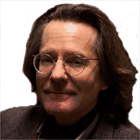
Gotta have faith? by AC Grayling

Thanks to New Humanist for informing me about this article by AC Grayling.

I summarise his article (at the end i have many examples of comments made by readers of this article):-
Prof. Grayling rebuts the notion that "Atheism is itself a faith position". It is not possible to be a "Fundamentalist" Atheist or Secularist or Humanist. Those who do not share a religious outlook should repudiate the label "atheist" unless those who wish to use it are prepared to say "atheist and afairyist and agoblinist and aghostist" to mark the rational rejection of belief in supernatural entities of any kind.

Rationality is the key. If a person gets wet every time he is in the rain without an umbrella, yet persists in hoping that the next time he is umbrella-less in the rain he will stay dry, then he is seriously irrational. To believe in the existence of (say) a benevolent and omnipotent deity in the face of childhood cancers and mass deaths in tsunamis and earthquakes, is exactly the same kind of serious irrationality. If there is a deity, does the evidence suggest that it is benevolent or malevolent? The answer is - malevolent!

Children should be taught how NOT to put up barriers between themselves and their classmates on the basis of gender, ethnicity and their parents' choice of superstition.


Gotta have faith? -
Professor AC Grayling writes in the Guardian - November 10, 2006. Plus hundreds of comments by readers.

The repetition this week of the weary old canard that atheism is 'a faith proposition' shows that our archbishops need a lesson in semantics.

In the foreword to the confused document produced by the religious thinktank Theos this week the Archbishops of Canterbury and Westminster, in a joint statement iterate the claim that "atheism is itself a faith position". This is a weary old canard to be set alongside the efforts of the faithful to characterise those who robustly express their attitude towards religious belief as "fundamentalist atheists".

This is classified in logic as an "informal fallacy" known as a "tu quoque" argument ... a simple lesson in semantics might help to clear the air for them on the meanings of "secular", "humanist" and "atheist". Once they have succeeded in understanding these terms they will grasp that none of them imply "faith" in anything, and that it is not possible to be a "fundamentalist" with respect to any of them.

Secularism is the view that church and state (religion and national government) should be kept separate.

Religious organisations should embrace secularism as their best chance of survival, because a secular dispensation keeps the public domain neutral with respect to all interest groups within it, including the different religions and their internally-competing denominations, allowing them all to survive - which they would not do if one became dominant and had the ear, or the levers, of government. As this shows, it is possible (and even wise) for religious people to be secularists too.

Humanism is the view that whatever your ethical system, it derives from your best understanding of human nature and the human condition in the real world. This means that it does not, in its thinking about the good and about our responsibilities to ourselves and one another, premise putative data from astrology, fairy tales, supernaturalistic beliefs, animism, polytheism, or any other inheritances from the ages of humankind's remote and more ignorant past.

"Atheism" is a word used by religious people to refer to those who do not share their belief in the existence of supernatural entities or agencies. Presumably .... believers in fairies would call those who do not share their views "a-fairyists", hence trying to keep the debate on fairy turf, as if it had some sensible content; as if there were something whose existence could be a subject of discussion worth the time.

People who do not believe in supernatural entities do not have a "faith" in "the non-existence of X" (where X is "fairies" or "goblins" or "gods"); what they have is a reliance on reason and observation, and a concomitant preparedness to accept the judgment of both on the principles and theories that premise their actions. The views they take about things are proportional to the evidence supporting them, and are always subject to change in the light of new or better evidence.

"Faith" - specifically and precisely: the commitment to a belief in the absence of evidence supporting that belief, or even (to the greater merit of the believer) in the very teeth of evidence contrary to that belief - is a far different thing, which is why the phrase "religious thinktank" has a certain comic quality to it: for faith at its quickly-reached limit is the negation of thought.

So despite the best efforts of religious folk to keep the discussion on their turf, those who do not share their outlook should repudiate the label "atheist" unless those who wish to use it are prepared to say "atheist and afairyist and agoblinist and aghostist" and so on at considerable length, to mark the rational rejection of belief in supernatural entities of any kind.

As Richard Dawkins has pointed out, since Christians and Muslims do not believe in Thor and Wotan, or Zeus and Ares and Hermes, or Shiva and Vishnu, or the Japanese Emperor, and so endlessly on, they too are "atheists" about almost all the gods ever imagined.

Without the commonplace and dispiriting facts of history which show how religious organisations are in truth political, military and economic ones that exist for the sake of their all-too-human beneficiaries, it would not be easy to see why, eg Christians believe in the volcano god of the Jews (the pillar of smoke by day, the burning bush on the mountain top), and why they choose the Jesus story out of all the many in which a god (Zeus and Jaweh are hardly alone in this) makes a mortal woman pregnant, who gives birth to a son, who engages in heroic endeavours, often involving suffering (think of Hercules and his labours), and therefore goes to heaven. For this tale is a commonplace of the old Middle Eastern religions, and it is arbitrary to pick this one rather than that one to kill and die for.

And on that subject: the sufferings attributed to Jesus, involving torture and an unpleasant death, all (so the putative records say) within less than 24 hours, are horrible enough to contemplate, but every day of the week millions of women suffer more and for longer in childbirth. Longer and worse suffering is also experienced by torture victims in the gaols of tyrannical regimes - and in the gaols of some democratic ones too, alas. Why then does Christianity's founding figure have a special claim in this regard? Flagellation followed by crucifixion was the form of Roman punishment particularly reserved for terrorists and insurgents in their Empire, and many thousands died that way: after the Spartacist revolt one of the approach roads to Rome was lined on both sides for miles with crucified rebels. Should we "worship" Spartacus? After all, he sought to liberate Rome's slaves, a high and noble cause, and put his life on the line to do it.

GK Chesterton, one of the Catholic faithful, sought to discomfort non-religious folk by saying "there are only two kinds of people; those who accept dogmas and know it, and those who accept dogmas and don't know it." He is wrong; there are three kinds of people: these two, and those who know a dogma when it barks, when it bites, and when it should be put down.

Even some on my own side of the argument here make the mistake of thinking that the dispute about supernaturalistic beliefs is whether they are true or false. Epistemology teaches us that the key point is about rationality. If a person gets wet every time he is in the rain without an umbrella, yet persists in hoping that the next time he is umbrella-less in the rain he will stay dry, then he is seriously irrational. To believe in the existence of (say) a benevolent and omnipotent deity in the face of childhood cancers and mass deaths in tsunamis and earthquakes, is exactly the same kind of serious irrationality.

The best one could think is that if there is a deity (itself an overwhelmingly irrational proposition for a million other reasons), it is not benevolent. That's a chilling thought; and as it happens, a quick look around the world and history would encourage the reply "the latter" if someone asked: "If there is a deity, does the evidence suggest that it is benevolent or malevolent?"

Some theologians - those master-wrigglers when skewered by logic - try to get out of the problem by saying that the deity is not omnipotent; this is what Keith Ward attempted when debating "God and the tsunami" in Prospect magazine. A non-omnipotent deity, eh? Well: if the theologians keep going with their denials of the traditional attributes of deity, they will eventually get to where common sense has already got the rest of us: to the simple rational realisation that the notions of deities, fairies and goblins belong in the same bin. Let us hope, in the interest of limiting religion-inspired conflict around the world, that they hurry up on their journey hither.

And then perhaps we can have a proper discussion about the ethical principles of mutual concern, imaginative sympathy and courageous tolerance on which the chances for individual and social flourishing rest. We need to meet one another as human individuals, person to person, in a public domain hospitable to us all, independently of the Babel of divisive labels people impose on others or adopt for themselves. Look at children in nursery school: a real effort has to be made to teach them, later on, how to put up barriers between themselves and their classmates on the basis of gender, ethnicity and their parents' choice of superstition. That is how our tragedy as a species is kept going: in the systematic perversion of our first innocence by falsehood and factionalism.

********

Some comments by readers:


GBR

The term "fundamentalist atheist" is, as far as I can tell, usually used to denote someone who positively denies the existence of a god(s) and who seeks to convert others to their way of thinking.

The definition of atheist needs revising, in my humble opinion. I'm an atheist, yet I can't say that there absolutely is no god: that would be a faith position. I'm, in addition to being atheist, also an agnostic. But, logically, so are the two archbishops, so it's meaningless (not to mention absurd) for me to describe myself firstly and foremost as being an agnostic. (Which is the common refrain from religious persons, "actually, you're not an atheist, you're an agnostic.")


GBR

Excellent stuff.

I liked "Calling atheism a faith is like calling 'bald' a hair colour". Can't remember who came up with it though.

I like the concept of "fundamentalist atheism". When accused of this, I normally admit to it explaining that the god I don't believe in is a vengeful interventionist (probably a PNAC member) rather than a namby-pamby "benevolent spirit" sort of god.


GBR
People who do not believe in supernatural entities do not have a "faith" in "the non-existence of X" (where X is "fairies" or "goblins" or "gods"); what they have is a reliance on reason and observation.

That really is not true. What they have is reliance on OTHER PEOPLE's oberservation, which is a form of faith. For example, how many of those who accept the basis for evolution have studied fossil records for themselves and done some sums to find out of the timescales are realistic? Not many, I suspect. They assume that the books they have read are well edited and peer-reviewed, but that is a kind of faith. To find out even the simplest facts about our world, including whether the Earth goes round the sun, are extremely difficult. If science ever build a good model for the big bang, it will be extremely complicated, understandable to as many people now who understand quantum mechanics (let's say 1%, at a push). What does everyone else do? Take it on faith.


MYS

When the religious talk about atheism being a faith, they are mixing up two different senses of the word, to score a rhetorical point.

In its religious sense, faith means a deliberate choice to believe in some proposition (such as the existence of God) despite a lack of evidence. It is defiant. It's used to silence doubt and to end arguments. "You just have to have faith, that's all."

In this sense, it's ridiculous to call atheism based on a rational scientific process "faith", since this choice to ignore evidence is explicitly outlawed by the scientific method.

In it's more normal sense, faith is a synonym for trust. Of course, we all have to trust things that people tell us of events outside our direct experience. We also have to trust our own perceptions and judgements. This is trust on the basis of evidence, and it's rational.

Every judgement involves this kind of trust, eventually. It's a tenet of quantum physics that we can never obtain comprehensive information on any phenomenon we might try to measure. At some point we have to stop gathering evidence, and reach a conclusion, based on what is reliable. In this sense, a rational scientific conclusion regarding the existence of God does involve faith, just like a conclusion that the Republicans lost the mid-term elections involves faith.

The first means deliberately ignoring evidence, while the second acknowledges the primacy of evidence. It's very disingenous to conflate the two meanings, but it's apparently a convincing argument for many people.

While the second type of faith does acknowledge that there can be no such thing as exhaustive evidence, this is really just a technical point about the nature of information, and in no way implies that we are free to *choose* which evidence to accept and which to ignore, based on emotional convictions. Probability is very real, and it matters.

Of course it shouldn't be necessary to assert that probability matters: the most religious person in the world makes use of it every time they cross the road. The selective ignoring of probability when it comes to arguments about religious matters just shows how dishonest this particular argument about the "faith of atheism" is.

Posters here have already started talking about the limits of science. This is an important topic, and shouldn't be dismissed out of hand. Not every aspect of human life reduces to the scientific assessment of the truth value of various beliefs and concepts.

However, the existence of God is inescapably a scientific question. If you want to say that there is no way to prove God's existence, but you still believe it nonetheless, then you have the *first* kind of faith. Your belief is not scientific but more like poetry or something, and you should not expect anyone to be rationally convinced by it, nor should you expect it to be taken as a basis for public policy.

It is perfectly possible to argue ethics in a non-relativist, scientific way, provided we take the time to convincingly explain some basis of morality in a rational moral calculus of happiness, or a related concept such as freedom.

Hope Ann Coulter is reading this page.


GBR

I believe a lot of things. But I try to avoid having faith in anything - by which I mean having beliefs that I'd be unwilling to change if the evidence pointed the other way.

When I say "I believe that...", some people tell me that because I say that I am taking up a faith position. But in fact I mean the reverse. I say "I believe that..." rather than "I know that" because I admit the possibility that I could be wrong - the complete opposite of faith.

Some of my beliefs are supported by much more evidence than others. Sometimes there's so little evidence that you have to go with the best guess. If I'm honest, there probably _are_ things that I have faith in - hey, I'm human. But I try to open up these areas of faith to rational argument based on the evidence - because I don't regard faith as a valuable attitude for someone who wants to understand the world.

The scientific method isn't flawless, but one of the things I like about it is that it doesn't claim to be... it requires constant cross-checking with the world and with your peers, and there are incentives for challenging the existing model which have resulted in several paradigm shifts.

On the other hand, the religious "method" includes strong disincentives for challenging the existing model, rarely if ever goes through paradigm shifts. Oh, and the main evidence is historical secondary sources many centuries old.

For these reasons I believe that the scientific method is more reliable than the religious method. This is not a faith position - I am willing to change it. But I have yet to see an alternative that is anything like as coherent.


GBR

The point you seem to miss about science, andrewthomas100, is that it will happily put up its hand and say "we don't actually know" when it reaches a point beyond which we are as yet unable to travel. What it DOESN'T do is then go on to say "since we don't know, we'll stop trying to find out and we'll assume that some beardy guy up in the sky did it all but would rather we didn't probe his motivation or existence too closely..."

As history shows anyone who cares to look, we really don't know what might be possible next week, next year, next decade... imagine the equivalent of somebody inventing the telescope or microscope today...imagine the information about the universe which, though as yet unknown, might become known? Your problem is you're not interested in knowing - you've closed your mind to these possibilities (apparently we should "leave behind our rigid devotion to the scientific experimental method - it's been useful up to know, but it can be useful no more")

Good for you, and I hope you are happy, but don't criticize those who are interested in knowing more...


GBR

Thank you for another great article AC Grayling. Keep up the good work in lighting up the darkness. I myself am agnostic (we annoy both aethists and the 'faithful' tee-hee), but leaning heavily towards aethist - I leave open the possibility that there could be a god, but I doubt it v.much indeed.


I can't remember which particularly bright ancient Greek came up with the following, and apologies for paraphrasing;

There is unimaginable suffering and pain on earth.
If there is a god, he would know about said suffering.
Said god neither can not nor will not do anything to alleviate the suffering, which leaves us with two possibilities:
1. If he can not stop the suffering he is not omnipotent, therefore not a god - or at the very least a very crap one.
2. If he will not stop it then he is a vengeful, spiteful, nasty god - in which case he can just f*** right off back to the metaphysical hole he crawled out from.

Oh, and if anyone says that he allows suffering because he moves in mysterious ways - then you get minus 10 points for fatuousness.


GBR

the point can easily be missed here, and frequently is being.

andrew thomas presents a fairly abstract theory about us being a big brother experiement. Well, maybe, it is certainly impossible to disprove, but does that mean you believe it?

This piece is about the atheist belief, based on reason and evidence, that there is no good. No atheist can ever tell you that that is an absolute truth (though some will try admittedly), which is what AC Grayling is clearly saying. That is the fundamental difference between atheists and theists, and why there is no such thing as a 'fundamental atheist'.

Science can never explain all the answers, of course - i have never heard anyone claim it can, but it does inform and help us to rationally understand, instead of relying on fanciful stories.

I personally don't think it is right for an atheist to claim some kind of moral superiority (though i would check your facts before labelling stalin and hitler as atheists), and i know our local churches do a lot of great work for the vulnerable groups in our society.

But, this argument will never end because it consists of one person taking a position that says, look, rationally, and in all probabality there is no god and the other saying, ah yes, but we don't need proof and rationality because we have faith, and that is equal to reason.

The latter position seems absurd to me, but we shouldn't deny the right of people to have faith in something, as has been mentioned some of us need a narrative to explain things (in all walks of life, not just faith, some people need stories to understand, some people need facts).

Surely the important thing is how we use our relative positions and what our moralities are. the frustrating thing for me here is that people of faith are more likely (ie. not all people of faith), to take a bigoted, irrational, vengeful etc opinion and explain it with their religion, and hold that this is as valid as an argument on, say, the morality and efficacy of the death penalty.


GBR

"There is unimaginable suffering and pain on earth."

Related to this, there's a good dialogue, can't remember who by:

"I am in pain. There can be no God. God created so much pain in the world."

"But God created all the love in the world as well, do not forget that."

"But love is the reason I am in pain".

I like that. The point being people just seem to detract from a "God" when there is any pain, but give no credit when there is any joy. Doesn't seem fair, somehow! It's like you like a fabulous happy life until you're 40, then you get cancer and die. And people say: "There can't be a God, what a terrible thing to happen", but they've forgotten about the 40 fabulous years they had. Seems like a thankless attitude.

You've got to have "bad" and "evil". Without it there can be no "good" or "love". You need the two flip sides. You need to create that distinction. It's like you need positive and negative in electricity to create a current. It's impossible to define one if the other does not exist.


MYS

readerj: "For these reasons I believe that the scientific method is more reliable than the religious method. This is not a faith position - I am willing to change it. But I have yet to see an alternative that is anything like as coherent."

You don't need to worry about this paradox of someone potentially using the scientific method to show that the scientific method doesn't work. It kind of seems like it leaves science open to a charge that it's unfalsifiable, which is a characteristic of pseudoscience. It's a mind bender.

This paradox shows that there are boundaries to science, but it can't reach within those boundaries to discredit science itself. The ultimate basis for its validity is found in the nature of consciousness, and statistical physics, but there's no room to go into that here.

But just try to imagine how life could be possible if there was no such thing as evidence or probability! Not only can one not imagine it, the thought-experiment itself can't be posed without using the things it's trying to question.


GBR

Very good article, well argued. HAving said that, it is fascinating to see how many of the religious out there (in the ecumenical spirit, i will refrain from describing them as 'credulous arseholes') wilfully ignore and twist the arguments as they go along.

Chrish, you are a classic example! Grayling points out that it is a good thing that the cofE has been emasculated by temporal government, and you thank him for 'accepting the positive role that the CoE plays in our society'. He said nothing of the sort.

AndrewThomas: so because science cannot tell us everything immediately about the universe, we should just make up stuff to believe in? You believe what you like mate, if it makes you happy, but don't try and impose it on more honest people than yourself, and don't expect any respect for your beliefs.

catswhiskers: thought you'd gone off in hissy fit? For your information, I have not 'swapped a Buddha for a Grayling', although if i had it would be agood swap. No. I simply hold beliefs in proportion to the evidence. I do not believe in God. I do not believe in pixies. How many gods do you disbelieve in? On what grounds? The sound of high horses being saddled appears to be coming for your direction, if anywhere.

Consider this: if i told you your spouse was having an affair, what would your reaction be? I think everyone, religious or atheist, would demand to see an awful lot of evidence before believing me. Or if i told you that gravity had been switched off, and it was now safe to jump from the London Eye? Again, a certain amount of evidence would be demanded. The difference between religious folk and atheists, is that atheists are consistent in their demands for evidence, and religious people are not.

Let's test that theory. JohnR, gravity has been switched off. You may jump from the highest building in your town and not be hurt, in fact, it will be fun! Let us know how you get on, won't you?


GBR

Catswhiskers, "The sad truth behind it all is that atheists just swap Buddhas for Graylings",

Wrong. Plain wrong. Buddhists accept the teaching of Buddha because of who he is and his purported divine wisdom. Christians believe there is a place for them in heaven because Jesus is supposed to have confirmed that. Muslims fast at Ramadan because Mohammed instructed them to. Moses gave the law to the Jews and so they follow it.

The followers of religions do not follow the tenets of their religion because they're convinced that there's reliable evidence and sound reasoning to back-up the commandments. They do so because they have faith.

Non-believers do not accept arguments based upon the authority of the speaker/writer. Anyone making a claim that they hope to have accepted by rational thinkers needs to supply evidence to support their claim and then demonstrate the reasoning they have used to arrive at their conclusion. If they don't do that or if their evidence or reasoning are found wanting, then their claims are discredited immediately - no matter who they are.

Atheists don't 'believe' that god doesn't exist - they simply don't accept that there is evidence that he does.

It's not a question of lack of humility. Believers are humble before their gods - because they believe those gods exist. Non-believers are humble in the face of evidence and reason - not because they 'believe' in them but because they are the best tools we have to interpret the world around us.


GBR

diotavelli: "Atheists don't 'believe' that god doesn't exist - they simply don't accept that there is evidence that he does."

Not true - atheism is a belief in the non-existence of god. Don't get it mixed-up with agnosticism. Atheism is a hard-core belief in the non-existence of God (despite the fact that science cannot disprove such a thing). As such, atheism could be considered "unscientific".


GBR

The author is correct that whereas science is always prepared to adjust or abandon existing theories (beliefs, if you will) when presented with new arguments and evidence, the essence of religion is that it is not. Biblical or Koranic or whatever inerrancy is the foundation of their faith.

Of course, in practice various religious ideas are indeed modified, when the evidence is overwhelming (such as the earth orbiting the sun rather than vice versa), though it can take a while. Even those in the source material are quietly ignored if they conflict too strongly with modern morals (the bits about stoning people to death in the Bible (of which there are a lot), for example). But the fiction of Biblical inerrancy remains.

I don't object to people holding any beliefs so long as they don't impose them on others or use them to justify harm on others. And I acknowledge that much of modern morality was derived from Christian teaching. But here I have a problem with those continually trying to source morality in religion. Suppose we, at long last, do find the one, true religion. Suppose that it requires us to devour every third born children and says that all men are entitled to choose three wives under the age of 12, and so on. We would, I hope, disdain such a religion as a source of ethics. If you agree, then it follows that our ethical beliefs are not, contrary to so much of what religious adherents say, dependent on religious authority. If only we would abandon trying to find ethical standards in ancient texts and concentrate on debating them in a modern context, then perhaps we'd have a better chance of agreeing on universal standards of behaviour.

In any event, I don't know why religious sorts so fear a separation of church and state. America, for example, has a rigidly applied doctrine of church/state separation yet a far higher church attendance (at least in some states) than, say, the UK.


DavidOHilbert

There is more than one usage of the word "faith". These are not different "Kinds of faith" but the same word used to describe quite separate things.

My dictionary shows the following definitions

1. Trust
2. Belief without proof
3. Religion
3. Promise
4. Loyalty

The "kind of faith" involved in the scientific process is the first. I.E. If I wanted to I could spend the time and effort to reproduce any scientific result, reproducibility is a key scientific concept, I could. But I trust (have faith) that someone has already done this and there is no conspiracy to falsify results.

This is distinctly different from the usage of �faith� in the religious context - belief without proof.

Five pounds of potatoes is not the same as five pounds of potatoes.

�5 of potatoes is not the same as 5 lbs of potatoes


Jonathan Miller - President of the Rationalists Assocation


Dorset Humanists November newsletter inform me that Sir Jonathan Miller is the new President of the Rationalists Association (RA)

The RA publishes The New Humanist monthly magazine.

Jonathan Miller will be a brilliant advocate for the RA!

Tuesday, November 14, 2006

Enemies of science

Spin doctors and government agencies are undermining the quest for knowledge

Alok Jha
Monday November 13, 2006
The Guardian


So Tony Blair wants to be a science evangelist? In a recent speech in Oxford, he outlined his plan to stand up for science and face down those who distort and undermine it. He singled out animal rights extremists and people who cause confusion over MMR and GM technology.

But encouraging scientific progress is not just about giving good PR to new gadgets or cures. Most important is protecting the principle of free inquiry, something on which he and his government are way behind. His call for politicians to stand up for science belies the fact that his own administration systematically attacks this basic principle.

The biggest threat to science doesn't come from a mother scared of what the MMR jab might do to her child, or the extremist who burns down farms in solidarity with research animals. It comes from those who claim to respect the way science creates knowledge, but then misinterpret, distort or ignore that knowledge.

On the surface, scientists might seem to have little to worry about. Starved of prestige and money by successive Tory governments, they have seen labs rebuilt and reputations renewed under Labour. Blair talked of having trouble with science in his early years until a Damascene conversion left him "fascinated by scientific process, its reasoning, deduction and evidence-based analysis; inspired by scientific progress; and excited by scientific possibility".

But last week the conclusions of the Commons science committee inquiry into the government's use of scientific advice showed that his good intentions were not being mirrored by his own advisers. The report said that the government hid behind a fig leaf of scientific respectability when spinning controversial policies in a bid to make them more acceptable to voters, and it called for a "radical re-engineering" of its use of science.

Furthermore, scientists are becoming concerned at the rise of creationism in the British education system. The geneticist Steve Jones, who has lectured on evolution at schools for 20 years, says that he now regularly meets pupils who claim to believe in creationism. The creationist interpretation of fossil evidence is even encouraged in the new GCSE Gateway to Science curriculum. In August, a survey of British university students found that a third believed in either creationism or intelligent design.

At the end of the last parliamentary session, the government agency charged with licensing drugs took the remarkable decision that it would license homeopathic remedies. These glorified bottles of water can now carry details of the ailments they supposedly treat on their labels. The remedies do not need clinical trial data and peer-reviewed research to make their claims (as every modern pharmaceutical does). Scientists say the new rules are an affront to the principle of basing healthcare advice on scientific evidence.

Science is a tough master. Use this method of uncovering truth and you are not allowed to be selective about your evidence. But innovation, the technological answers to climate change, and all Blair's "glittering prizes" will come, at some point in the chain, from the basic rules of free inquiry grounded in scientific method: think of an idea, test it with experiments, draw conclusions, refine your experiments, and so on.

A forward-thinking nation loses respect for that free inquiry at its peril. Children taught to disregard evidence when trying to work out where the earth came from; a scientific agency deciding to abandon basic principles; and a government twisting research to fit its ideological message - none of that respects free inquiry. And if you don't stand up for that, you don't stand up for science.

· Alok Jha is the Guardian's science correspondent

alok.jha@guardian.co.uk


Monday, November 13, 2006

Religions don't deserve special treatment - AC Grayling


Unedited

It is time to reverse the prevailing notion that religious commitment is intrinsically deserving of respect. by Prof. AC Grayling

It is time to reverse the prevailing notion that religious commitment is intrinsically deserving of respect, and that it should be handled with kid gloves and protected by custom and in some cases law against criticism and ridicule.

It is time to refuse to tip-toe around people who claim respect, consideration, special treatment, or any other kind of immunity, on the grounds that they have a religious faith, as if having faith were a privilege-endowing virtue, as if it were noble to believe in unsupported claims and ancient superstitions. It is neither. Faith is a commitment to belief contrary to evidence and reason, as between them Kierkegaard and the tale of Doubting Thomas are at pains to show; their example should lay to rest the endeavours of some (from the Pope to the Southern Baptists) who try to argue that faith is other than at least non-rational, given that for Kierkegaard its virtue precisely lies in its irrationality.

On the contrary: to believe something in the face of evidence and against reason - to believe something by faith - is ignoble, irresponsible and ignorant, and merits the opposite of respect. It is time to say so.

It is time to demand of believers that they take their personal choices and preferences in these non-rational and too often dangerous matters into the private sphere, like their sexual proclivities. Everyone is free to believe what they want, providing they do not bother (or coerce, or kill) others; but no-one is entitled to claim privileges merely on the grounds that they are votaries of one or another of the world's many religions.

And as this last point implies, it is time to demand and apply a right for the rest of us to non-interference by religious persons and organisations - a right to be free of proselytisation and the efforts of self-selected minority groups to impose their own choice of morality and practice on those who do not share their outlook.

Doubtless the votaries of religion will claim that they have the moral (the immoral) choices of the general population thrust upon them in the form of suggestive advertising, bad language and explicit sex on television, and the like; they need to be reminded that their television sets have an off button. There are a number of religious TV channels available, one more emetic than the next, which I do not object to on the grounds of their existence; I just don't watch them.

These remarks will of course inflame people of religious faith, who take themselves to have an unquestionable right to respect for the faith they adhere to, and a right to advance, if not indeed impose (because they claim to know the truth, remember) their views on others. In the light of history and the present, matters should perhaps be to the contrary; but stating that religious commitment is not by itself a reason for respect is not to claim that it is a reason for disrespect either. Rather, as it is somewhere written, "by their fruits ye shall know them"; it is this that far too often provides grounds for disrespect of religion and its votaries.

The point to make in opposition to the predictable response of religious believers is that human individuals merit respect first and foremost as human individuals. Shared humanity is the ultimate basis of all person-to-person and group-to-group relationships, and views which premise differences between human beings as the basis of moral consideration, most especially those that involve claims to possession by one group of greater truth, holiness, or the like, start in absolutely the wrong place.

We might enhance the respect others accord us if we are kind, considerate, peace-loving, courageous, truthful, loyal to friends, affectionate to our families, aspirants to knowledge, lovers of art and nature, seekers after the good of humankind, and the like; or we might forfeit that respect by being unkind, ungenerous, greedy, selfish, wilfully stupid or ignorant, small-minded, narrowly moralistic, superstitious, violent, and the like. Neither set of characteristics has any essential connection with the presence or absence of specific belief systems, given that there are nice and nasty Christians, nice and nasty Muslims, nice and nasty atheists.

That is why the respect one should have for one's fellow humans has to be founded on their humanity, irrespective of the things they have no choice over - ethnicity, age, sexuality, natural gifts, presence or absence of disability - and conditionally (ie. not for intrinsic reasons) upon the things they choose - political affiliation, belief system, lifestyle - according to the case that can be made for the choice and the defence that can be offered of the actions that follow from it.

It is because age, ethnicity and disability are not matters of choice that people should be protected from discrimination premised upon them. By contrast, nothing that people choose in the way of politics, lifestyle or religion should be immune from criticism and (when, as so often it does, it merits it) ridicule.

Those who claim to be "hurt" or "offended" by the criticisms or ridicule of people who do not share their views, yet who seek to silence others by law or by threats of violence, are trebly in the wrong: they undermine the central and fundamental value of free speech, without which no other civil liberties are possible; they claim, on no justifiable ground, a right to special status and special treatment on the sole ground that they have chosen to believe a set of propositions; and they demand that people who do not accept their beliefs and practices should treat these latter in ways that implicitly accept their holder's evaluation of them.

A special case of the respect agenda run by religious believers concerns the public advertisement of their faith membership. When people enter the public domain wearing or sporting immediately obvious visual statements of their religious affiliation, one at least of their reasons for doing so is to be accorded the overriding identity of a votary of that religion, with the associated implied demand that they are therefore to be given some form of special treatment including respect.

But why should they be given automatic respect for that reason? That asserting a religious identity as one's primary front to the world is divisive at least and provocative at worst is fast becoming the view of many, although eccentricities of dress and belief were once of little account in our society, when personal religious commitment was more reserved to the private sphere - where it properly belongs - than its politicisation of late has made it. From this thought large morals can be drawn for our present discontents.

But one part of a solution to those discontents must surely be to tell those who clamour for a greater slice of public indulgence, public money and public respect, that their personal religious beliefs and practices matter little to the rest of us, though sometimes they are a cause of disdain or amusement; and that the rest of us are as entitled not to be annoyed by them as their holders are entitled to hold them. But no organised religion, as an institution, has a greater claim to the attention of others in society than does a trade union, political party, voluntary organisation, or any other special interest group - for "special interest groups" are exactly what churches and organised religious bodies are.

No one could dream of demanding that political parties be respected merely because they are political parties, or of protecting them from the pens of cartoonists; nor that their members should be. On the contrary. And so it should be for all interest groups and their members, without exception.

Comments by Guardian readers

Here are a few of the hundreds of comments:

Comment No. 261336 October 19 16:11

At last, atheists awake from their slumber. Dawkin's has really stuck a chord with his new book (I see Anthony has read it). Let's hope we finally assert ourselves and challenge religious dogma where we see it.


GBR

Hurrah! I was having this very discussion the other day. Why do beliefs that are based on science come second to any beliefs that by definition have no scientific backing? It seems you can question anybody's beliefs, unless they believe in some kind of supernatural entity and a moral code laid down a couple of thousand years ago, at which point they (the beliefs) must automatically be respected and shown deference...


GBR

'...Faith is a commitment to belief contrary to evidence and reason...'
No, better to say faith is commitment to an opinion held piously. It's the piety bit that usually gets in the way of reason. It makes people think they can manage without reason, and that they are somehow virtuous for calling their belief or opinion 'faith'. It's this self-righteousness that leads to all the silly clothes, incense, belief in their own humility, acceptance of a jolly important Creator and so on.


You took your time this has been bubbling under for weeks, thank you oh so much. Let battle royale commence.

Religion is hard-wired into our brains, making it difficult for people to think outside of that paradigm. Religion is brainwashing, as with all ideologies a certain way of thinking is expected.

Religous scripts have been doctored time and again to fit contemporaneous society.

How many versions of the bible are there?

These people deserve protection from this ludicrous and ultimately destructive mental malaise of faith.

Look at those with the niqab, those with cross, those with the skullcap, they ahve a right to exist but please understand you have been brainwashed. You have a culture that I will defend with my life, but your superstitions, the earth 6000 years old, get off that cloud cuckoo.

Weak minds, unsure people accrete around poles of certainty, and religion masquerades as fact.

If it were not for religion though, the mental hospitals would be fuller. So there is a trade off.


Thank you again, though you took your bloody time.


GBR

If people want to dress up in funny clothes and speak in strange made-up languages the only sensible response is to laugh at them. There is no reason why we should find Trekkies speaking in 'Klingon' and less ridiculous than evangelists babbling in 'tongues'.

Why should fictional characters like 'Jesus' or 'Mohammed' to be treated any differently from King Arthur or Captain Kirk?


GBR

Spot on, wonderful comment piece. Religion should be a matter of private, and individual, conscience, and should not be imposed on those of us who are able to live quite happy and moral lives without it.


IRL

Belief in God should not confer any more moral authority on a population than belief in the fairies at the bottom of the garden (thanks Dawkins). The media could help - why when there is a "moral" debate do the media look to religious figures for comment. Why are they especially qualified? What about going to the sociologists instead? Let's put some faith in science and the well-educated. Those are the peers we should look to for good debate every time.

There is a middle ground to be won over; the strong atheists and agnostics just have to stand up and be counted. Well done AC Grayling.


Excellent piece.

I think some people here fail to distinguish between respecting people's right to practise their religion and respecting their religious beliefs. Two different things. Of course if you want to believe that God came to earth 2000 years ago to save all who believed in him, then please do so, but don't expect to be able to ban tv programmes that offend you, have automatic representation in the House of Lords, or receive state funding for your schools. Or, indeed, receive universal murmurs of admiration for your piety.


GBR

About time that someone said this.

As a rationalist scientific athiest I find the idea that people who believe something because God says so foolish.

I find the phrase "faith school" an oxymoron. Either you learn or you are indoctorated, you can't do both.

I do not think that belief should be irradicated, but should be taught in the same way that we learnt about Classical Greece or Roman times. You need to know ABOUT them, but not believe them.

I personally NEVER use the phase "I belive" as a matter of priciple. When I find I am about to say it, I don't use it as a shorthand for "I think that the arguments suggest.." because people of faith think that their foolish subjigation to a book is on the same par as centurys of reasoned thought and argument.


The Sickness of Secularism

Seems that the voice of secularism / humanism / atheism is being heard loud and clear by the religious. My comments in Red

The threat to tolerance and coexistence no longer comes from religion.

by Soumaya Ghannoushi

"We are witnessing the rise of an arrogant secularist rhetoric founded on belief in the supremacy of reason and absolute faith in science and progress.

These high priests of rationality, who in Britain include in their ranks such names as Richard Dawkins and Anthony Grayling have erected a world of dichotomies, borders and fences: secular v religious, rationality v superstition, progress v backwardness, public v private

... today's self- proclaimed guardians of enlightenment and rationality are offshoots of the intellectual poverty of eighteenth century positivism and scienticism, who disfigure philosophy and thought, history and reality.

Why are there views disfiguring? read above as: I don't agree with what they say.

They are the victims of what may be referred to as a sick secularist consciousness.

Are the religious victims of a sick religious consciousness?

Just as they simplify the breathtakingly complex phenomenon that is the human being,

Dawkins and Grayling dont do this.

these missionaries of secularism impoverish the social order, filling it with sacred boundaries between the private and the public, and strictly laying down what may and may not be practiced in each.

why should i or my children be exposed to religious superstitions? Why should religion have so many privelages in todays society?

You may indulge in your religious "superstitions" behind the thick closed doors of your home, church, temple, or mosque. But the moment you step outside into the light of the secular sphere, you must discard your cross, turban, or headscarf. Communication, they insist, is only possible within uniformity. Such was the argument used in France to ban the Islamic headscarf in schools and government offices last year, and which is gaining currency in Britain today.

Secularist dogmatism is no less dangerous than its religious sibling.

for dogmatism read fundamentalism.

Secularism itself can be, and indeed has been in many historical instances, highly destructive. We should remember that Europe's modern history is scarred with the brutality of secular totalitarianism. Neither the Jacobins, fascists, Nazis or Stalinists were priests or theologians. They were fanatical secularists who worshipped in reason's grand temple and sacrificed hundreds of thousands for the god of progress, fervently vowing to create a new man and a new world on the ruins of the old.

the religious are deluded.

With the retreat of Christianity and shrinking of the ecclesiastical institution in Western Europe, the threat to tolerance and coexistence no longer comes from religion. What we should be dreading today is the tyranny of an arrogant secularism

religion can be tyrannical

which hides its exclusionist and intolerant face behind the sublime mask of reason, enlightenment and progress. "

so what is wrong with reason and the scientific method? Are not reason & science the best ways to understand the world? Should the delusion of "Faith" and "Belief in God" be replaced by "Reason" and "Science" today?

Now read the
article by Anthony Grayling

Debunking Christianity

Debunking Christianity says "This Blog has been created for the express purpose of debunking Evangelical Christianity. We are all ex-Christians. Most of us are ex-ministers, and even ex-apologists for the Christian faith. We are now freethinkers, skeptics, agnostics, and atheists. With the diversity of our combined strengths, we seek to debunk Christianity."

For example read the extremely well written and powerful blog by Teresa: "I was a pastor’s wife. I lived a Christian life. I did the Christian things. I believed the Christian doctrine. I did it all. I believed it all. Now I am not a pastor’s wife. I do not lead a Christian life. I do not believe the Christian doctrine. This is my journey...."

Sunday, November 12, 2006

The FreeThinker - The voice of atheism since 1881

I was introduced to the The FreeThinker magazine by NSS President Dennis Cobell yesterday at the Dorset Humanists meeting.

Thanks Dennis.

Humanist Cards


Saturday, November 11, 2006

Dennis Cobell Meeting at Dorset Humanists & The National Secular Society


At the Dorset Humanists meeting in Bournemouth on 11th November Dennis Cobell gave a talk on the National Secular Society (NSS). He is the 10th President of NSS and described himself as a Secular Humanist. He is a member of both BHA (British Humanist Association) and NSS.

The weekly NSS Newsline is edited by Terry Sanderson (who should soon be the 11th President) and includes a database of articles in magazines & newspapers.


The NSS helped to defeat the Incitement to Religious Hatred bill. I note that NSS has a similar outlook as Comedian and actor Rowan Atkinson who branded as "draconian" plans to make incitement to religious hatred illegal. "In a democracy there is no right not to be offended" Shami Chakrabarti.


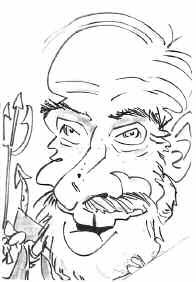
The Prophet is not the only one to
be caricatured – when the
President recently spoke this is
how one listener saw him… with
a devil’s trident! (source: NSS Annual Report 2006)

The NSS is opposed to Faith Schools. School entry criteria based on religion must be reduced and eventually eliminated. 16 year olds students now (as parents already have) have the right to opt of out Religious Education lessons.

Nicolas Walter (editor, New Humanist) has defined Secularism as "this life is all we know. Their is no evidence for any other world. One world is quite enough to deal with any one time, in any case". (this quote needs verifying)

When BNP Leader Nick Griffin told a crowd Islam was a "wicked, vicious faith", he had no idea his speech was being secretly captured on camera by the BBC. Nick Griffen has been acquitted of race hate offenses. I note that he has maintained his words were intended not to stir up racial hatred but to motivate already like-minded people to get involved in the party. Judge Norman Jones QC said a democratic society gave its citizens the right to free speech. He said: "That does not mean it is limited to speaking only the acceptable, popular or politically correct things."

The NSS advocates that ALL weddings be Civil weddings but that in addition a separate ceremony could include religious or humanist content.

The NSS publishes The Bulletin three times a year.

The "non belief in the supernatural" is an issue that a minority of NSS members want to exclude from the NSS "constitution". This was not discussed further at this meeting but is clearly a crucial issue for NSS.

It is unlikely that NSS & BHA will merge. This proposal has been rejected by both organisations in the past.

Securalist of the Year
Professor Steve Jones, the scientist & geneticist, has recently been giving a lecture around the country entitled “Why evolution is right and creationism is wrong.” He was awarded the "Secularist of the Year" prize in October 2006 by NSS. I note that Jones has offended some Christians with his allegations that Creationism is "anti-science". This brings him into direct opposition with proponents of Creationism like Ken Ham (who Jones publicly criticised) who argue that evolution is hypothesis, not science. Jones suggested in a BBC Radio Ulster interview on 19 March 2006 that Creationists should be disallowed from being medical doctors because "all of its (Creationism's) claims fly in the face of the whole of science", and disputes the claim that anyone who believes in Biblical Creation can be a serious biologist.

Cobell mentioned that Dorset Humanists could consider affiliating to the NSS just as they were affiliated to British Humanists. I note that South Hampshire Humanists affiliate to both groups.

Questions from the Floor
Chris Street asked Cobell "Was not the ongoing Evolution v Creationism Scientifhc debate important and what was the NSS view of Science in relation to Religion? Chris stated that he believed that Science (in the words of Lewis Wolpert) is the Best Way of Understanding the World.

?? Asked: What were the differances between NSS and BHA. Cobell said the NSS focuses on challenging religious privaleges and promoting the separation of Church & State whilst BHA focuses on officiation at Humanist Ceremonies (Namings, Weddings and Deaths). The NSS has 2500 members and BHA 5000 members. Membership of both groups has grown significantly recently.

From the
National Secular Society website

(this section needs editing)

We want a society in which all are free to practise their faith, change it or not have one, according to their conscience. Our belief or lack of it should neither advantage or disadvantage. Religion should be a matter of private conscience, for the home and place of worship; it must not have privileged input into the political arena where history shows it to bring conflict and injustice.

The National Secular Society is the leading pressure group defending the rights of non-believers from the demands of religious power-seekers. We campaign on a wide range of issues, including religious influence in the government, the disestablishment of the Church of England, the removal of the Bench of Bishops from the House of Lords and for conversion of religious schools (paid for by the taxpayer) to community schools, open to all.

Additionally:

  1. We fight to protect free expression from attacks by religious groups, often keen to restrict comment about, and examination of, their activities.
  2. We want the blasphemy law to be abolished and artistic expression to be protected from religious censors.
  3. We lobby the BBC to reduce the amount religious propaganda paid for by license-payers, very few of whom are interested.
  4. We want to ensure that human rights always come before religious rights, and to fight the massive exemptions religious bodies are granted from discrimination laws that everyone else has to observe. The NSS was prominent in the campaign to frustrate religious bodies’ attempts to opt out of the Human Rights Act – we fought to limit exemptions in the employment discrimination legislation and other equality law.

Even now the government seems anxious to increase religious involvement in public life. Each increase disadvantages those who have no religion.

Only by secularising our institutions can we ensure that no religious ideology can dominate and discriminate against others.

The NSS was founded in 1866 by Charles Bradlaugh. A message from Claire Rayner.

General Principles
  • Secularism affirms that this life is the only one of which we have any knowledge and human effort should be directed wholly towards its improvement.
  • Affirming that morality is social in origin and application, Secularism aims at promoting the happiness and well-being of mankind. Secularism demands the complete separation of Church and State and the abolition of all privileges granted to religious organisations.
  • Secularism affirms that progress is possible only on the basis of equal freedom of speech and publication; that the free criticism of institutions and ideas is essential to a civilised state.
  • It asserts that supernaturalism is based upon ignorance and assails it as the historic enemy of progress.
  • It seeks to spread education, to promote the fraternity of all peoples as a means of advancing universal peace to further common cultural interests and to develop the freedom and dignity of mankind.
  • To remove an impediment to these objectives, we demand the complete separation of Church and State and the abolition of all privileges granted to religious organisations.

Those of us who value reason are becoming alarmed about the increasingly extreme religious influence in our government, our lawmakers, and our public institutions - especially in our education system. Many people, while standing up for freedom of religion, and freedom not to believe, feel that the proper place for religion is in the place of worship or home. They see the danger of religion becoming too politically ambitious.

The NSS is a rallying point for opposition to this religious resurgence. We must convince our politicians and public servants - as well as our friends, neighbours and colleagues - that our institutions and public life should be secular. A secular state should guarantee freedom of conscience, but eliminate religious privilege.

The only way to prevent the kind of religious power-seeking that leads to conflict is to make both religious discrimination and religious privilege constitutionally impossible.

We need a secular constitution that will:

  • End the privileged input of religious bodies to policy making and law-making
  • Keep all public services free from religious control so that that they remain equally available to all on the same terms
  • Abolish the established church and all its privileges (including 26 bishops in the House of Lords)
  • Put an end to the divisiveness of publicly funded religious schools by making them open to all without discrimination on grounds of religion, or lack of it, and bringing them under local authority controll
  • Abolish blasphemy and similar repressive laws, rather than extend them

Religious influence in Government has not been higher in living memory. The rise of fundamentalist religion of all shades has the potential to seriously erode hard-won freedoms.

Heart disease is biggest killer

Heart disease still kills more people in England and Wales than any other condition, official figures show.

Office for National Statistics data showed one in five men and around one in six women died from heart disease, including heart attacks, in 2005. Heart Disease & Stokes - The Facts.

Diagnostic Tests for Heart Disease. Tests to establish whether people are at risk of, or have suffered, heart disease or stroke can involve chemicals being injected into the body - invasive - or readings taken externally only - non-invasive.

TOP 10 CAUSES OF DEATH IN MEN - 2005
Heart disease - 20.2%
Cerebrovascular diseases* - 7.9%
Lung cancer - 6.9%
Chronic lower respiratory disease - 5.6%
Flu/pneumonia - 5%
Prostate cancer - 3.7%
Colon cancer - 3.1%
Lymph cancers - 2.3%
Alzheimer's disease/dementia - 2.1%
Aortic aneurysm - 2%

TOP 10 CAUSES OF DEATH IN WOMEN - 2005
Heart disease - 16%
Cerebrovascular disease* - 12.9%
Flu/pneumonia - 7.9%
Alzheimer's disease/dementia - 5.2%
Chronic lower respiratory disease - 5.2%
Lung cancer - 4.9%
Breast cancer - 4.5%
Heart failure - 3%
Colon cancer - 2.7%
Urinary diseases - 2.5%


*: mainly strokes

Friday, November 10, 2006

Faith's last gasp


This article is reproduced without edits.

Despite superficial appearances of a resurgence in religious belief, we are actually witnessing the death throes of faith by AC Grayling in Prospect Magazine

On the basis of apparently incontrovertible evidence, commentators of various persuasions, among them Eric Kaufmann in Prospect, John Gray, writing recently in the New Statesman, and Damon Linker, author of The Theocons: Secular America Under Siege (Doubleday) are convinced that we are witnessing an upsurge in religious observance and influence.

Kaufmann relies on the weak argument that demographic trends will turn Europe into a predominantly religious place, John Gray seems to hope that this will be so, and Damon Linker is convinced that a “theocon” conspiracy has so successfully captured Washington that the US has become a de facto theocracy—the home of faith-based politics, faith-based science (creationism), faith-based medicine ("pro-life"), faith-based foreign policy (conducting jihad for American/Baptist values) and faith-based attacks on civil liberties. Add this to the all too obvious fact of political Islam—Islamism—and the case seems made.

But I see the same evidence as yielding the opposite conclusion. What we are witnessing is not the resurgence of religion, but its death throes. Two considerations support this claim. One is that there are close and instructive historical precedents for what is happening now. The second comes from an analysis of the nature of contemporary religious politics.

If a given interest group turns up the volume, it is usually reacting to provocation. We view the Victorian era as a sanctimonious period of improving movements such as self-help, temperance and university missions to city slums. But prudishness and do-goodery existed precisely because their contraries—poverty, drunkenness, godlessness and indecency—were endemic: some streets of Victorian London swarmed with child prostitutes, and were too dangerous to walk at night. In the same way, today’s “religious upsurge” is a reaction to the prevalence of its opposite. In fact, it is a reaction to defeat, in a war that it cannot win even if it succeeds in a few battles on the way down.

Here is what is happening. Over the last half-century, sections of the Muslim world have become increasingly affronted by the globalisation of western and especially American culture and values, which appears arrogantly to disdain their traditions. Yet latterly, some of these same sections of Islam have been emboldened by the victory of warriors of the faith over a superpower (Afghanistan’s mujahedin over Soviet Russia); the combination encourages them to assert their opposition to the engulfing encroachment of western modernity, even by taking up arms.

When a climate of heightened tension such as this prompts activists in one religious group to become more assertive, to push their way forward in the public domain to demand more attention, more respect, more public funds (faith-based schools are one example), other religious groups, not wishing to be left behind, follow suit. In Britain, Muslim activism has been quickly mimicked by others—by Sikhs demonstrating about a play, Christian evangelicals demonstrating about an opera, and all of them leaping on the funding bandwagon for faith and interfaith initiatives. To placate them, politicians lend an ear; the media report it; immediately these minorities of interest have an amplifier for their presence. The effect is that suddenly it seems as if there are religious devotees everywhere, and the spurious magnification of their importance further promotes their confidence. As a result they make some gains, as the faith schools example shows.

Yet the fact is that only 10 per cent of the British population attend church, mosque, synagogue or temple every week, and this figure is declining in all but immigrant communities. This is hardly the stuff of religious resurgence. Yes, over half the population claim vaguely to believe in Something, which includes feng shui and crystals, and they may be “C of E” in the sense of “Christmas and Easter,” but they are functionally secularist and would be horrified if asked to live according to the letter of (say) Christian morality: giving all one’s possessions to the poor, taking no thought for the morrow and so impracticably forth. Not even Christian clerics follow these injunctions. This picture is repeated everywhere in the west except the US, and there too the religious base is eroding.

The historical precedent of the counter-Reformation is instructive. For over a century after Luther nailed his theses to Wittenberg’s church door, Europe was engulfed in ferocious religious strife, because the church was losing its hitherto hegemonic grip and had no intention of doing so without a fight. Millions died, and Catholicism won some battles even as it lost the war. We are witnessing a repeat today, this time with Islamism resisting the encroachment of a way of life that threatens it, and as other religious groups join them in a (strictly temporary, given the exclusivity of faith) alliance for the cause of religion in general.

As before, the grinding of historical tectonic plates will be painful and protracted. But the outcome is not in doubt. As private observance, religion will of course survive among minorities; as a factor in public and international affairs it is having what might be its last—characteristically bloody—fling.

Thursday, November 09, 2006

Lewis Wolpert - Six Impossible Things Before Breakfast - The Evolutionary Origins of Belief - Part 1 - Introduction


Professor Lewis Wolpert FRS
Lewis Wolpert is a Rationalist who appeals to reason as a source of knowledge or justification & in which the criterion of truth is not sensory but intellectual and deductive. He is a Materialist and Vice President of the British Humanist Association . He describes himself as a Reductionist Materialist Atheist or an Atheist Reductionst Materialist (the difference escapes me). He is not religious and knows of no good evidence for God. Nor has he any beliefs in the spiritual world or paranormal happenings. A commited scientist he views science as the best way of understanding the world.

Synopsis
Why do 70 per cent of Americans believe in angels, and thousands more that they have been abducted by aliens? Why does every society around the world have a religious tradition of some sort? What makes people believe in things when all the evidence points to the contrary? Why do 13 per cent of British scientists touch wood? In "Through the Looking Glass", the White Queen tells Alice that to believe in a wildly improbable fact she simply needs to 'draw a long breath and shut your eyes'. Alice finds this advice ridiculous. But don't almost all of us, at some time or another, engage in magical thinking? Professor Lewis Wolpert investigates the nature of belief and its causes. He looks at belief's psychological basis and its possible evolutionary origins in physical cause and effect. How did toolmaking drive human evolution? Is it the lack of an explanation about fundamental questions which is truly intolerable? Are we born with an evolutionary propensity to believe in things that make us feel better? Wolpert explores the different types of belief - including that of animals, of children, of the religious, and of those suffering from psychiatric disorders. And he asks whether it is possible to live without belief at all, or whether it is a necessary component of a functioning society.

Introduction
Why is their a general absense of belief in the scientific method - verging on an anti-science movement? Surely science and the necessity for evidence is the best way to understand how the world works. By corollory why is the belief in the unbelievable so prevalent - from religion, aliens, telepathy and angels? How can people believe in something without a shred of reliable evidence? His aim is to understand what people believe about causal events (an example would be good here).

What distinguishes our thinking and beliefs from other animals and how has this been a part of evolution. How has our brain structure evolved? Our genes determine how our brains will work whilst culture, learning and nurture are of secondary importance. Evolutionary adaptiveness of the mind produces our behaviours, thoughts and beliefs helping humans to survive better.

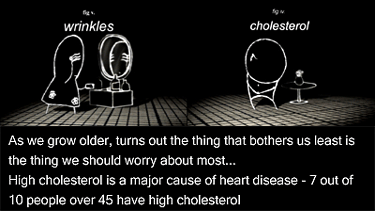
British Heart Foundation - 7 out of 10 over 45 have high cholesterol


My cholesterol level is 5.2 mmoles /Litre (Boots test) or 5.1 (GP Nurse test). British Heart Foundation say it should be <5.0>

How is cholesterol measured?

Measuring cholesterol levels involves a simple blood test. This can be done either through a full blood test or a pinprick test. It is measured in millimols per litre of blood. These tests should always be carried out by a GP or trained health professional rather than using a self test kit.

What is the ideal cholesterol level?

The BHF advises that people should have a total cholesterol level of under 5 mmol/1 and a LDL level under 3 mmol/1.

The average blood cholesterol level of people living in England is 5.5mmol/1. This is high compared to other countries. For example, in China the average is 4.5mmol/1.

Who is at risk?

Those most at risk are those people who have a high intake of saturated fat in their diets. However, you can lower your cholesterol level by reducing your saturated fat intake, increasing the amount of physical activity you do and increasing your intake of fresh fruit and vegetables.

BHF launched a campaign to highlight cholesterol - and get people to think more seriously about the health of their heart.

Today, nearly half of all deaths from coronary heart disease in Britain are due to raised cholesterol.

People should take positive steps to look after their hearts by cutting down saturated fats, increasing the amount of physical activity they take and eating more fresh fruit and vegetables.

You may have seen our adverts on TV, which show a series of animated characters worrying about the outward signs of ageing - such as getting wrinkles and loss of hair. But all of the characters show scant regard for their health - and especially their hearts. Watch the ad here.

And today ex Malaysian Prime Minister has heart attack.

Monday, November 06, 2006

Freestonia - pictures of life in a squat

Tony Sleep says:-
"In 1977, Freston Road, a squatted street in Notting Dale, West London, seceded from the United Kingdom, and appealed to the United Nations to send a peacekeeping force to prevent evictions by the Greater London Council. "

His 70 amazing pictures & documentary show life in Freestonia in the late 1970s - early 80s. Drugs, alcohol and dissolution were an ever-present dark side of Frestonian life.

Sunday, November 05, 2006

How to backup my data? - Part 1

My work and home data is in hundreds of different formats: Word documents, photos, outlook files etc. I backup 11.5GB of this type of data on my laptop. I have used an online backup service Connected DataProtector for the past eight years for all the important work and home data. All data at work is stored on one PC which uses this service. This is almost completely hassle free (set it up once and let it run automatically every night) & relatively cheap.

Recently i've upgraded, after much procrastination, from the 10GB limit (Gold $280 pa) to the 20GB limit (Gold+ $535 pa) service. But i dont want to upgrade to the 30GB limit (Platinum $800) which i consider to be too expensive.

But with 20GB backup limit I still cannot backup all 50GB+ of data. Less important ripped music (from my CDs) or movies (ripped from my DVDs) is not backed up. Connected DataProtector service would be too expensive to backup these multimedia files.

I will investigate other cheap and hassle free solutions to backup ALL my data. The criteria will be:-

  • The total cost of backing up 50GB+ work & home data should be <$500 pa
  • the backup should be as hassle free as the Connected DataProtector service.
  • have the ability to easily backup several PC at home and work

Thursday, November 02, 2006

Fingers crossed Superstitions are perfectly natural, and entirely understandable

The Times September 05, 2006

Avoided walking under any ladders lately? Tied a knot in a handkerchief? Of course you haven’t. Such beliefs are just pure superstition, touch wood.

According to Bruce Hood, Professor of Experimental Psychology at the University of Bristol, this kind of irrational behaviour is natural. Speaking at the British Association Festival of Science yesterday, he claimed that superstition is a product of evolution. Mankind is adapted to reason intuitively, to invent explanations for how the world works, which increases the odds of keeping safe. Superstitions also provide a welcome sense of control. We cross our fingers to trap the bad luck between them. We say “bless you” to stop the soul following the sneeze out of the body.

Modern members of Homo sapiens, texting on their BlackBerries while skirting round black cats, have also evolved to know that some beliefs are really just indulgent nonsense. So they cheat. See only one magpie? Look again. Horoscope bleak? Suddenly remember your birthday is close to the cusp. Is that hypocrisy, or a clever way to reconcile rationality with irrationality?

One thing is clear: the foundations of science were built on mankind’s ability to reason intuitively. Anyone who insisted on direct visible proof would have been unable, for example, to discover gravity. So we should perhaps think more kindly of human credulity. Paul Ince’s legendary insistence on being the last to leave the changing room and pull on his jersey probably had little bearing on the outcome of any particular England football games. But no doubt the habit made him feel better. So do not mock: after all the wind might change.

Evolution keeps us superstitious. Now that's lucky

The Times September 05, 2006

Professor Bruce Hood of the University of Bristol said humans have evolved into accepting superstitions such as witches (Channel 4) By Mark Henderson, Science Editor

HUMANS have evolved over tens of thousands of years to be susceptible to supernatural beliefs, a psychologist has claimed.

Religion and other forms of magical thinking continue to thrive — despite the lack of evidence and advance of science — because people are naturally biased to accept a role for the irrational, said Bruce Hood, Professor of Experimental Psychology at the University of Bristol.

This evolved credulity suggests that it would be impossible to root out belief in ideas such as creationism and paranormal phenomena, even though they have been countered by evidence and are held as a matter of faith alone.

People ultimately believe in these ideas for the same reasons that they attach sentimental value to inanimate objects such as wedding rings or Teddy bears, and recoil from artefacts linked to evil as if they are pervaded by a physical “essence”.

Even the most rational people behave in irrational ways and supernatural beliefs are part of the same continuum, Professor Hood told the British Association Festival of Science in Norwich yesterday.

To demonstrate his theory he asked members of the audience if they were prepared to put on an old-fashioned blue cardigan in return for a £10 reward. He had no shortage of volunteers. He then told the volunteers that the cardigan used to belong to Fred West, the mass murderer.

“Most hands went down,” he said.

“When people did wear it people moved away from them. It’s not actually West’s jumper. But it’s the belief that it’s West’s jumper that has the effect.

“It is as if evil, a moral stance defined by culture, has become physically manifest inside the clothing.”

Similar beliefs, which are held even among the most sceptical scientists, explain why few people would agree to swap their wedding rings for replicas. The difference between attaching significance to sentimental objects and believing in religion, magic or the paranormal is only one of degree, Professor Hood said.

These tendencies, he said, were almost certainly a product of evolution. The human mind is adapted to reason intuitively, so that it can generate theories about how the world works even when mechanisms cannot be seen or easily deduced.

While this is ultimately responsible for scientific thinking, as in the discovery of invisible forces such as gravity, it also leaves people prone to making irrational errors. “In most cases, intuitive theories capture everyday knowledge, such as the nature and properties of objects, what makes something alive, or the understanding that people’s minds motivate their actions,” Professor Hood said.

“But because intuitive theories are based on unobservable properties, such theories leave open the possibility of misconceptions. I believe these misconceptions of naive intuitive theories provide the basis of many later adult magical beliefs about the paranormal.”

This innate tendency means it is futile to expect that such beliefs will die out even as our scientific understanding of the world improves, he said. “The mind is adapted to reason intuitively about the properties of the world. Because we operate intuitively, it is probably pointless to get people to abandon belief systems.

“No amount of evidence is going to get people to take it on board and abandon these ideas.”

Credulous minds may have evolved for several reasons. It was once less dangerous to accept things that were not true than it was to reject real facts, such as the threat posed by a nearby predator. This may have predisposed humans to err on the side of belief. Superstition may also give people a sense of control that can reduce stress.

“I don’t think we’re going to evolve a rational mind because there are benefits to being irrational,” said Professor Hood. “Superstitious behaviour — the idea that certain rituals and practices protect you — is adaptive.

“If you remove the appearance that they are in control, both humans and animals become stressed. During the Gulf War, in 1991, in areas attacked by Scud missiles there was a rise in superstitious belief.

“I want to challenge recent claims by Richard Dawkins, among others, that supernaturalism is primarily attributable to religions spreading beliefs among the gullible minds of the young. Rather, religions may simply capitalise on a natural bias to assume the existence of supernatural forces.”